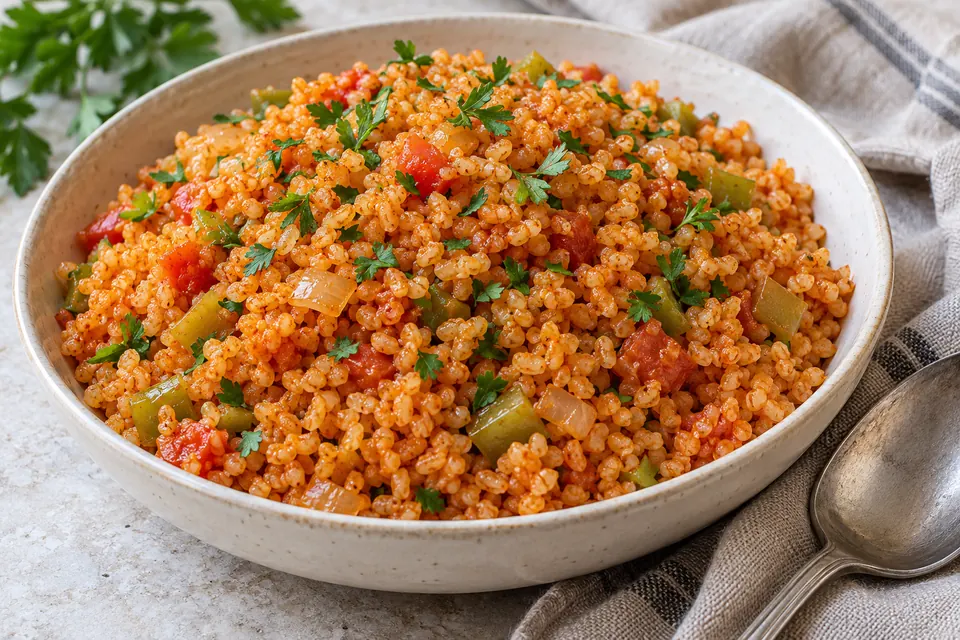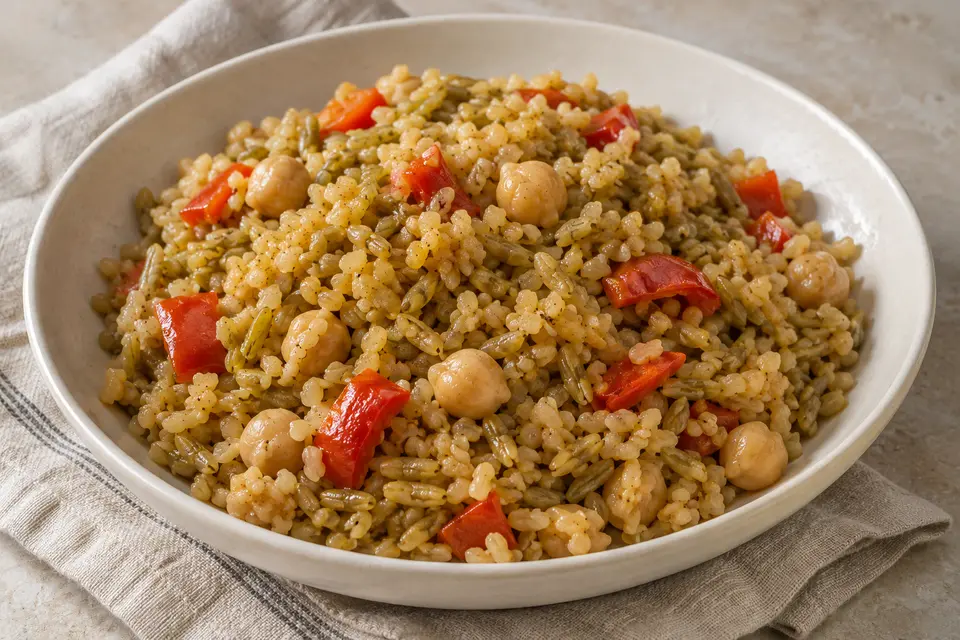
Gaziantep Firik Pilavı combines firik with coarse bulgur. Firik is wheat harvested green and treated with smoke before processing. The registered Gaziantep dish has both meat-free and meat-based methods; this home recipe follows the meat-free approach, with chickpeas, sweet red pepper and olive oil. The amounts are adapted for a home kitchen.
Gaziantep Firik Pilavı — Recipe Card
Smoky freekeh and bulgur pilaf with chickpeas and sweet red pepper
Makes 6 servings · Makes 6 substantial side portions. Total time is about 55 minutes, including a 10-minute covered rest; whole-grain firik may take longer.US cup = 240 ml · tablespoon = 15 ml · teaspoon = 5 ml. Cup and weight conversions are approximate. Australian cooks: use a 15 ml measuring tablespoon.
Ingredient quantities and servings are scaled. Cooking times, pan sizes, frying oil depth, and temperatures stay the same; cook larger batches as needed.
Ingredients
How to make Gaziantep Firik Pilavı
Prepare the grains
Pick through the firik for any foreign material. Rinse the firik and bulgur separately in a fine sieve and drain well. Rinse and drain the cooked chickpeas and prepare the sweet pepper.
Start the firik
Put 720 ml / 3 cups of the boiling water and the firik in a medium heavy saucepan. Bring back to a gentle simmer, cover and cook over low heat for 10–15 minutes, until the firik has begun to soften but is still firm in the centre. If a whole-grain brand remains very hard, continue this stage before adding the bulgur, with a little extra boiling water if the pan is drying out.
Add the bulgur and vegetables
Stir in the bulgur, remaining 480 ml / 2 cups boiling water, chickpeas, sweet red pepper and salt. Return to a gentle simmer. Cover and cook over low heat for 15–20 minutes, until both grains are tender and the liquid is absorbed. Avoid repeated stirring. If the grains are still hard and the pan is dry, add 30–60 ml / 2–4 tablespoons boiling water, cover and continue briefly. If tender but wet, uncover over low heat just long enough to lose the excess moisture.
Finish with olive oil
Warm the olive oil gently in a small pan for about 1 minute, without letting it smoke. Pour it over the cooked pilaf, add the black pepper and fold through carefully so the grains keep their shape.
Rest and serve
Remove from the heat, cover and rest for 10 minutes. Fluff gently with a fork and serve warm. A tomato and cucumber salad makes a fresh accompaniment.
Bring this recipe to your kitchen with a printable copy.
Print recipeRecipe from MyTurkishRecipes · https://myturkishrecipes.com/turkish-freekeh-pilaf-gaziantep-firik-pilavi. Quantities reflect your selected serving scale. Cooking times are estimates; follow the doneness cues.
A few helpful kitchen notes
Dietary notes
The base recipe uses olive oil, water and plain chickpeas and is vegan. Firik and bulgur are both wheat products and contain gluten.
Heat level
No added chili. Use sweet red bell pepper; the black pepper adds a gentle peppery bite. For a hotter variation, stir 1 g / ½ teaspoon hot pul biber into the warmed oil after taking it off the heat.
Choose the right grains
Use coarse firik and coarse pilaf bulgur. Fine freekeh or fine bulgur softens faster and can turn mushy with this method. Whole-grain firik may need a longer first simmer; use the doneness cues and add boiling water in small amounts as needed.
Keep the finish light
Warm the oil without smoking it, fold it into the pilaf and allow the covered rest. Heavy stirring breaks the softened grains and makes the texture dense.
How to store and reheat Gaziantep Firik Pilavı
Divide leftovers into shallow containers and refrigerate within 2 hours, or within 1 hour if the room is above 32°C / 90°F. Keep at 4°C / 40°F or below and use within 2 days. Reheat the portion needed with a splash of water until steaming hot throughout, reaching 74°C / 165°F; stir to heat evenly.
Gaziantep Firik Pilavı: questions and answers
Are firik and bulgur the same?
Both are made from wheat, but firik is processed from green wheat and has a smoky flavour. Coarse bulgur has a different texture and cooking time, so the two grains enter the pan at different stages.
Why is my pilaf still firm after the water disappears?
Firik varies in size and processing. Add 30–60 ml / 2–4 tablespoons boiling water, cover and continue over low heat until tender. Give whole-grain firik more time before the bulgur goes in.
Can I use canned chickpeas?
Yes. Use plain canned chickpeas, rinse and drain them well, then weigh out the amount in the ingredient list. They are already cooked and go in with the bulgur.