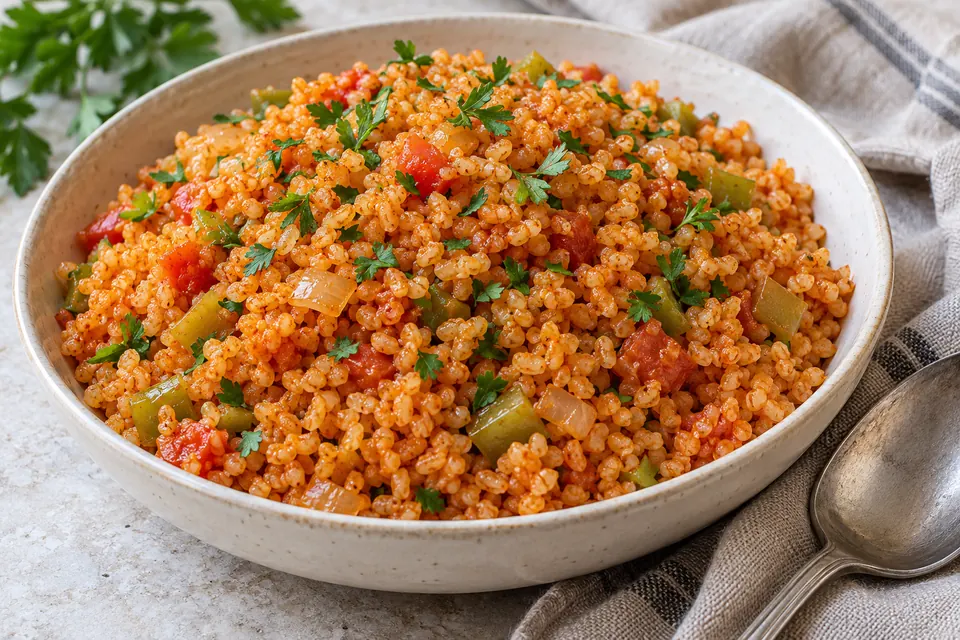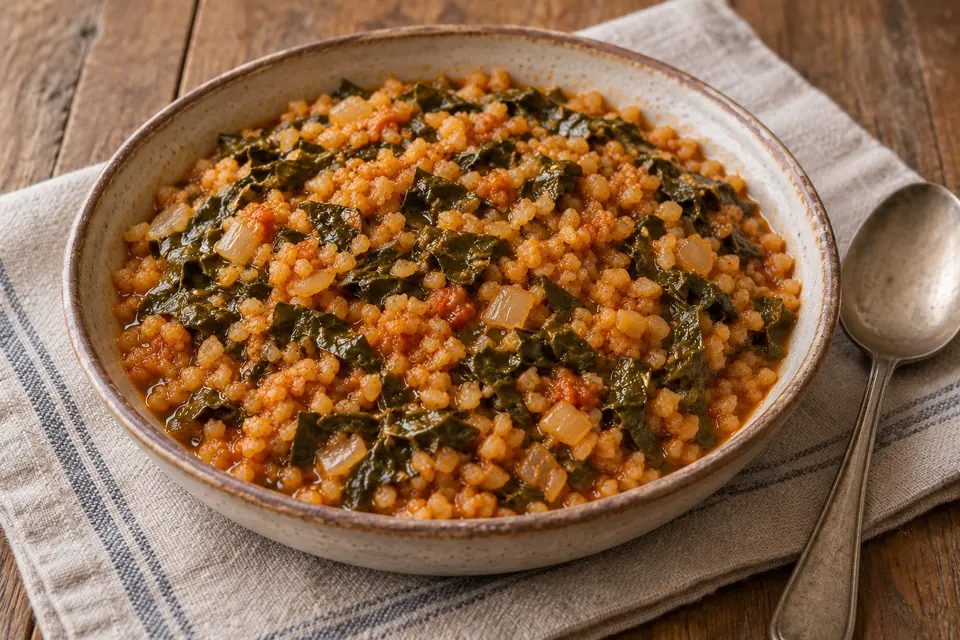
Türkiye’s Ministry of Culture and Tourism records Çabut Aşı as a Denizli zeytinyağlı, an olive-oil vegetable dish, and credits the regional recipe to a Denizli Provincial Directorate of Culture and Tourism local food competition. The official method sautés onion, adds tomato paste, water and salt, then simmers bulgur with grape leaves for 30 minutes. This home-kitchen version keeps that compact structure and adds clearer cues for preparing either fresh or brined leaves. GoTürkiye’s Denizli guide also places vegetable cookery within the province’s broader Aegean culinary influence.
Çabut Aşı — Recipe Card
Denizli-style grape leaf and bulgur stew with olive oil and tomato
Makes 4 servings · Serves 4 as a light main or 6 as a side.US cup = 240 ml · tablespoon = 15 ml · teaspoon = 5 ml. Cup and weight conversions are approximate. Australian cooks: use a 15 ml measuring tablespoon.
Ingredient quantities and servings are scaled. Cooking times, pan sizes, frying oil depth, and temperatures stay the same; cook larger batches as needed.
Ingredients
How to make Çabut Aşı
Prepare the grape leaves
Rinse the leaves under cool running water. If using brined leaves, separate them and rinse very thoroughly to remove excess salt; taste a small edge before seasoning the pot. Trim away tough stems, stack the leaves and cut them crosswise into ribbons about 2 cm (3/4 inch) wide.
Soften the onion
Heat the olive oil in a medium heavy-based saucepan over medium-low heat. Add the onion and cook for 8–10 minutes, stirring often, until soft and translucent but not browned.
Cook the tomato paste
Add the tomato paste and stir for 1 minute, pressing it through the onion until the oil turns brick red and the paste no longer smells raw.
Bring the base to a boil
Pour in the water and add the salt. Scrape the bottom of the pan, raise the heat to medium-high and bring the liquid to a steady boil.
Simmer the bulgur and leaves
Stir in the bulgur and grape-leaf ribbons. Return to a simmer, cover, lower the heat and cook gently for 30 minutes. Stir at 10-minute intervals so the bulgur does not catch. If the pan becomes dry before the leaves are tender, add hot water 30 ml (2 tablespoons) at a time.
Rest and serve
Remove the pot from the heat when the leaves are tender, the bulgur is soft but distinct and the liquid has been absorbed. Keep covered for 10 minutes, then loosen gently with a spoon. Taste before adding salt, especially if the leaves were brined. Serve warm or at room temperature.
Bring this recipe to your kitchen with a printable copy.
Print recipeRecipe from MyTurkishRecipes · https://myturkishrecipes.com/turkish-grape-leaf-and-bulgur-stew-cabut-asi. Quantities reflect your selected serving scale. Cooking times are estimates; follow the doneness cues.
A few helpful kitchen notes
Fresh or brined leaves
Use culinary grape leaves from untreated vines. Brined leaves vary greatly in saltiness, so rinse them several times and season only after tasting. The same drained weight works for either type.
Bulgur and gluten
Bulgur is wheat, so the base recipe is not gluten-free. Replacing it with rice would change both the texture and the identity of this particular dish; no gluten-free label is applied.
Heat level
No added chili. Çabut Aşı is savory and gently tangy rather than hot; keep the base recipe free of pepper flakes so the grape-leaf flavor remains clear.
Consistency
This is a moist, spoonable grain dish rather than a dry pilaf or a soup. If liquid remains after 30 minutes, uncover and simmer for 2–4 minutes; if it tightens while resting, fold in a spoonful of hot water.
How to store and reheat Çabut Aşı
Cool in a shallow container and refrigerate within 2 hours at 4°C (40°F) or below for up to 4 days. Reheat only the portion needed, covered with a splash of water, until it reaches 74°C (165°F). It may also be served chilled or at room temperature, but do not leave it unrefrigerated for more than 2 hours.
Çabut Aşı: questions and answers
What does Çabut Aşı taste like?
It is savory, olive-oil-rich and gently tart from the grape leaves, with a soft but lightly nubbly bulgur texture and a restrained tomato background.
Can I use jarred grape leaves?
Yes. Use 250 g (8.8 oz) after draining, rinse the leaves very well and taste one before adding the recipe’s salt. Very salty leaves may need a brief 5-minute soak in cool water.
Is Çabut Aşı served hot or cold?
Both work. Serve it warm as a light main or side, or let it cool to room temperature in the zeytinyağlı style. Keep the two-hour refrigeration limit in mind.
Why is my bulgur still firm?
Grape-leaf acidity and different bulgur grades can slow softening. Add 30 ml (2 tablespoons) hot water, cover and cook for another 5 minutes, repeating once if needed.