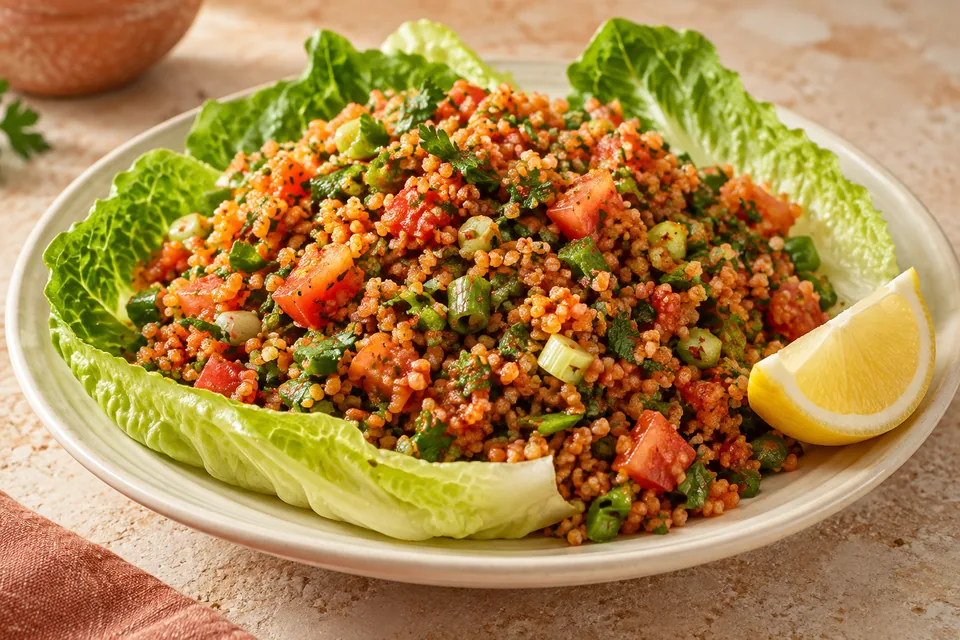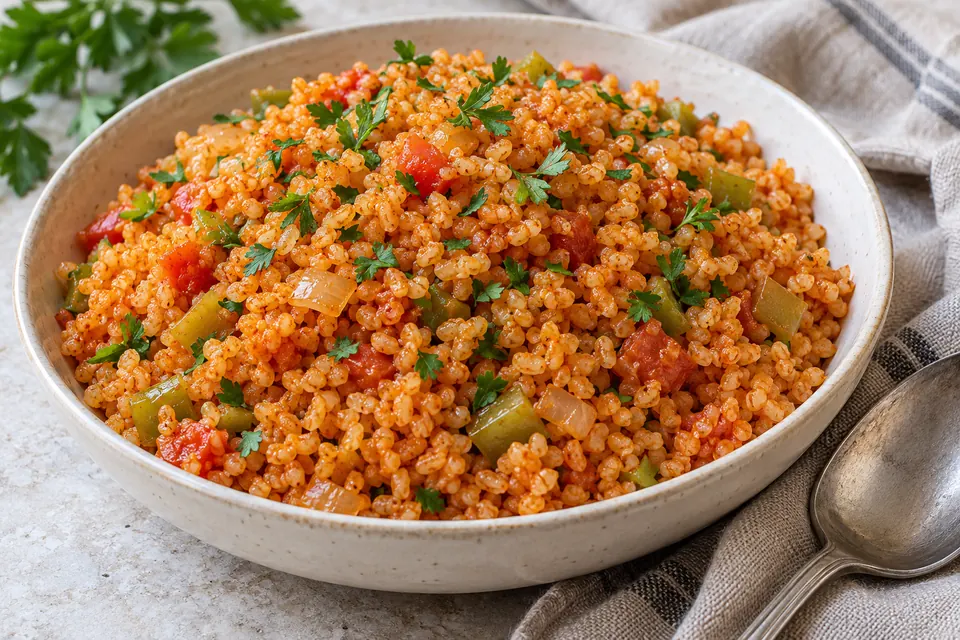
Bulgur is wheat that has been parboiled, dried and cracked, and it appears in many Turkish pilafs. Tomato-and-pepper versions are well established, while other preparations include meat, legumes or different vegetables. This is a straightforward meat-free home-style version, not a claim to one fixed regional formula. It uses coarse pilaf bulgur rather than fine bulgur for kısır.
Bulgur Pilavı — Recipe Card
Turkish bulgur pilaf with tomatoes and mild green peppers
Makes 4 servings · Four side-dish portions. The stated cooking time is approximate; extra-coarse bulgur can need additional minutes and small additions of hot water.US cup = 240 ml · tablespoon = 15 ml · teaspoon = 5 ml. Cup and weight conversions are approximate. Australian cooks: use a 15 ml measuring tablespoon.
Ingredient quantities and servings are scaled. Cooking times, pan sizes, frying oil depth, and temperatures stay the same; cook larger batches as needed.
Ingredients
How to make Bulgur Pilavı
Prepare the bulgur
Check that the packet says coarse or pilaf bulgur, not fine bulgur or raw cracked wheat. If the package calls for rinsing, rinse briefly in a fine sieve and drain thoroughly; do not soak. Have the hot water ready and choose a heavy saucepan about 20 cm (8 inches) wide with a close-fitting lid.
Soften the vegetables
Heat the olive oil over medium heat. Add the onion and mild green pepper and cook for 6–8 minutes, stirring, until softened without browning deeply. Stir in the tomato paste for 1 minute, then add the chopped tomatoes and their juices. Cook for 4–5 minutes, until the tomatoes soften and the mixture becomes saucy.
Add the grain and water
Stir in the bulgur until coated. Add the 480 ml (2 cups) hot water, salt and black pepper. Bring to a gentle boil, stir once to distribute the ingredients, then cover and reduce the heat to low.
Cook until tender
Simmer gently for about 12–15 minutes without stirring. Check near the end: the water should be absorbed and the bulgur tender with a slight bite, not hard in the center. If the pan is dry but the grain remains firm, add 15–30 ml (1–2 tbsp) hot water, cover and cook for 2–3 minutes more. Extra-coarse brands may need longer; follow the texture, not just the timer.
Rest and fluff
Remove from the heat and leave covered for 10 minutes. No cloth or paper is needed under the lid. Fluff gently with a fork, fold through the parsley and serve warm. The pilaf should be moist with separate grains, not soupy.
Bring this recipe to your kitchen with a printable copy.
Print recipeRecipe from MyTurkishRecipes · https://myturkishrecipes.com/turkish-bulgur-pilaf-bulgur-pilavi. Quantities reflect your selected serving scale. Cooking times are estimates; follow the doneness cues.
Make it work in your kitchen
Ingredient Substitutions
These swaps change flavor or texture as described. Keep the original ingredients for the closest version of the dish.
Fine bulgur
Look for fine bulgur labelled köftelik or #1. Coarse pilaf bulgur needs different hydration and cooking; do not replace it directly in this recipe.
A few helpful kitchen notes
Bulgur choice
Coarse pilavlık bulgur is required. Fine köftelik bulgur and raw cracked wheat do not cook the same way. Grain size, tomato juiciness and the pan affect water absorption, so make small hot-water adjustments rather than adding a large amount at once.
Dietary notes
Contains wheat and gluten. Bulgur is not gluten-free, and this recipe does not provide a tested gluten-free substitution. The listed version is vegan and dairy-free because it uses olive oil and water, not butter or meat stock; check that the tomato paste is plain.
Heat level
Mild, with no added chili, when sweet green peppers are used. Choose peppers sold as sweet or non-hot; sivri peppers can also be hot. For a warmer variation, add ¼ tsp pul biber with the black pepper, or up to ½ tsp for more heat. Chili strength varies; start small.
Measures and serving
US measures use a 240 ml cup, a 15 ml tablespoon and a 5 ml teaspoon. Weigh the dry bulgur because different grain sizes fill cups differently. This quantity makes four side-dish portions.
How to store and reheat Bulgur Pilavı
Transfer leftovers promptly to shallow containers and refrigerate within 2 hours of cooking, or within 1 hour above 32°C (90°F). Keep at 4°C (40°F) or below and use within 3 days. Reheat only the portion needed with a splash of water until it reaches 74°C (165°F) throughout. Freeze promptly in portions for up to 2 months for best quality; thaw in the refrigerator.
Bulgur Pilavı: questions and answers
Can I use the fine bulgur used for kısır?
No. Its smaller grains hydrate much faster and would become soft with this cooking method. Use coarse pilaf bulgur.
Why is the bulgur still firm after the water disappears?
The grain may be extra coarse, the heat too high or the lid loose. Add 15–30 ml (1–2 tbsp) hot water, cover and continue gently for 2–3 minutes, then check again.
Can I make it with canned tomatoes?
Yes. Replace the fresh tomatoes with 300 g (10.6 oz) plain chopped canned tomatoes, including their juice. Use the same starting water quantity and check the grain near the end; tomato thickness varies.