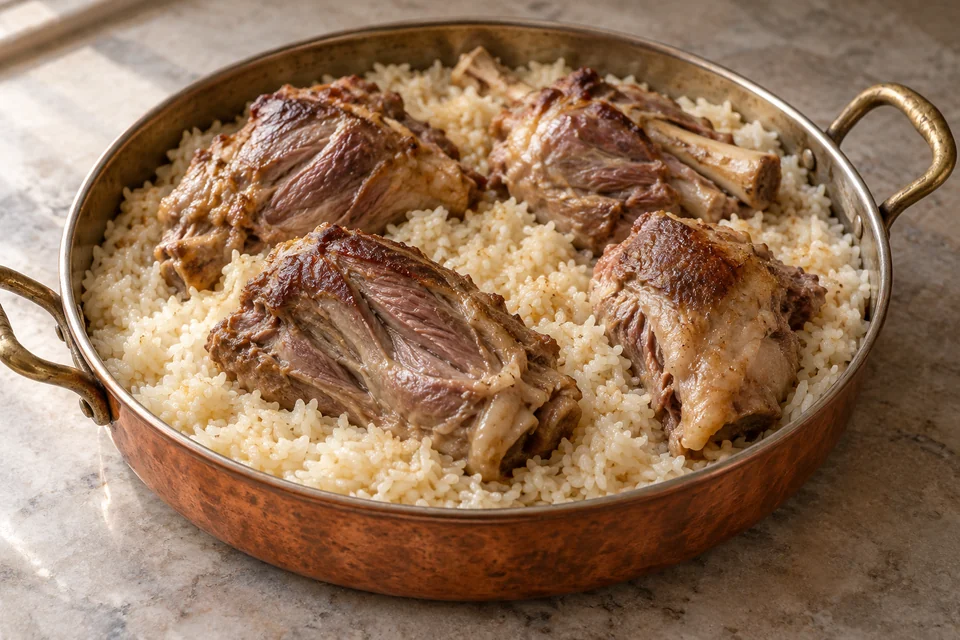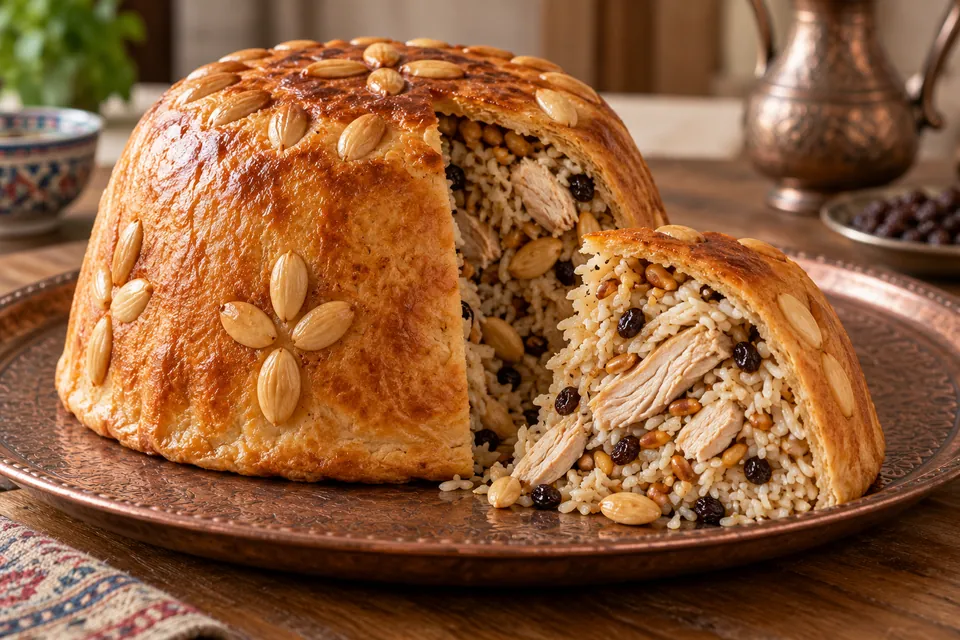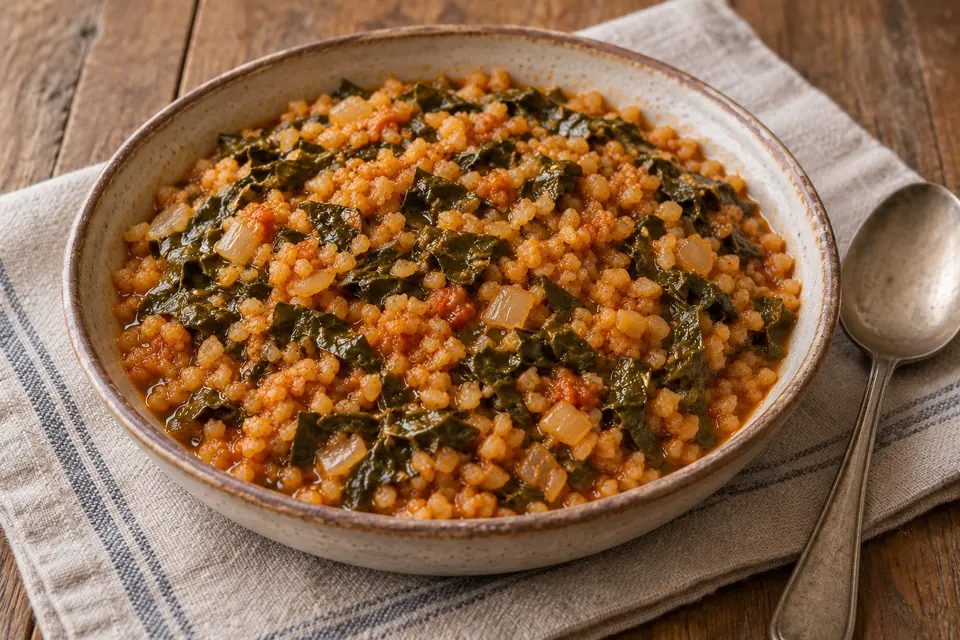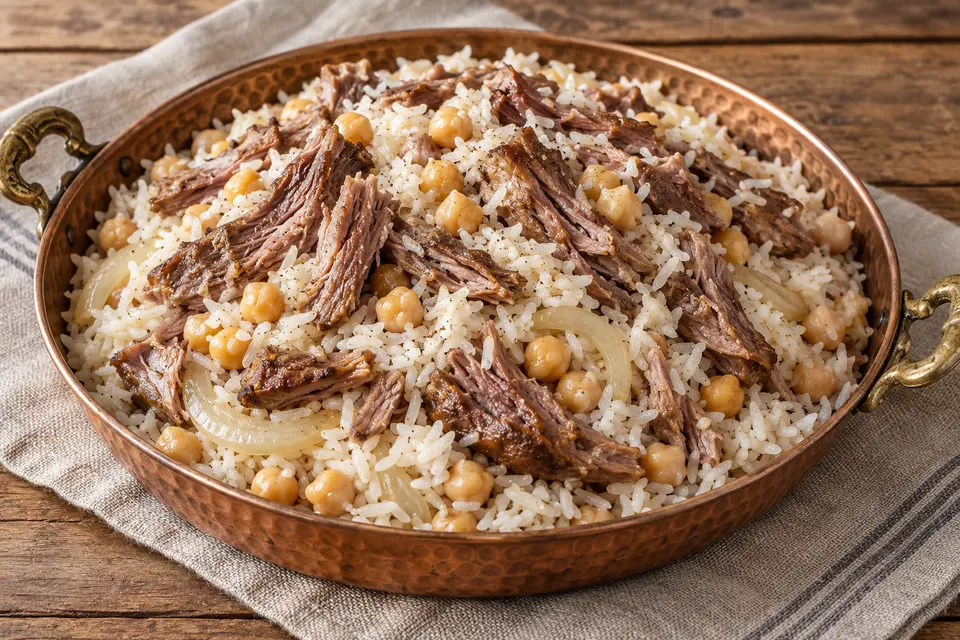
TÜRKPATENT registered Isparta Kabune Pilavı as geographical indication no. 355. The specification links it to Isparta’s chickpeas, local meat and butter, and to its layered method in a tinned copper cauldron over a fast vine-twig fire. A quick addition of butter as the rice absorbs its broth is known locally as miyami. This home version keeps the registered proportions and sequence in a heavy lidded pot, while the protected commercial identity remains tied to Isparta.
Isparta Kabune Pilavı — Recipe Card
Layered Rice Pilaf with Rib Meat, Chickpeas and White Onion
Makes 6 servingsUS cup = 240 ml · tablespoon = 15 ml · teaspoon = 5 ml. Cup and weight conversions are approximate. Australian cooks: use a 15 ml measuring tablespoon.
Ingredient quantities and servings are scaled. Cooking times, pan sizes, frying oil depth, and temperatures stay the same; cook larger batches as needed.
Ingredients
How to make Isparta Kabune Pilavı
Cook the ribs and make the broth
Put the ribs in a large pot with the cold water and 4 g (2/3 teaspoon) of the salt. Bring slowly to a boil, skim the surface, then cover partially and simmer gently for 90–120 minutes, until the meat is very tender, easily leaves the bones and has passed 63°C/145°F with a 3-minute rest. Remove the meat, strain the broth and reserve 600 ml (2 1/2 cups). When the ribs are cool enough to handle, discard the bones and excess fat and pull the meat into small pieces; you should have about 500 g (17.6 oz). Spread the meat on a tray for 15 minutes so the surface dries.
Prepare the rice and pot
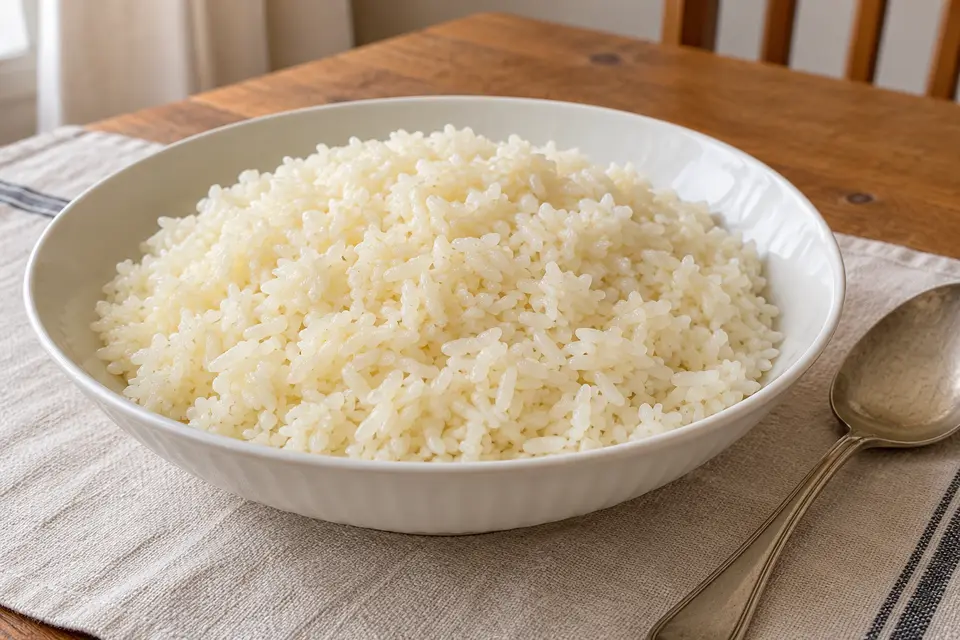
Rinse the rice in several changes of cool water until the water is nearly clear, then drain for 20 minutes. Choose a heavy 24–26 cm (9 1/2–10-inch) lidded pot. Arrange the onion rings in an even layer over the bottom, without adding butter.
Build the layers
Scatter the chickpeas over the onions. Add half of the shredded meat, then half of the rice. Repeat with the remaining meat and rice, leveling each layer gently but never packing or stirring it.
Add broth and cook
Heat the reserved broth until steaming and dissolve the remaining 4 g (2/3 teaspoon) salt in it. Hold a slotted spoon just above the rice and pour the broth through it so the layers stay in place. Cover and bring to a strong simmer over medium-high heat, then reduce to low and cook for 15–18 minutes, until the broth is almost absorbed and distinct rice grains show at the surface.
Perform the miyami butter finish
Melt the butter until hot and foaming but not browned. Quickly drizzle it across the visible rice, cover again and cook over the lowest heat for 3–5 minutes, until no liquid remains. Remove from the heat, place a clean folded kitchen towel under the lid and rest for 20 minutes.
Lift, season and serve
Use a slotted spatula to lift the pilaf upward from the bottom and turn it over lightly, bringing onion, chickpeas and meat through the rice without crushing the grains. Transfer to a warm copper or shallow serving dish with plenty of meat on top. Sprinkle with the black pepper and serve hot.
Bring this recipe to your kitchen with a printable copy.
Print recipeRecipe from MyTurkishRecipes · https://myturkishrecipes.com/turkish-layered-meat-and-chickpea-pilaf-isparta-kabune-pilavi. Quantities reflect your selected serving scale. Cooking times are estimates; follow the doneness cues.
A few helpful kitchen notes
Meat and broth
The registered method starts with boiled rib meat and its broth. Simmering bone-in ribs here produces both. If prepared a day ahead, cool the meat and broth in shallow containers within 2 hours and refrigerate separately.
Rice and pot
Baldo rice gives a plump but separate grain. A heavy pot substitutes for the traditional tinned copper cauldron; keep the onion layer intact because it protects and flavors the rice above it.
Dietary notes
The base recipe uses no wheat ingredients and the broth is made only from ribs and water. For a gluten-free serving, use plain rice, chickpeas, butter and spices with suitable labeling where needed; this does not guarantee absence of cross-contact or certification for coeliac disease.
Heat level
Mild: black pepper is the only heat. Chili is not part of the registered profile; for an optional hotter variation, offer pul biber separately at the table rather than mixing it into the pot.
How to store and reheat Isparta Kabune Pilavı
Refrigerate leftover pilaf in shallow containers within 2 hours at 4°C/40°F or colder and use within 3 days. Reheat only once, adding a spoonful of broth or water and heating to 74°C/165°F throughout. Do not cool or reheat the rice in the deep cooking pot.
Isparta Kabune Pilavı: questions and answers
Can I use canned chickpeas?
Yes. Rinse and drain them well, then weigh 220 g (about 1 1/3 cups). Because they are already tender, add them exactly where the layering step specifies.
Why does Kabune Pilavı start with white onion?
The sweet white-onion layer is part of the registered Isparta method. It protects the bottom during the fast cook and perfumes the broth as it rises through the rice.
What does miyami mean?
In this Isparta technique, miyami is the quick addition of hot butter when the rice has nearly absorbed its broth and separate grains appear at the surface.
Can I prepare Isparta Kabune Pilavı ahead?
Cook the ribs and broth up to one day ahead, chill both promptly and separately, then assemble and cook the rice shortly before serving. Fully assembled pilaf is best fresh.