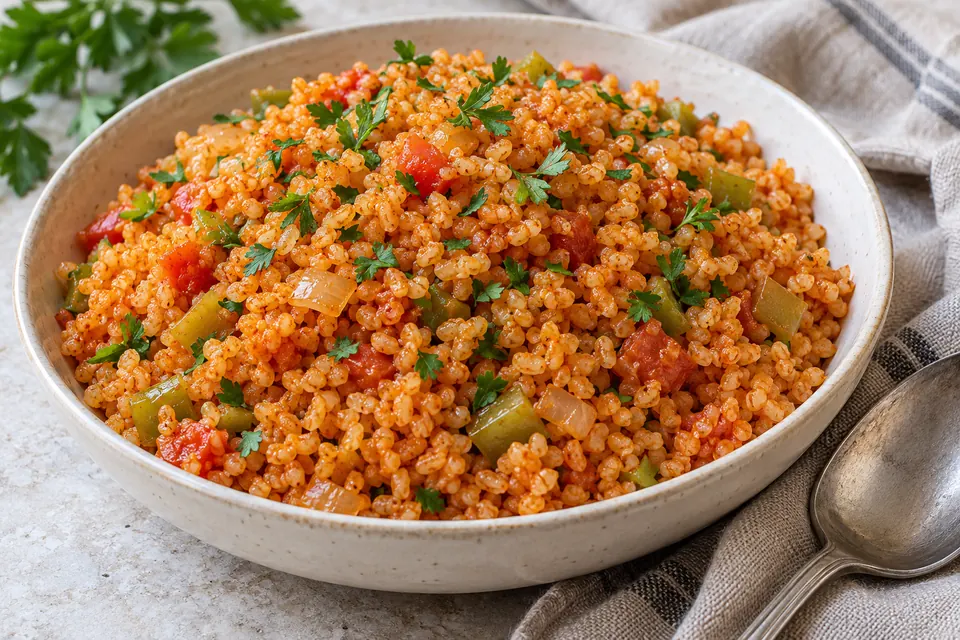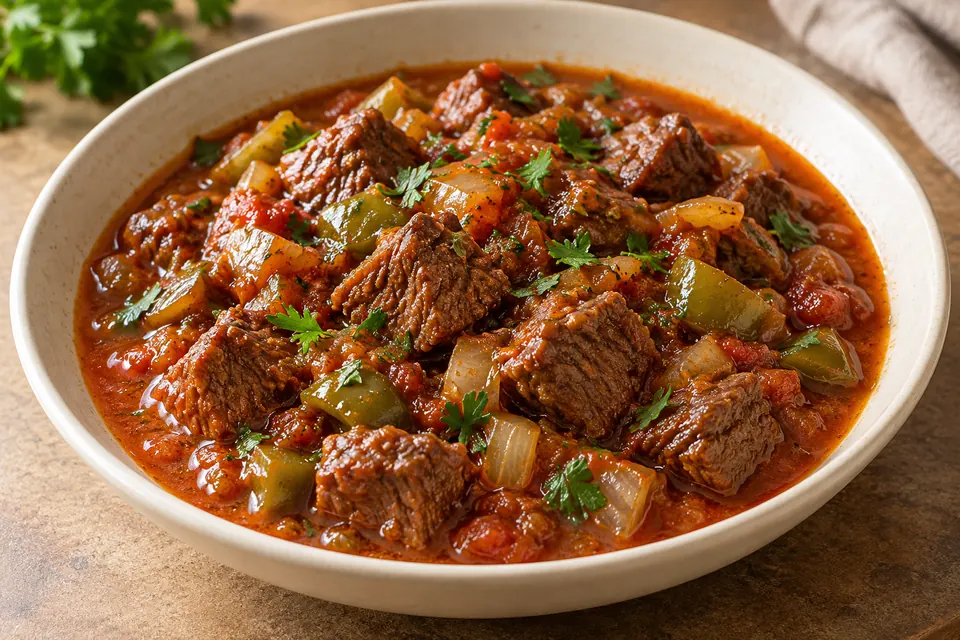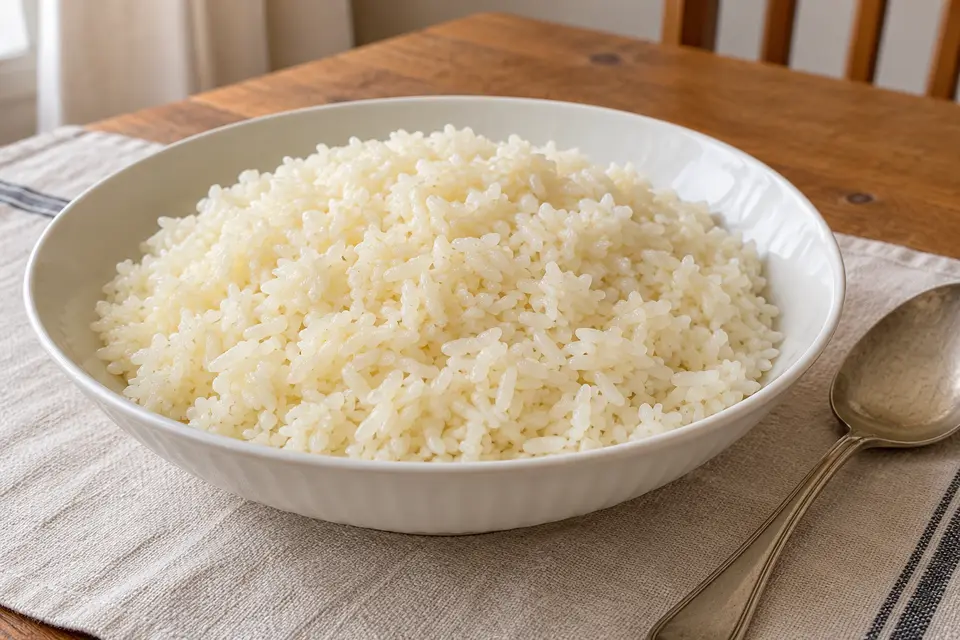
Turkish pilaf can be plain or enriched with toasted şehriye, chickpeas, vegetables, meat, nuts or spices. The Ministry of Culture and Tourism highlights simple white pilaf with tomato-based kuru fasulye as a particularly familiar pairing. This recipe presents the plain, butter-forward everyday version so the rice remains useful beside stews, meatballs, chicken or vegetable dishes. Baldo rice is traditional for its plump, tender grain; liquid needs can vary slightly by variety and brand.
Pirinç Pilavı — Recipe Card
Turkish buttered rice pilaf with separate, tender grains
Makes 4 servings · Makes about 600 g (21 oz), enough for 4 side-dish portions.US cup = 240 ml · tablespoon = 15 ml · teaspoon = 5 ml. Cup and weight conversions are approximate. Australian cooks: use a 15 ml measuring tablespoon.
Ingredient quantities and servings are scaled. Cooking times, pan sizes, frying oil depth, and temperatures stay the same; cook larger batches as needed.
Ingredients
How to make Pirinç Pilavı
Rinse and soak the rice
Put the rice in a bowl and rinse twice with cool water. Cover with the 720 ml (3 cups) warm water and stir in 5 g (about 3/4 tsp) of the salt. Leave for 20 minutes; the grains should swell slightly but remain firm.
Drain thoroughly
Tip the rice into a fine-mesh sieve. Rinse under cool running water, turning the grains gently with your fingers, until the water is nearly clear. Let it drain for 5 minutes and shake off the last droplets; excess water would change the measured cooking ratio.
Coat the grains
Melt the butter with the olive oil in a heavy 18–20 cm (7–8 in) saucepan over medium heat. Add the drained rice and fold gently for 2–3 minutes. Stop when the grains are glossy and their edges look a little translucent; do not brown or break them.
Add the measured water
Pour in the 330 ml (1 3/8 cups) just-boiled water and add the remaining 3 g (about 1/2 tsp) salt. Stir once to distribute the rice. Bring back to a steady simmer, then immediately cover and reduce the heat to its lowest setting.
Cook without lifting the lid
Cook for 12–15 minutes without stirring or opening the pot. At the end, the liquid should be absorbed, small steam holes should mark the surface, and a grain from the edge should be tender with no chalky center. If liquid remains, cover and cook 2 minutes more.
Rest, fluff and serve
Remove the pan from the heat and leave it covered for 10 minutes. Lift the lid away from the rice so condensed water does not drip back. Fluff gently from the edges toward the center with a fork and serve hot.
Bring this recipe to your kitchen with a printable copy.
Print recipeRecipe from MyTurkishRecipes · https://myturkishrecipes.com/turkish-buttered-rice-pilaf-pirinc-pilavi. Quantities reflect your selected serving scale. Cooking times are estimates; follow the doneness cues.
A few helpful kitchen notes
Rice choice
Baldo rice gives a plump Turkish-style pilaf. Osmancık or another medium-grain white rice can be used, but absorption varies; begin with the stated water and add 15–30 ml (1–2 tbsp) boiling water only if the grains remain firm after the liquid is absorbed.
Şehriye variation
For şehriyeli pilav, toast 30 g (1 oz) orzo in the butter and oil until deep gold before adding the rice. Reduce the rice to 170 g (6 oz) and keep the cooking water at 330 ml (1 3/8 cups). Ordinary orzo contains wheat, so this variation is not gluten-free unless an appropriate gluten-free product is used.
Dietary notes
The base recipe is vegetarian and uses no wheat ingredients. For a gluten-free serving, use rice and any packaged seasonings that are labelled gluten-free when required, and prevent cross-contact; the label does not imply certification or suitability for every person with coeliac disease. Butter contains milk.
Heat level
No added chili. The base pilaf is gently seasoned with salt only. If serving with a spicy stew or meze, keep the rice plain so it balances the meal.
How to store and reheat Pirinç Pilavı
Serve promptly or keep hot at 60°C (140°F) or above. For leftovers, transfer the rice to a shallow container and refrigerate within 2 hours, or within 1 hour above 32°C (90°F), at 4°C (40°F) or colder. Use within 3 days. Reheat only the portion needed to 74°C (165°F) throughout, adding 15 ml (1 tbsp) water per cup of rice and keeping it covered. Discard rice that has remained at room temperature beyond those limits.
Pirinç Pilavı: questions and answers
Why did my pilaf turn sticky?
The most common causes are insufficient rinsing, rice that was still wet when measured cooking water was added, too much liquid, or stirring during simmering. Drain well, measure the 330 ml water accurately and leave the covered pot undisturbed.
Can I use chicken stock instead of water?
Yes, replace all 330 ml (1 3/8 cups) cooking water with hot chicken stock. Use low-sodium stock and reduce or omit the 3 g cooking salt after tasting the stock. The result is no longer vegetarian; check the stock label for gluten if needed.
Can I skip soaking the rice?
Soaking helps Baldo rice hydrate evenly and releases surface starch. If you skip it, rinse very thoroughly and expect the grains to need a little more cooking time; do not automatically add extra water until you check the texture at the end.
What should finished Pirinç Pilavı look like?
The grains should be tender, glossy and distinct rather than dry, crunchy or creamy. A fork should lift them apart easily after the 10-minute rest, with no free water at the bottom of the pot.