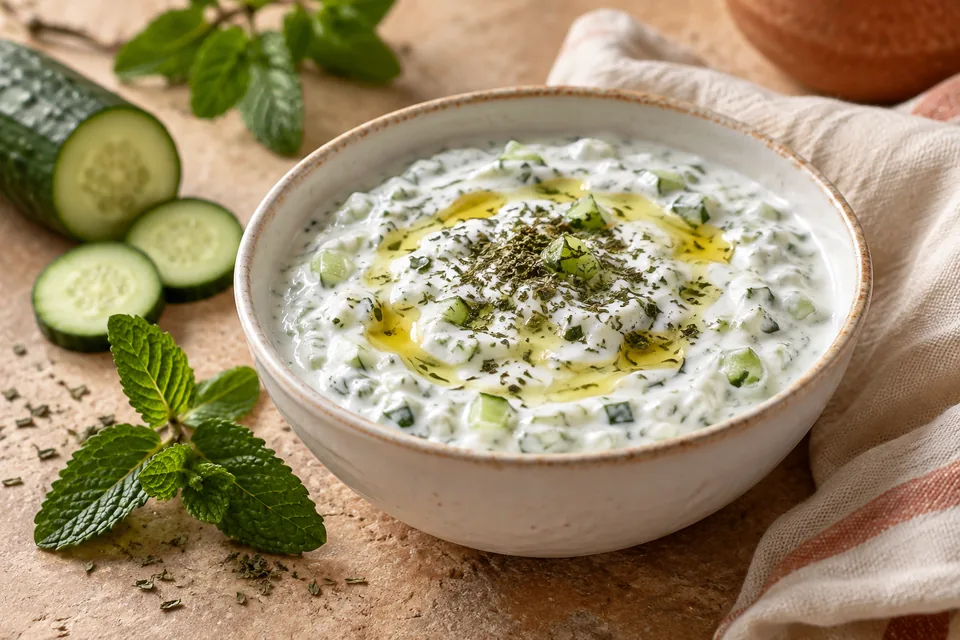
There is no single household formula for haydari. Strained yogurt, garlic and herbs form the core; some versions add Turkish brined white cheese, while others use mint warmed in butter. This recipe combines both familiar approaches in moderate amounts, keeping yogurt—not cheese—the main flavor. It is a general Turkish meze recipe and does not claim one regional origin.
Haydari — Recipe Card
Thick Turkish yogurt and white-cheese meze with dill and mint
Makes 6 servings · Makes 6 small meze portions. If the yogurt needs draining, allow an additional 30–60 minutes in the refrigerator before measuring it.US cup = 240 ml · tablespoon = 15 ml · teaspoon = 5 ml. Cup and weight conversions are approximate. Australian cooks: use a 15 ml measuring tablespoon.
Ingredient quantities and servings are scaled. Cooking times, pan sizes, frying oil depth, and temperatures stay the same; cook larger batches as needed.
Ingredients
How to make Haydari
Check the yogurt
The yogurt must be thick and spoonable. If liquid whey is visible, line a fine sieve with clean cheesecloth or sturdy paper towel, set it over a bowl, add the yogurt and drain in the refrigerator for 30–60 minutes. Measure 400 g (14.1 oz) after draining. Keep it chilled; do not strain dairy on the counter.
Make the yogurt base
Mash the white cheese very finely in a mixing bowl. Add the cold strained yogurt, grated garlic and chopped dill. Stir until evenly combined but still thick. Taste before adding salt; add up to 1 g (⅛ tsp) only if the cheese and yogurt need it.
Bloom the mint
Melt the butter in a small pan over low heat. Remove it from the heat, stir in the dried mint and let it foam gently for about 15 seconds. Cool for 2–3 minutes until warm rather than hot; hot butter can loosen or split the yogurt.
Combine and chill
Fold the warm mint butter into the yogurt mixture until no oily streaks remain. Cover and refrigerate for 30 minutes so the dip firms and the garlic and herbs settle into the yogurt. Keep the dip at 4°C (40°F) or below.
Plate and finish
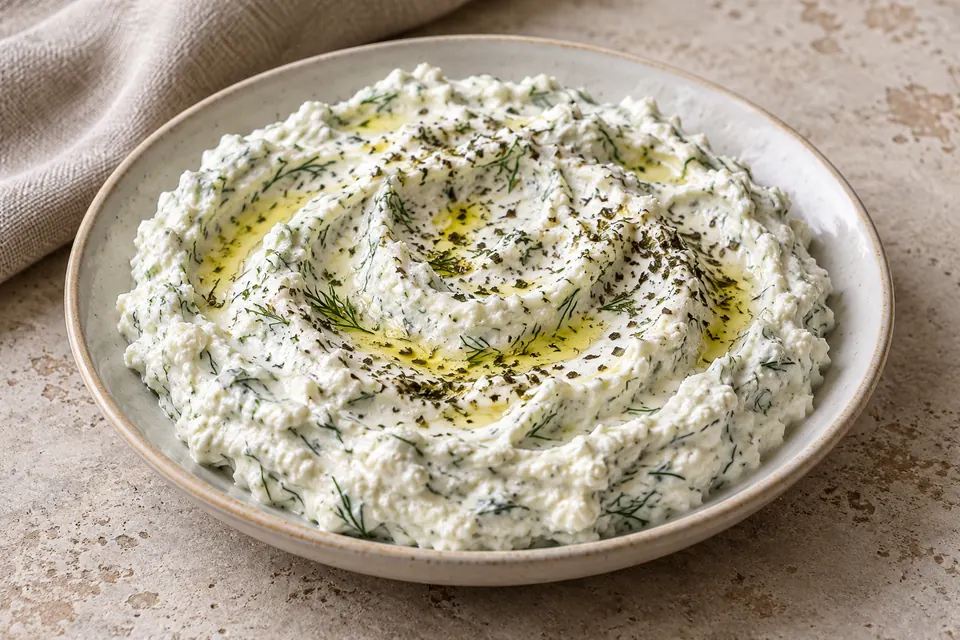
Spoon onto a shallow plate and make broad swirls that hold their shape. Drizzle with the olive oil. Serve cold in small portions, returning unused haydari promptly to the refrigerator rather than leaving the full bowl on the table.
Bring this recipe to your kitchen with a printable copy.
Print recipeRecipe from MyTurkishRecipes · https://myturkishrecipes.com/turkish-yogurt-and-herb-dip-haydari. Quantities reflect your selected serving scale. Cooking times are estimates; follow the doneness cues.
A few helpful kitchen notes
Texture and substitutions
Haydari should be much thicker than a pourable yogurt sauce and contains no cucumber. Turkish süzme yoğurt is ideal; a firm full-fat Greek-style yogurt is a practical substitute. Labneh can be saltier and denser, so it is not a direct one-for-one substitute with the same cheese and salt amounts.
Cheese and salt
Turkish brined white cheese gives the most appropriate flavor; pasteurized feta is a practical alternative. Saltiness varies, so mash the cheese finely and taste the mixed dip before using the optional salt. Do not replace the cheese with cream cheese, which changes both flavor and texture.
Dietary notes
The specified recipe is vegetarian and uses pasteurized dairy. It contains milk. It has no wheat ingredient; for a gluten-free serving, use products labelled gluten-free where needed and avoid cross-contact. Ordinary flatbread is not gluten-free, so choose a suitable accompaniment if required.
Heat level
No added chili; this haydari is mild, garlicky and herby. For a warmer individual portion, sprinkle up to ¼ tsp pul biber over that serving. Check the pepper for added ingredients if gluten-free status matters.
How to store and reheat Haydari
Keep covered in the refrigerator at 4°C (40°F) or below and use within 3 days. Stir briefly before serving; a small amount of separated whey can be folded back in. Do not freeze, because thawing can make the yogurt grainy and watery. Discard haydari left at room temperature for more than 2 hours, or more than 1 hour above 32°C (90°F).
Haydari: questions and answers
Why is my haydari runny?
The yogurt was too loose, the mint butter was added while hot, or extra liquid entered the mixture. Drain the yogurt before measuring and let the butter cool until merely warm. Do not add water or cucumber.
Is haydari the same as cacık?
No. Both can contain yogurt, garlic and herbs, but cacık includes cucumber and may be loosened with water. Haydari is cucumber-free, richer and thick enough to spread.
Can I prepare it ahead?
Yes. Make it earlier the same day and keep it covered and refrigerated. Garlic becomes stronger as it rests, so do not increase the stated amount for a long chill. Add the olive-oil finish just before serving.