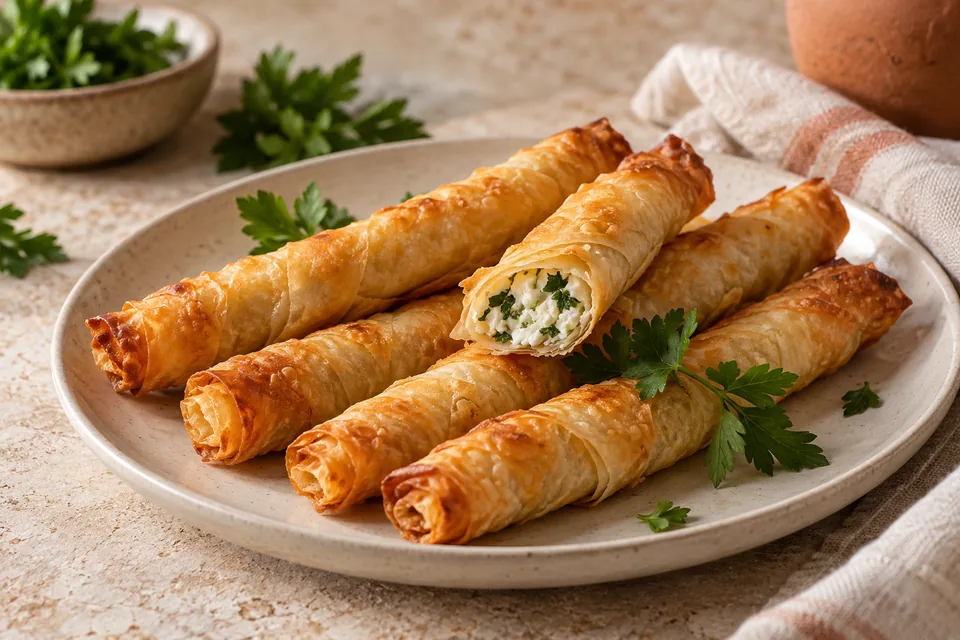
Turkish yufka is the easiest pastry to use here, particularly the packs sold as triangles for börek. It is sturdier than many supermarket filo sheets. Filo can work, but the thinner sheets need careful handling and a different fold; the notes below explain the adaptation.
Sigara Böreği — Recipe Card
Crisp cheese & parsley pastry rolls
Makes 4 servings · 16 rollsUS cup = 240 ml · tablespoon = 15 ml · teaspoon = 5 ml. Cup and weight conversions are approximate. Australian cooks: use a 15 ml measuring tablespoon.
Ingredient quantities and servings are scaled. Cooking times, pan sizes, frying oil depth, and temperatures stay the same; cook larger batches as needed.
Ingredients
How to make Sigara Böreği
Mix the filling
Crumble the drained cheese into a bowl. Stir in the parsley and black pepper. Taste before adding salt: brined cheese is often salty enough on its own.
Roll the börek
Lay one yufka triangle on the worktop with the wide edge nearest you. Place about a tablespoon of filling in a short line near that edge, leaving space at each side. Fold the sides inward, then roll toward the point, keeping the pastry snug without pulling it tight.
Seal the tip
Dip the last 2 cm / ¾ inch of the point into water and press it against the roll to seal. Place seam-side down. Repeat with the remaining pastry and filling. Cover unused pastry with a barely damp clean towel so it does not dry out.
Fry in batches
Heat the oil in a deep, heavy frying pan to 175°C / 350°F. Carefully add a few rolls without crowding. Fry for 3–4 minutes, turning with tongs, until evenly golden. Adjust the heat between batches. Drain on a wire rack or paper towels and serve warm.
Bring this recipe to your kitchen with a printable copy.
Print recipeRecipe from MyTurkishRecipes · https://myturkishrecipes.com/turkish-cheese-pastry-rolls-sigara-boregi. Quantities reflect your selected serving scale. Cooking times are estimates; follow the doneness cues.
Make it work in your kitchen
Ingredient Substitutions
These swaps change flavor or texture as described. Keep the original ingredients for the closest version of the dish.
Yufka
For rolled börek, use two thin sheets of thawed filo per roll, cut to a similar size. Keep unused sheets covered with a slightly damp towel. Filo is more brittle and produces a flakier shell; try one roll before shaping the full batch.
Turkish white cheese
Use the same weight of firm feta, well drained. Taste before adding salt: feta varies in saltiness. The filling may be tangier and slightly drier.
A few helpful kitchen notes
Using filo instead of yufka
Use 8 large filo sheets. Stack 2 sheets at a time and cut each stack into 4 rectangles, making 16 double-layer wrappers. Fill one short end, tuck in the sides and roll. Seal the end with a thin paste of flour and water. Wrapper dimensions vary by brand, so keep the filling modest.
For a vegetarian table
Check that the cheese is made with vegetarian or microbial rennet. Cheese made with animal rennet is not suitable for a vegetarian diet.
Oil temperature matters
Cool oil makes the pastry absorb more oil; very hot oil browns it before the center warms. Use a thermometer and let the oil recover between batches.
How to store and reheat Sigara Böreği
The rolls are crispest freshly fried. Refrigerate leftovers promptly and use within 2 days. Reheat in a hot oven until the center reaches 74°C / 165°F. For make-ahead prep, freeze uncooked rolls in a single layer, then transfer to a sealed container; thaw in the fridge before frying.
Sigara Böreği: questions and answers
Can I use feta?
Yes. Choose a firm block of feta and drain it well. Very soft or wet cheese can leak during frying.
Why are my rolls splitting?
Too much filling, wet cheese, damaged pastry or rolling too tightly can all cause splitting. Leave a little room for the filling and seal the final edge carefully.
Are these the same as spring rolls?
The shape is similar, but these use yufka or an adapted filo wrapper with a Turkish white-cheese-and-parsley filling.