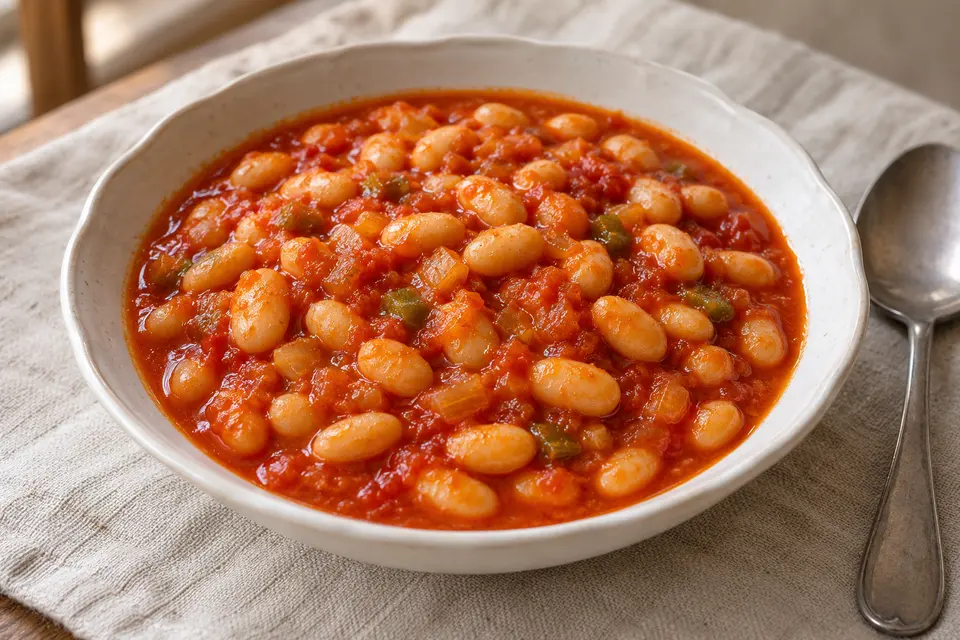
Versions of kuru fasulye are cooked across Türkiye, especially in cooler weather. The Ministry of Culture and Tourism records meat, pastırma and meatless preparations, while GoTürkiye describes the familiar dish as pale beans stewed in tomato gravy and notes its place in everyday bean restaurants. The recipe here is the equally established olive-oil, plant-based style; it is not the registered meat-and-butter Çayeli regional version.
Kuru Fasulye — Recipe Card
Turkish white bean stew in a tomato and pepper-paste sauce
Makes 6 servings · Serves 6 as a main dish.US cup = 240 ml · tablespoon = 15 ml · teaspoon = 5 ml. Cup and weight conversions are approximate. Australian cooks: use a 15 ml measuring tablespoon.
Ingredient quantities and servings are scaled. Cooking times, pan sizes, frying oil depth, and temperatures stay the same; cook larger batches as needed.
Ingredients
How to make Kuru Fasulye
Soak the beans
Put the sorted beans in a large bowl, cover with the cold soaking water and refrigerate for 8–12 hours. Drain, rinse under cold running water and discard the soaking liquid.
Pre-boil safely
Transfer the beans to a large saucepan and add the fresh water. Bring to a vigorous boil uncovered and keep it boiling for 10 minutes. Reduce only enough to prevent boil-over and continue cooking for 20 minutes, so the beans have boiled for 30 minutes in total. Drain; they should still be firm in the center.
Build the aromatic base
Heat the olive oil in a heavy pot over medium heat. Add the onion and mild green pepper and cook for 8–10 minutes, stirring often, until soft and translucent without deep browning.
Cook the pastes
Stir in the tomato paste and mild pepper paste. Cook for 2 minutes, stirring continuously, until the pastes darken slightly and coat the vegetables.
Simmer the stew
Add the pre-boiled beans and hot water. Bring to a boil, then lower the heat and simmer partially covered for 45–60 minutes. Stir gently every 10–15 minutes and add a little more hot water if the beans rise above the liquid. Stop when the beans are fully tender and creamy inside but mostly hold their shape, and the sauce lightly coats a spoon.
Season and rest
Stir in the salt and black pepper during the final 10 minutes. Remove from the heat and rest, covered, for 10 minutes so the sauce settles. Taste for salt and serve hot, ideally with rice pilaf and pickles or a chopped salad.
Bring this recipe to your kitchen with a printable copy.
Print recipeRecipe from MyTurkishRecipes · https://myturkishrecipes.com/turkish-white-bean-stew-kuru-fasulye. Quantities reflect your selected serving scale. Cooking times are estimates; follow the doneness cues.
Make it work in your kitchen
Ingredient Substitutions
These swaps change flavor or texture as described. Keep the original ingredients for the closest version of the dish.
Turkish red pepper paste
Use the same quantity of tomato paste, then add mild paprika to taste. This gives a more tomato-forward flavor and will not reproduce the full pepper flavor.
A few helpful kitchen notes
Heat level
Mild, with no added chili. For an even gentler version, replace the mild pepper paste with the same amount of tomato paste. For more heat, add 1 teaspoon pul biber or hot pepper flakes with the pastes.
Bean choice and timing
Small white or cannellini beans work well. Older beans can take longer to soften; keep the simmer gentle and top up only with hot water. Do not cook soaked, uncooked beans solely in a slow cooker.
Dietary notes
This exact recipe is vegan and vegetarian. Its ingredients are naturally wheat-free, but no gluten-free claim is made: check the tomato and pepper-paste labels and your kitchen's cross-contact needs if avoiding gluten.
Traditional variations
Turkish cooks also make kuru fasulye with cubed meat, pastırma or sucuk. Those are distinct variations; this olive-oil version keeps the familiar tomato-based bean stew meatless.
How to store and reheat Kuru Fasulye
Cool in shallow containers and refrigerate within 2 hours. Keep at 4°C/40°F or colder for up to 4 days, or freeze for up to 2 months for best quality. Reheat to 74°C/165°F throughout, adding a splash of water if the sauce has thickened; discard leftovers that have already been reheated once.
Kuru Fasulye: questions and answers
Can I use canned beans?
Yes. Use three 15-ounce cans of white beans, drained and rinsed, skip soaking and pre-boiling, reduce the hot water to 480 ml/2 cups and simmer for about 20 minutes. The flavor will be good, though dried beans give a creamier sauce.
Why are my beans still firm?
Bean age and hard water can lengthen cooking. Continue the gentle simmer and add hot water as needed; do not add extra tomato or other acidic ingredients before the beans soften.
Is Kuru Fasulye always made with meat?
No. Meat, pastırma and sucuk versions are common, but Turkish sources also record meatless preparations. This recipe uses olive oil and no animal products.
What should I serve with it?
Plain rice pilaf is the classic partner. Pickles, raw onion, ayran, cacık or a crisp chopped salad provide a fresh, tangy contrast.