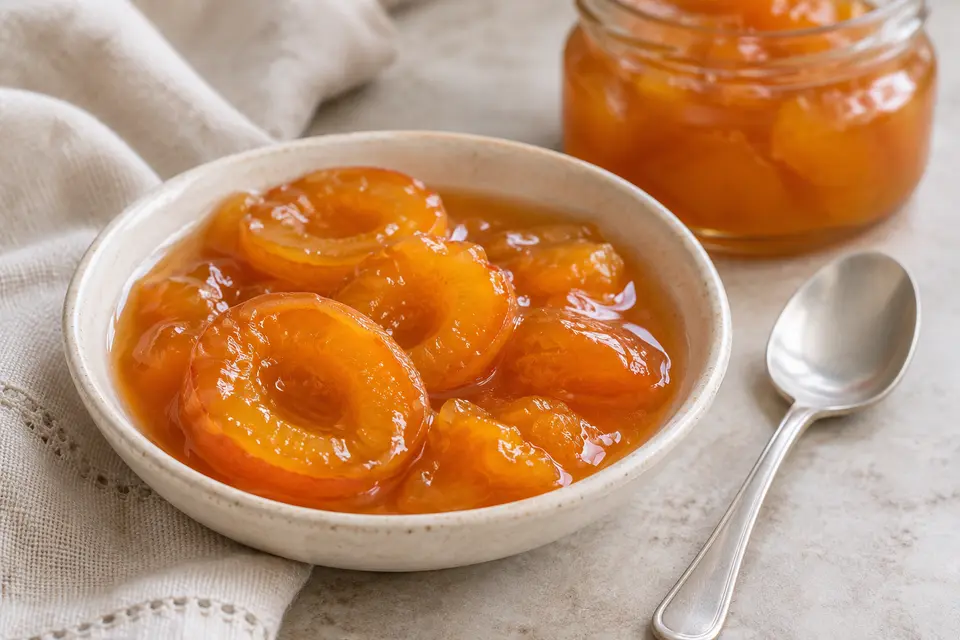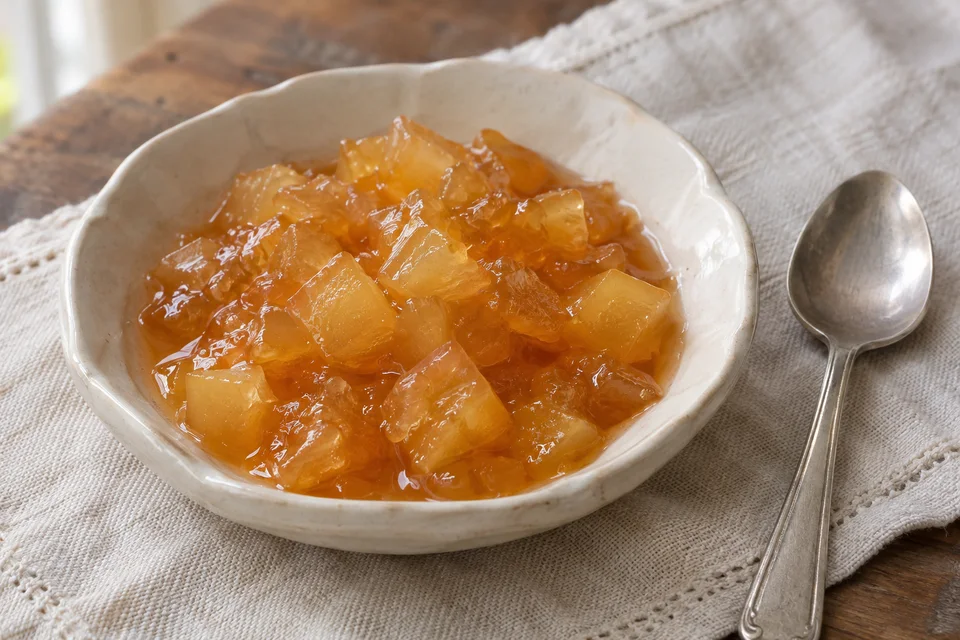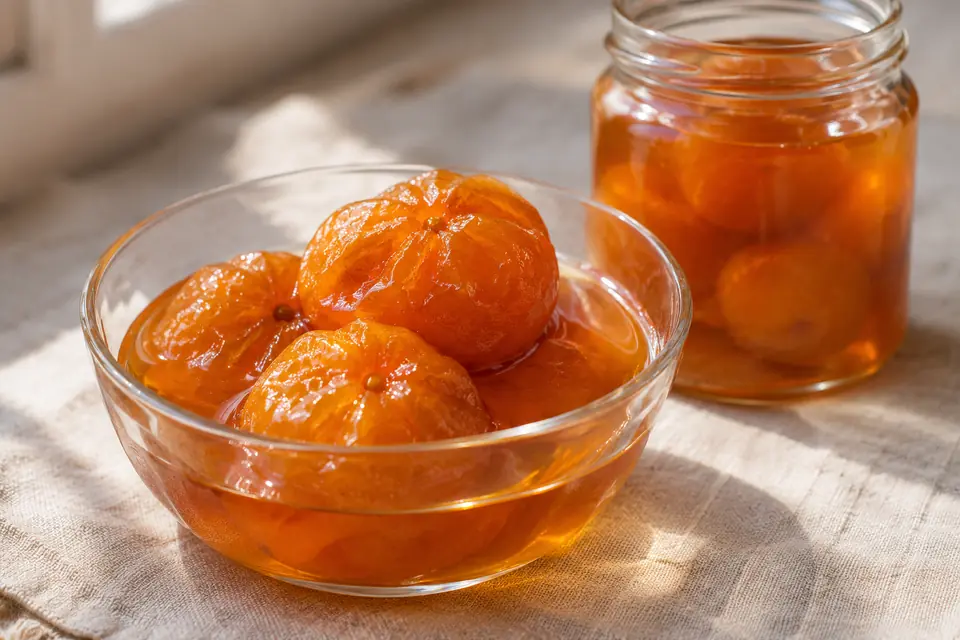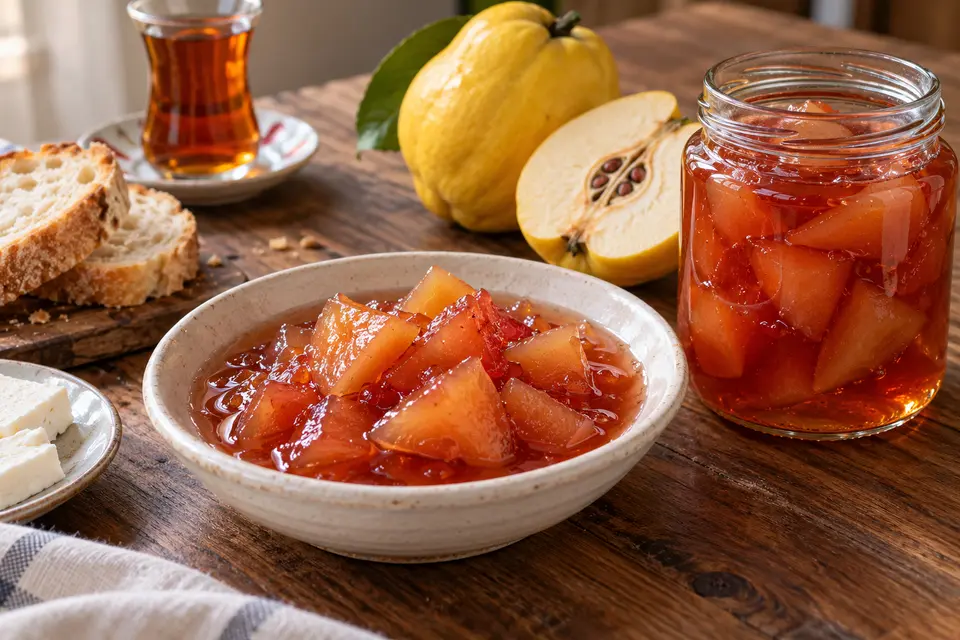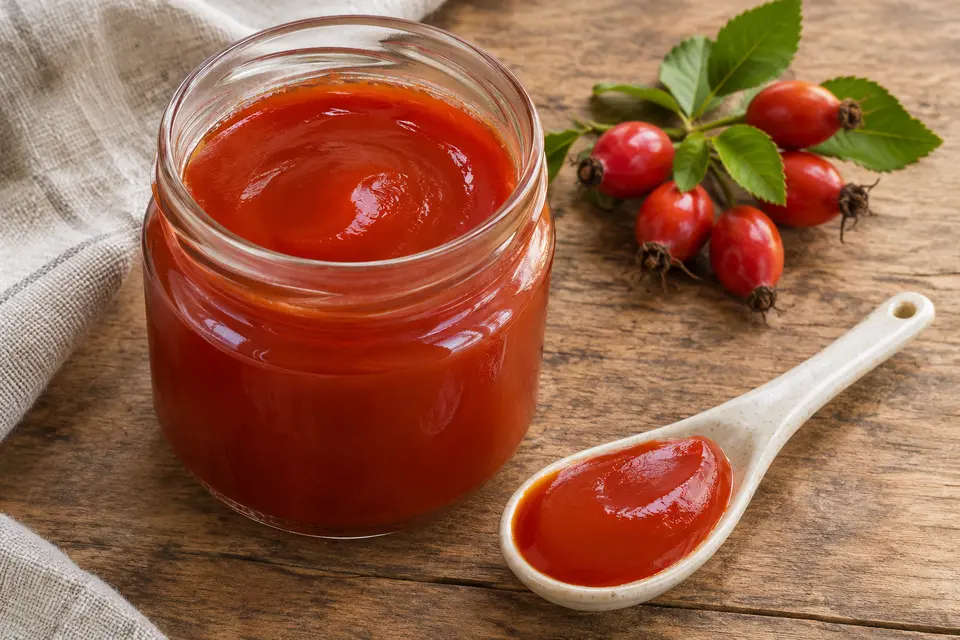
The Turkish Ministry of Culture and Tourism's Culture Portal records this recipe for Bitlis under the local name İtburnu, alongside the widely understood name kuşburnu. Its source formula uses 2 kg rosehips, 1 kg sugar, three water glasses, half a lemon and one dessert spoon of butter. This refrigerator version makes a practical half batch while preserving the defining method: soften the whole fruit, sieve it two or three times, then briefly boil the purée with sugar, lemon and butter.
İtburnu (Kuşburnu) Marmelatı — Recipe Card
Bitlis Rosehip Marmalade
Makes 60 servings · Makes about 900 ml (roughly three 300 ml refrigerator jars); one serving is 1 tablespoon.US cup = 240 ml · tablespoon = 15 ml · teaspoon = 5 ml. Cup and weight conversions are approximate. Australian cooks: use a 15 ml measuring tablespoon.
Ingredient quantities and servings are scaled. Cooking times, pan sizes, frying oil depth, and temperatures stay the same; cook larger batches as needed.
Ingredients
How to make İtburnu (Kuşburnu) Marmelatı
Sort, trim and wash the rosehips
Wash your hands. Sort the rosehips and discard any moldy, fermented, split or badly bruised fruit. Snip off the dark flower ends and stems. Rinse the trimmed fruit thoroughly under cool running water without soap and drain.
Soften the fruit
Put the rosehips and 300 ml (1 1/4 cups) water in a heavy saucepan. Cover, bring to a gentle boil, then lower the heat and simmer for 45–60 minutes, stirring every 10 minutes, until the skins split easily and the fruit crushes with light pressure. If the pan threatens to dry before the fruit softens, add hot water 30 ml (2 tbsp) at a time.
Press out the first purée
Let the fruit cool for 5 minutes. Working while it is still warm, press the rosehips and all remaining cooking liquid through a sturdy medium-mesh sieve or food mill into a clean bowl. Scrape the underside of the sieve and discard the hard seeds and coarse residue left behind.
Fine-sieve twice
Pass the purée through a fine-mesh sieve into a clean bowl, pressing firmly with a flexible spatula. Wash the sieve and repeat once more; use a third pass if you can still see seed fragments or fine hairs. Do not force the final dry, fibrous residue through. You should have a completely smooth, thick reddish purée.
Dissolve the sugar
Return the sieved purée to the cleaned saucepan and add the sugar. Heat over medium-low, stirring and scraping the base continuously until the sugar dissolves and the mixture becomes fluid. Increase to medium and bring it to a steady boil, stirring frequently to prevent scorching.
Finish the marmalade
As soon as the purée boils steadily, stir in the lemon juice and butter. Boil for 5 minutes, stirring continuously and lowering the heat if it spits. Put a teaspoon on a chilled plate and wait 30 seconds: it should hold a soft mound but still spread easily. If it runs like juice, boil for 1–2 minutes more and test again; do not overcook because it thickens as it cools.
Fill, cool and refrigerate
Spoon the hot marmalade into clean heatproof jars, leaving about 1 cm (3/8 inch) at the top, and close the lids. Let the jars cool for no longer than 2 hours, then refrigerate at 4°C/40°F or below. This is a refrigerator preserve, not a tested room-temperature canning process.
Bring this recipe to your kitchen with a printable copy.
Print recipeRecipe from MyTurkishRecipes · https://myturkishrecipes.com/turkish-rosehip-marmalade-itburnu-marmelati. Quantities reflect your selected serving scale. Cooking times are estimates; follow the doneness cues.
A few helpful kitchen notes
Regional scale
The Bitlis source gives 2 kg rosehips, 1 kg sugar, three water glasses, half a lemon and one dessert spoon of butter. This recipe is a half batch; it interprets the original three Turkish water glasses as about 600 ml before scaling, while the 240 ml US cup remains the site's standard.
Sieve carefully
Rosehips contain many hard seeds surrounded by fine hairs that should not remain in the finished spread. Press the cooked fruit rather than blending it, clean the sieve between passes, and stop pressing when only dry, fibrous residue remains.
Consistency
The spread should be softer than a firmly set jelly. It thickens markedly as it cools, so use the chilled-plate test and stop while it is still easily spreadable. A wide, heavy pan and constant stirring reduce scorching.
Refrigerator preserve
Hot filling alone does not make this untested regional recipe shelf-stable. Keep every jar refrigerated and use within 3 weeks. Use a clean spoon and discard the entire jar if you see mold, unexpected bubbling, or notice a yeasty, alcoholic or otherwise off odor.
Dietary notes
The traditional butter means this version is vegetarian, not vegan. The listed ingredients contain no gluten, but the label describes ingredients only and does not guarantee certification or freedom from cross-contact.
How to store and reheat İtburnu (Kuşburnu) Marmelatı
Cool the closed jars for no longer than 2 hours, then refrigerate at 4°C/40°F or below. Use within 3 weeks and return the jar promptly to the refrigerator after serving. Always use a clean spoon. Discard the entire jar if mold, unexpected bubbling, a yeasty or alcoholic odor, or any other sign of spoilage appears. Do not store this batch at room temperature.
İtburnu (Kuşburnu) Marmelatı: questions and answers
Can I make this with dried rosehips?
Not with the same quantities and method. Dried rosehips absorb water differently and may already be split or deseeded, so they require a separately developed formula.
Why must the purée be sieved more than once?
The first pass removes the seeds and coarse skins; the fine passes catch the small fragments and irritating inner hairs. A visibly smooth purée is essential to the characteristic texture.
Can I omit the butter?
The Bitlis source includes butter, and this scaled version keeps it. It helps tame surface foam and adds a slight gloss. Omitting it would make a vegan variation, but that variation is not the exact base recipe presented here.
Can I keep the jars in the pantry?
No. These instructions do not include a laboratory-tested canning process. Refrigerate the jars, or use a separately tested rosehip preserve recipe with its exact acidity, jar size, processing time and altitude adjustment.