The Turkish Ministry of Culture and Tourism’s Bitlis recipe records apricots, sugar, lemon and a small amount of butter, with the sugared fruit left for a day before cooking. This small batch follows that combination and fruit-to-sugar ratio. The fruit rests in the refrigerator, and the finished preserve is kept chilled rather than treated as a pantry preserve.
Kayısı Reçeli — Recipe Card
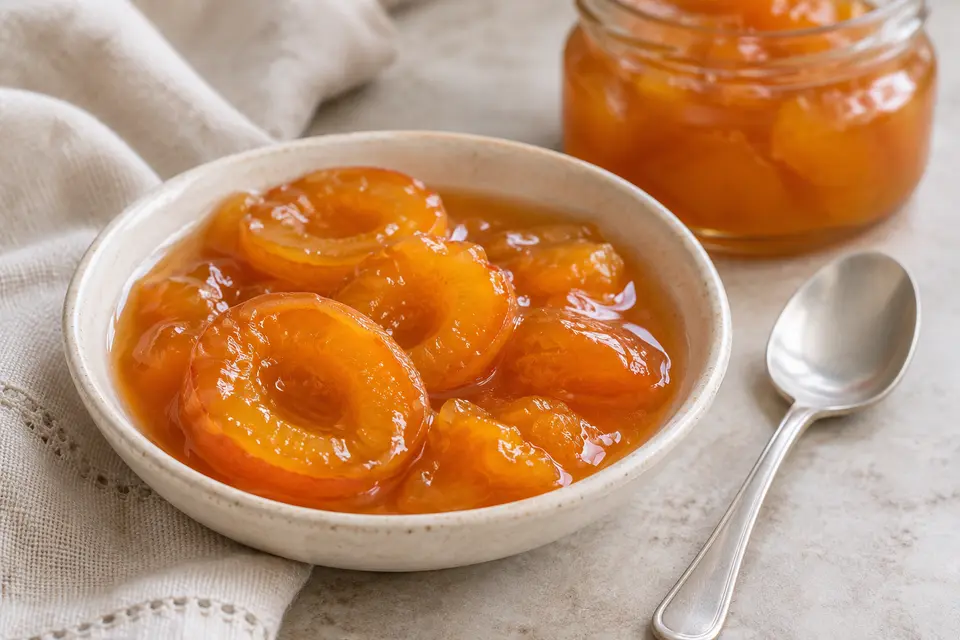
Turkish apricot preserves with tender fruit in golden syrup
Makes 30 servings · Makes about 750–800 g (26–28 oz): approximately 30 small servings of 25 g. Yield varies with fruit juiciness and evaporation.US cup = 240 ml · tablespoon = 15 ml · teaspoon = 5 ml. Cup and weight conversions are approximate. Australian cooks: use a 15 ml measuring tablespoon.
Ingredient quantities and servings are scaled. Cooking times, pan sizes, frying oil depth, and temperatures stay the same; cook larger batches as needed.
Ingredients
How to make Kayısı Reçeli
Prepare the apricots
Wash the apricots under running water and drain. Halve them, discard the pits and weigh 500 g (17.6 oz) of prepared fruit. Leave the skins on; cut any especially large halves once more. Use sound fruit without mold or damaged patches.
Let the sugar draw out the juice
Layer the apricots and sugar in a clean, nonreactive container. Cover and refrigerate at 4°C (40°F) or below for 24 hours, gently turning the fruit once about halfway through. The sugar should draw out enough juice to form a syrup around the fruit. Add no water.
Dissolve the sugar gently
Transfer the fruit, all its juice and any undissolved sugar to a heavy-based, nonreactive saucepan about 20 cm (8 inches) across. Warm over low heat for about 10 minutes, gently moving the fruit with a spatula or swirling the pan, until the sugar has dissolved. Do not let a dry patch of sugar scorch.
Simmer briefly
Bring to a steady simmer, then add the lemon juice and butter. Simmer uncovered for another 5–10 minutes, swirling gently, until the fruit is tender and the syrup lightly coats a cooled spoon. Some pieces will soften more than others. Total cooking is usually 15–20 minutes; aim for spoonable fruit and syrup, not a firm gel. Skim off any remaining surface foam.
Cool briefly, then refrigerate
Remove from the heat and divide carefully among small, clean, heatproof storage containers. Protect loosely while the steam subsides, allowing about 30 minutes for initial cooling, then cover and refrigerate promptly. Refrigerate within 2 hours of finishing, or within 1 hour if the room is above 32°C (90°F); do not wait for the preserve to become fully cold on the counter.
Serve chilled
Let the preserve finish cooling in the refrigerator, allowing about another 90 minutes or until fully cold. Spoon a small amount into a serving dish with a clean spoon and return the storage container to the refrigerator promptly. The syrup thickens as it cools but remains spoonable.
Bring this recipe to your kitchen with a printable copy.
Print recipeRecipe from MyTurkishRecipes · https://myturkishrecipes.com/turkish-apricot-preserves-kayisi-receli. Quantities reflect your selected serving scale. Cooking times are estimates; follow the doneness cues.
A few helpful kitchen notes
Choosing the fruit
Use fresh, ripe apricots that still hold their shape. Weigh them after removing the pits. Very soft fruit will break down more and give a softer texture with less distinct pieces.
Keeping the fruit intact
A wide enough pan and gentle movement help the halves keep their shape. A few broken pieces are expected; there is no need to crush the fruit or add pectin.
Dietary notes
Contains milk from the butter. Use plain unsalted butter rather than a flavored spread. Bread, yogurt or other serving accompaniments are separate from this recipe.
Batch size
Keep to the stated small batch for these cooking estimates. Doubling the ingredients changes evaporation and can leave the syrup thinner at the same cooking time.
How to store and reheat Kayısı Reçeli
Keep covered at 4°C (40°F) or below and use within 7 days, always using a clean spoon. For longer storage, freeze in freezer-safe containers with expansion space at −18°C (0°F) for up to 2 months for best quality. Thaw in the refrigerator and use within 7 days. Discard the entire container if mold, fermentation or other spoilage appears. This recipe is for refrigerated or frozen storage, not room-temperature storage.
Kayısı Reçeli: questions and answers
Will this set like a firm jam?
No. This version has tender apricot pieces in syrup, with no added pectin. The syrup becomes thicker when cold, but it should remain spoonable rather than forming a firm jelly.
Can I reduce the sugar?
The stated fruit-to-sugar ratio is part of this recipe. Reducing it changes the syrup, yield and keeping quality; choose a recipe developed for reduced sugar instead of assuming the same method and storage guidance will apply.
Can I keep sealed jars in the pantry?
No. These directions do not include a validated canning process. A lid that seals as it cools does not make this recipe shelf-stable. For pantry storage, follow a separate tested canning recipe exactly.