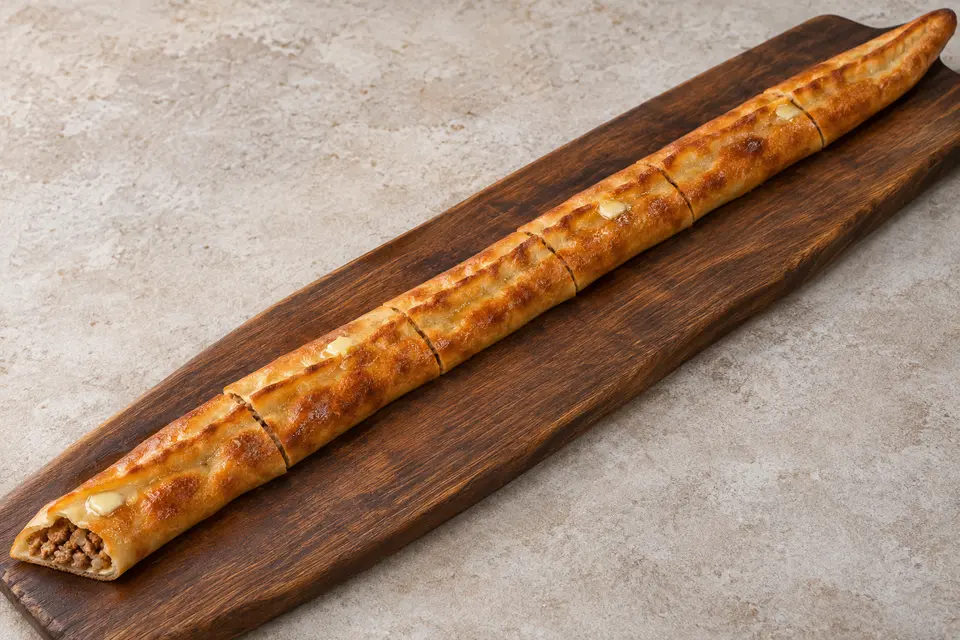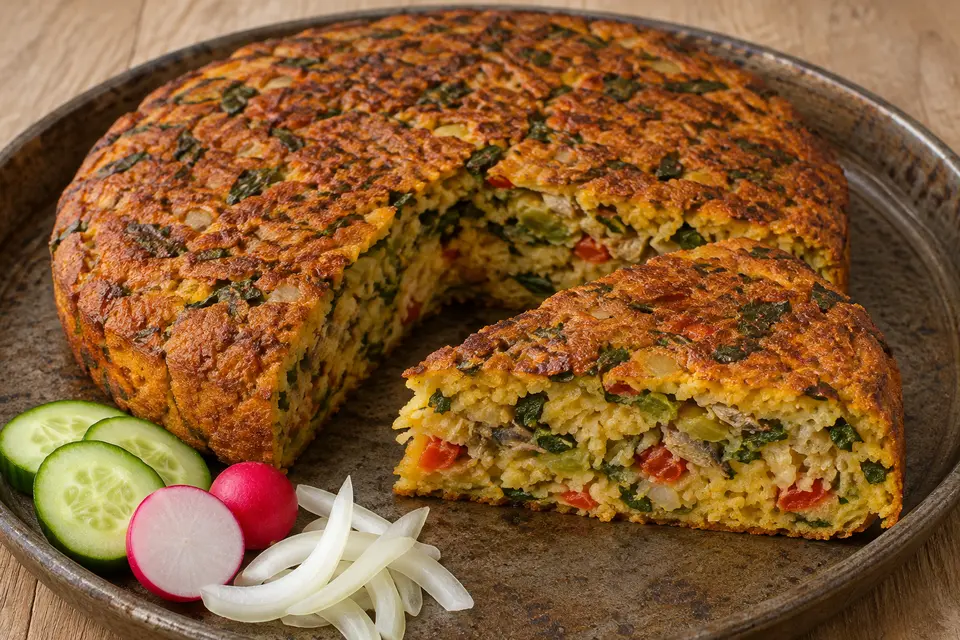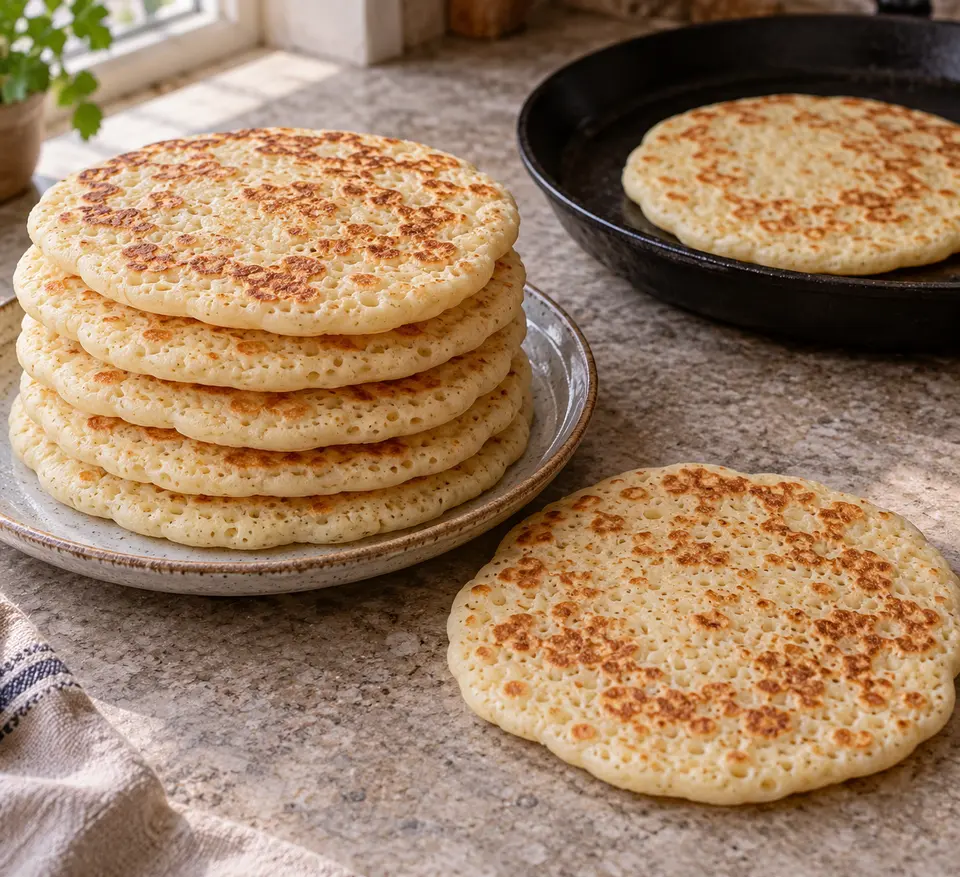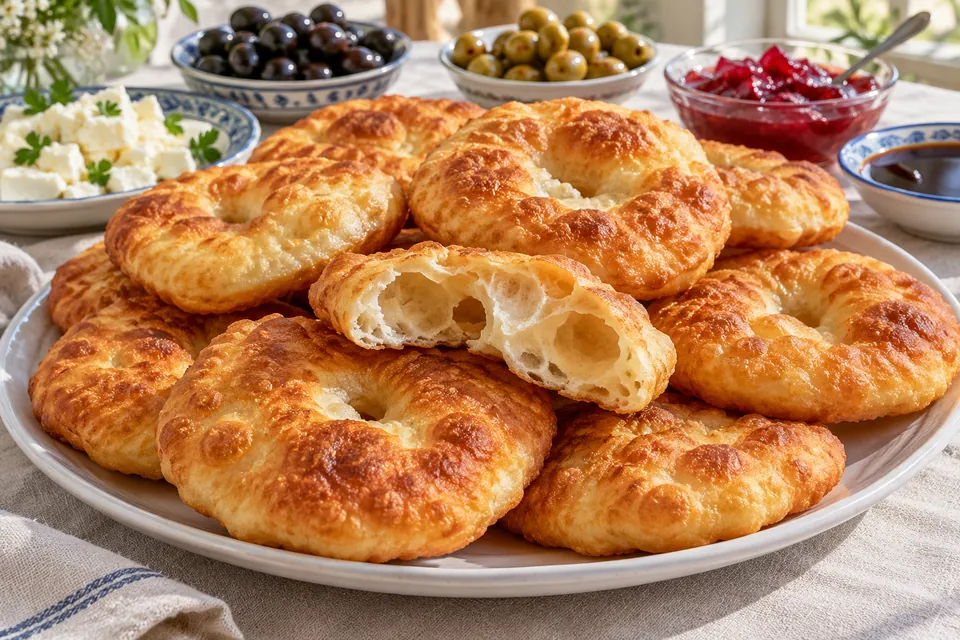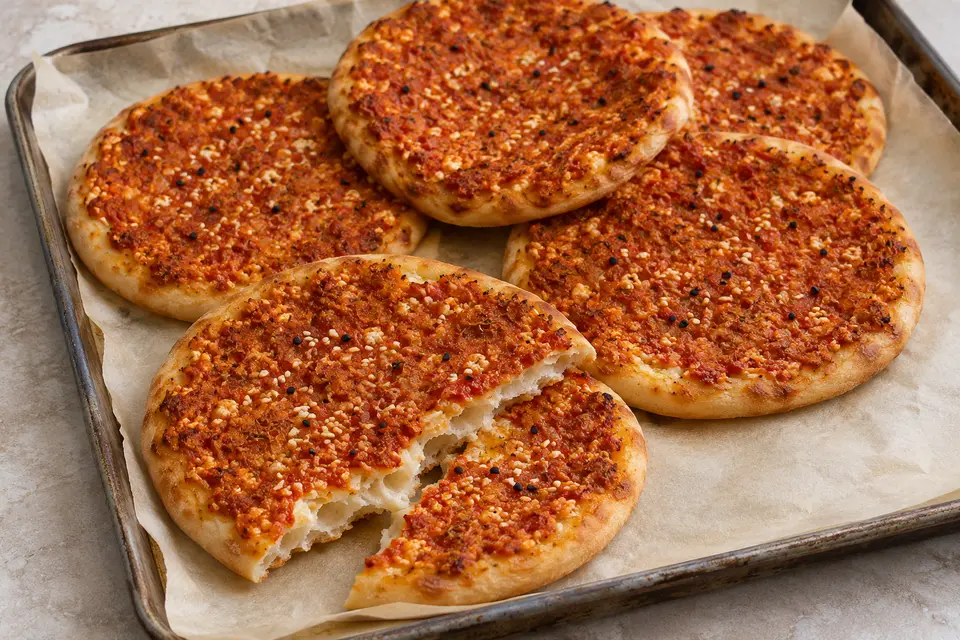
Hatay’s regional culture and tourism office records a topping of fresh çökelek, onion, pepper paste, sesame, nigella and zahter on yeasted dough. Local preparations are baked in ovens or tandırs, and the bread is also known as katıklı or içli ekmek in parts of Hatay. This home-oven version keeps that ingredient combination and provides measured dough and baking instructions.
Biberli Ekmek — Recipe Card
Hatay-style flatbreads with pepper, fresh cheese and seeds
Makes 8 servings · Makes 8 individual round flatbreads, each about 12–13 cm (5 inches) across; one bread per serving.US cup = 240 ml · tablespoon = 15 ml · teaspoon = 5 ml. Cup and weight conversions are approximate. Australian cooks: use a 15 ml measuring tablespoon.
Ingredient quantities and servings are scaled. Cooking times, pan sizes, frying oil depth, and temperatures stay the same; cook larger batches as needed.
Ingredients
How to make Biberli Ekmek
Mix and knead the dough
Mix the flour, instant yeast and salt in a bowl. Add the water, lukewarm at about 30–35°C (86–95°F), and 15 ml (1 tablespoon) of the olive oil. Mix, then knead for 8–10 minutes until smooth, soft and only slightly tacky. Do not taste raw dough.
Let it rise
Place the dough in a clean bowl and cover. Leave in a comfortably warm place for about 60 minutes, until nearly doubled in volume. The dough’s appearance matters more than the clock. Prepare the topping during this rise.
Mix the topping
Rub the drained çökelek, finely chopped onion, mild pepper paste, sesame, nigella, zahter or thyme, and 30 ml (2 tablespoons) of the olive oil together until evenly combined. The mixture should be spreadable without a pool of liquid. Keep covered in the refrigerator until shaping; no extra salt is needed in this topping.
Divide and relax
Set two oven racks in the upper and lower thirds and heat a conventional oven to 220°C (425°F). Line two baking sheets, about 30 × 40 cm (12 × 16 inches), with baking parchment suitable for that temperature. Divide the risen dough into 8 equal pieces, about 83 g each. Round into balls, cover and let relax for 10 minutes.
Shape and top
Use a little of the remaining 15 ml (1 tablespoon) oil on your fingers and the work surface. Press each ball into a 12–13 cm (5-inch) round, roughly 5–6 mm (¼ inch) thick, placing 4 on each sheet with gaps between them. Divide the topping evenly among the 8 rounds and press gently into a thin layer, leaving a narrow rim. Drizzle with any oil left from shaping. Let stand for 15 minutes, lightly covered, until slightly puffy.
Bake until the bases are done
Bake both sheets for 18–22 minutes, swapping upper and lower positions and turning the sheets front to back halfway through. The rims and undersides should be golden, the topping lightly toasted, and the bread crumb set rather than wet or doughy. Give pale or underbaked breads a little longer, watching the seeds closely.
Cool briefly and serve
Transfer to racks and let stand for 5 minutes. Serve warm as individual breads, or tear into smaller pieces at the table. Keep any remaining cheese-topped breads refrigerated as directed below.
Bring this recipe to your kitchen with a printable copy.
Print recipeRecipe from MyTurkishRecipes · https://myturkishrecipes.com/turkish-pepper-flatbreads-biberli-ekmek. Quantities reflect your selected serving scale. Cooking times are estimates; follow the doneness cues.
Make it work in your kitchen
Ingredient Substitutions
These swaps change flavor or texture as described. Keep the original ingredients for the closest version of the dish.
Turkish red pepper paste
Use the same quantity of tomato paste, then add mild paprika to taste. This gives a more tomato-forward flavor and will not reproduce the full pepper flavor.
A few helpful kitchen notes
Heat level
Mild: the base uses sweet, mild acısız red pepper paste without added hot chili. For a hotter batch, replace 25 g of the mild paste with 25 g hot red pepper paste. Heat varies by brand; keep the total paste weight at 50 g.
Dietary notes
Contains wheat (gluten), milk and sesame. The base uses acid-set çökelek and is vegetarian. If substituting another cheese, choose one labeled vegetarian. Ordinary wheat flour cannot be replaced one-for-one with a gluten-free flour in this dough.
Cheese and paste
Weigh the cheese after draining. Use thick pepper paste, not a thin pepper sauce; excess liquid can make the centers soggy. The cheese and paste supply salt to the topping, while the measured salt goes into the dough.
Oven and rising times
The stated baking time assumes both sheets bake together. If your oven only fits one sheet, bake in two batches and allow another 18–22 minutes. Rising times vary with room temperature; use the volume and puffiness cues.
How to store and reheat Biberli Ekmek
Refrigerate in covered containers within 2 hours of baking, or within 1 hour if the room is above 32°C (90°F). Keep at 4°C (40°F) or below and use within 3 days. Freeze separated breads at −18°C (0°F) for up to 2 months for best quality. Thaw in the refrigerator. Reheat at 180°C (350°F) until the topping and center reach 74°C (165°F).
Biberli Ekmek: questions and answers
What can replace çökelek?
Use 120 g of well-drained ricotta made from pasteurized milk and labeled vegetarian. It will be milder than çökelek. Drain it before weighing so the topping does not become watery.
Is zahter the same as a za’atar spice blend?
Here, zahter means the dried herb leaves, not a ready-mixed blend containing sesame and sumac. If the herb is unavailable, use the same 1 g (1 teaspoon) of dried thyme; the sesame is already measured separately.
Why does the dough spring back?
It needs a little more time to relax. Cover the dough and wait another 5–10 minutes, then press gently outward again rather than forcing it or adding more flour.