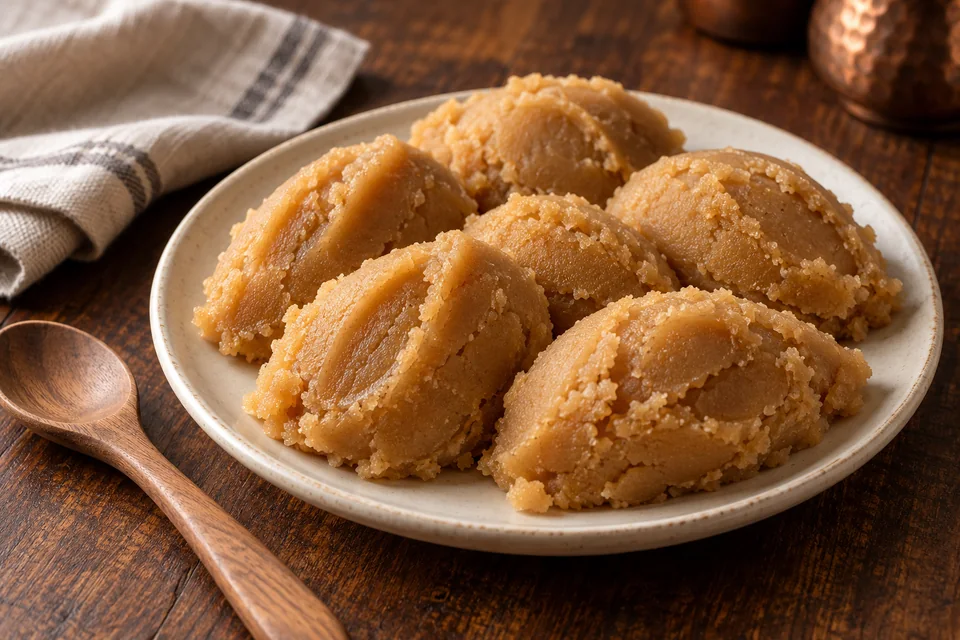
This recipe follows the milk-and-sadeyağ style documented for Sivas, where flour halva is closely identified with the local table and traditionally cooked in a broad halva pan. Other regional versions differ: an official Çankırı method uses water syrup and a mixture of butter and oil. Those are genuine variations, but this recipe keeps the rich Sivas combination of clarified butter, flour, milk and sugar.
Un Helvası — Recipe Card
Turkish flour halva slowly toasted in clarified butter and finished with sweetened milk
Makes 8 servings · Makes about 16 spoon-shaped piecesUS cup = 240 ml · tablespoon = 15 ml · teaspoon = 5 ml. Cup and weight conversions are approximate. Australian cooks: use a 15 ml measuring tablespoon.
Ingredient quantities and servings are scaled. Cooking times, pan sizes, frying oil depth, and temperatures stay the same; cook larger batches as needed.
Ingredients
How to make Un Helvası
Warm the milk mixture
Combine the 360 ml (1 1/2 cups) milk and 300 g (1 1/2 cups) sugar in a small saucepan. Warm over medium-low heat, stirring until the sugar dissolves. Keep it warm without letting it boil.
Melt the clarified butter
Put the 250 g (8.8 oz) clarified butter in a wide, heavy saucepan or deep skillet. Melt it over low heat; it should be fluid but not smoking.
Add the flour
Add the 300 g (2 1/2 cups) flour in three additions, stirring after each one with a sturdy wooden spoon until no dry pockets remain.
Toast slowly
Cook over low heat for 20–25 minutes, stirring continuously and scraping the base and corners. The mixture will first look stiff, then loosen slightly and turn an even light chestnut color with a distinctly nutty aroma.
Add the sweetened milk safely
Remove the pan from the heat. Standing back from the steam, add the warm milk mixture in three additions while stirring vigorously. Wait for each addition to be absorbed before adding the next.
Cook until cohesive
Return the pan to low heat and stir for 3–5 minutes, until the halva forms a soft mass, pulls cleanly from the pan and holds a spoon mark. Cover, remove from the heat and rest for 10 minutes.
Shape and serve
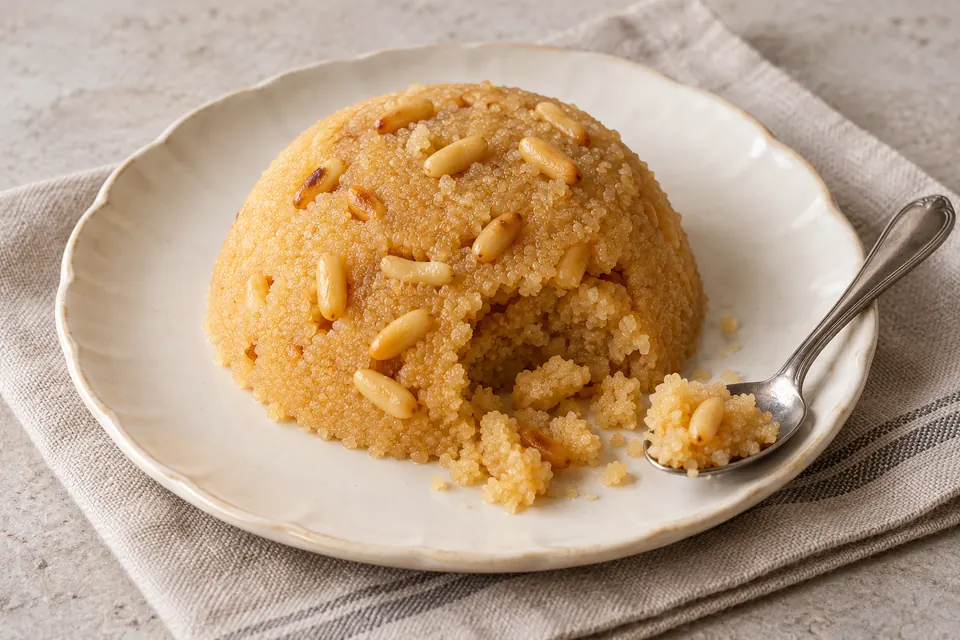
While the halva is still warm, press portions between two tablespoons to make about 16 oval pieces, or spoon it into a serving dish. Serve warm or at room temperature.
Bring this recipe to your kitchen with a printable copy.
Print recipeRecipe from MyTurkishRecipes · https://myturkishrecipes.com/turkish-flour-halva-un-helvasi. Quantities reflect your selected serving scale. Cooking times are estimates; follow the doneness cues.
A few helpful kitchen notes
Regional style
The milk-and-clarified-butter base follows the Sivas version. Water syrup and mixed fats appear in other regional recipes, including the documented Çankırı method.
Clarified butter
Use plain unsalted ghee or clarified butter. If clarifying butter at home, begin with about 300 g (10.6 oz) unsalted butter, then weigh 250 g (8.8 oz) of the clear fat after removing the milk solids.
Color control
A wide, heavy pan and low heat make even browning easier. Keep the spoon moving once the flour is added; the final halva should taste toasted, not burnt.
Dietary notes
This vegetarian recipe contains wheat and milk. It is not gluten-free or vegan, and no one-for-one gluten-free flour substitution has been tested for this texture.
How to store and reheat Un Helvası
Because this version contains milk, refrigerate leftovers in a shallow airtight container within 2 hours and keep at 4°C (40°F) or below for 3–4 days. Reheat only the portion needed to 74°C (165°F); a teaspoon of milk can help restore softness. For best texture, freeze tightly wrapped portions for up to 1 month and thaw in the refrigerator.
Un Helvası: questions and answers
Why did my flour halva taste raw?
The flour was probably not toasted long enough. Keep the heat low and stir until the whole mixture is light chestnut and smells nutty before adding the milk.
Why is the halva grainy?
Undissolved sugar or a cold liquid can make the texture coarse. Dissolve the sugar fully in warm milk and add it gradually while stirring.
Can I make Un Helvası with water?
Yes, water-based versions are traditional in some regions. Replacing the milk with the same volume of warm water gives a lighter result, but it is a different regional style from the Sivas version here.