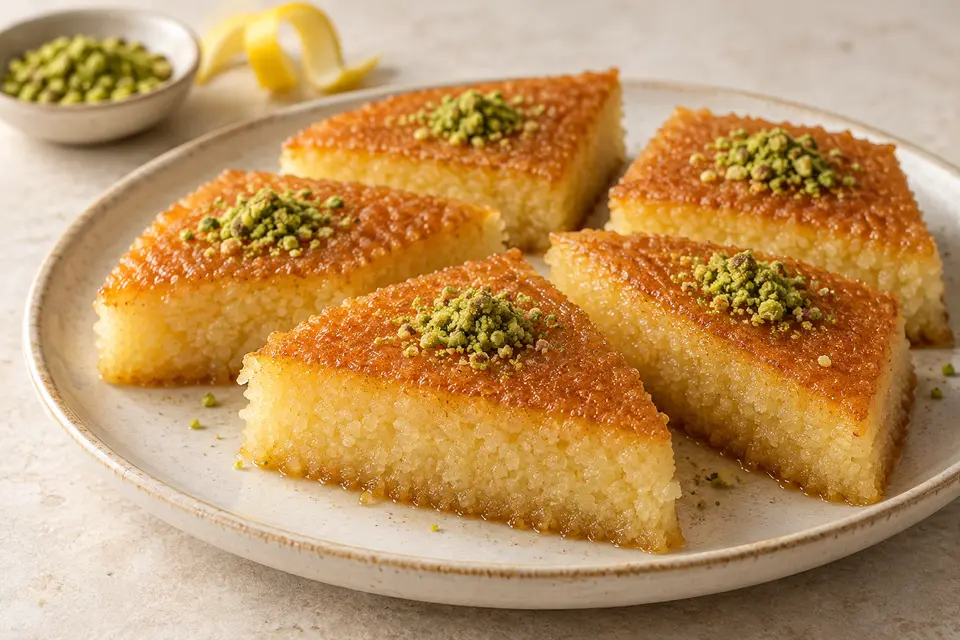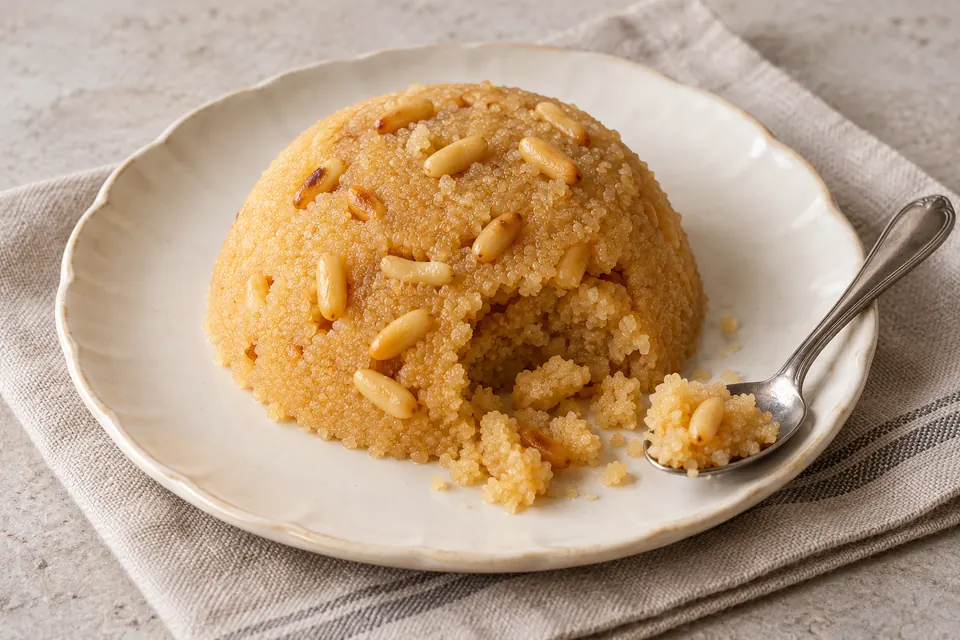
Semolina helva is prepared across Turkey, including for religious observances and gatherings of remembrance, though customs differ between families and regions. Water, milk and mixed-liquid versions all exist. This is a small milk-based batch with pine nuts, rather than the distinct cheese-filled regional variation.
İrmik Helvası — Recipe Card
Turkish milk-based semolina halva with pine nuts
Makes 6 servings · Approximately 650–750 g after cooking, depending on evaporation; 6 small dessert portions.US cup = 240 ml · tablespoon = 15 ml · teaspoon = 5 ml. Cup and weight conversions are approximate. Australian cooks: use a 15 ml measuring tablespoon.
Ingredient quantities and servings are scaled. Cooking times, pan sizes, frying oil depth, and temperatures stay the same; cook larger batches as needed.
Ingredients
How to make İrmik Helvası
Warm the sweetened milk
Combine the measured milk and sugar in a small saucepan. Warm over low heat, stirring until the sugar has dissolved and the milk is steaming lightly, without boiling. Remove from the heat and keep nearby while toasting the semolina.
Toast the pine nuts and semolina
Melt the butter in a wide, heavy-based saucepan with at least 2 litres capacity. Add the pine nuts and stir over medium-low heat for 2–3 minutes, until lightly golden. Lift them out with a slotted spoon, leaving the butter. Add the semolina and stir constantly for 15–20 minutes, scraping the base and corners, until evenly golden and fragrant. Lower the heat if it colors too quickly.
Add the milk carefully
Take the saucepan off the heat and set it securely on a heatproof surface. Keep your face and hands away from the rising steam. Add the warm milk mixture slowly in several small additions, stirring with a long-handled spoon; the first additions can bubble and splutter strongly. Do not pour it all in at once.
Cook until absorbed
Return to low heat and cook for 8–12 minutes, stirring frequently, until no pool of milk remains and the grains are tender. A spoon drawn across the bottom should leave a brief clear path. If the liquid is gone but the grains are still hard, add 30 ml (2 tbsp) hot milk and cook for another 2–3 minutes. Fold the reserved pine nuts back in.
Rest and portion
Turn off the heat, cover with a lid and rest for 15 minutes. Gently loosen with a fork. Spoon onto small plates or press lightly into small bowls and turn out. Serve warm; the texture firms as it cools.
Bring this recipe to your kitchen with a printable copy.
Print recipeRecipe from MyTurkishRecipes · https://myturkishrecipes.com/turkish-semolina-halva-irmik-helvasi. Quantities reflect your selected serving scale. Cooking times are estimates; follow the doneness cues.
A few helpful kitchen notes
Choose the right grain
Use granular coarse semolina sold as irmik. Fine pasta flour, couscous and cornmeal do not behave the same way and are not direct substitutes for this method.
Dietary notes
Vegetarian, but contains milk, wheat and gluten, and also contains pine nuts. It is not vegan or gluten-free. Check individual allergies and the labels of purchased ingredients.
Optional finish and measures
The base recipe is served plain. If desired, dust the whole batch with ¼ tsp ground cinnamon just before serving. US measures use a 240 ml cup and 15 ml tablespoon; weigh the semolina for consistency.
How to store and reheat İrmik Helvası
Divide leftovers into shallow covered containers and refrigerate within 2 hours, or within 1 hour if the room is above 32°C (90°F). Keep at 4°C (40°F) or below and use within 3 days. Reheat only the portion needed, stirring gently with about 15 ml (1 tbsp) milk per portion until it reaches 74°C (165°F) throughout. Freezing is not recommended for texture.
İrmik Helvası: questions and answers
Is semolina halva gluten-free?
No. Semolina is made from durum wheat and contains gluten. Do not replace it with rice flour or a generic gluten-free blend in the same quantities and expect this method to work.
Can I leave out the pine nuts?
Yes. Omit the pine nuts and skip their separate toasting; melt the butter and add the semolina directly. Keep the other ingredient quantities unchanged.
How brown should the semolina become?
Aim for a consistent golden beige, not dark coffee brown. Stir across the whole base of the pan and use the aroma and color as well as the time; pan material and burner strength affect browning.