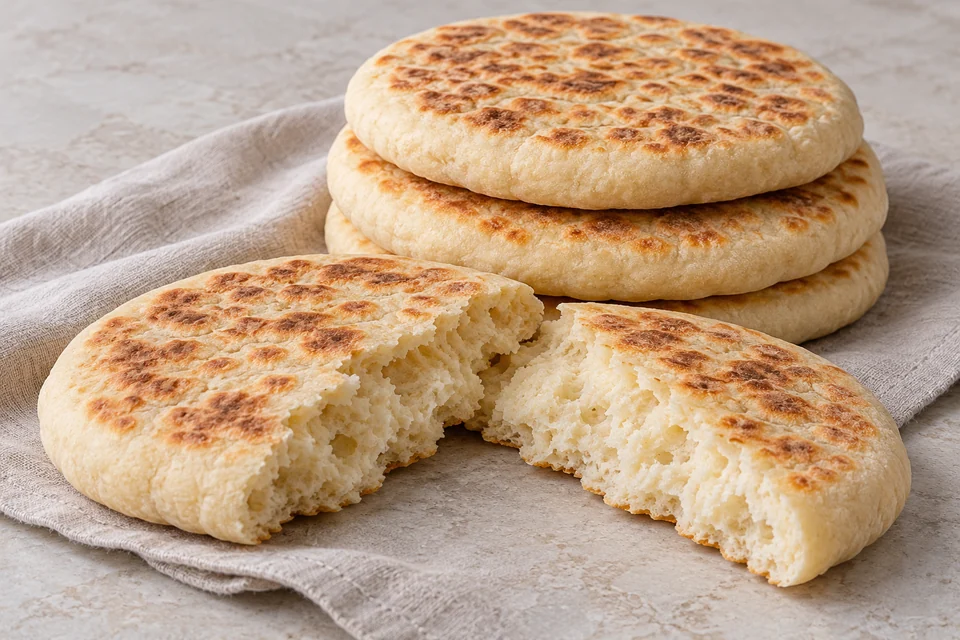
Turkish griddle breads vary by region and household. Cultural records describe bazlama in both Ankara and Isparta: a yeast dough is divided, flattened and cooked on a sac or pan. Some versions include a little sugar or dairy, and methods differ in the thickness and resting of the rounds. Here, a water-based dough and instant yeast make six small, plain breads for a home skillet. The important details are an even thickness, a relaxed dough and enough cooking time for the middle to set.
Bazlama — Recipe Card
Soft Turkish skillet flatbread
Makes 6 servings · 6 small flatbreads, about 15 cm (6 inches) acrossUS cup = 240 ml · tablespoon = 15 ml · teaspoon = 5 ml. Cup and weight conversions are approximate. Australian cooks: use a 15 ml measuring tablespoon.
Ingredient quantities and servings are scaled. Cooking times, pan sizes, frying oil depth, and temperatures stay the same; cook larger batches as needed.
Ingredients
How to make Bazlama
Mix and knead
Combine the 480 g flour, instant yeast and salt in a large bowl. Add the measured lukewarm water and stir until the flour is moistened. Knead by hand for 8–10 minutes, in the bowl or on a clean work surface, until smooth and elastic. The dough should be soft and slightly tacky, rather than wet or stiff. If necessary, work in a teaspoon of water at a time to soften it; avoid adding a large handful of flour.
Let the dough rise
Return the dough to the bowl, cover, and leave in a comfortably warm, draft-free place until roughly doubled, usually 60–90 minutes. Start checking after 60 minutes; a cool room will take longer. Use the change in volume as the guide rather than stopping solely because the timer has finished.
Divide and relax
Gently press out the largest air bubbles and divide into six equal pieces, approximately 133 g each. Tuck the edges of each piece underneath to make a loose ball. Cover the balls with a clean cloth and rest for 10 minutes so they are easier to flatten.
Shape the rounds
Lightly dust the work surface with some of the extra flour. Pat or gently roll each ball into a round about 15 cm (6 inches) across and 1 cm (3/8 inch) thick. Keep the thickness even, including the edges. If a round springs back, let it relax a few more minutes. Cover the shaped breads and rest for 10 minutes. During this rest, heat a heavy, dry skillet over medium heat for about 5 minutes; follow the manufacturer's guidance for your pan.
Cook one bread at a time
Brush away loose flour and lay one round in the hot, dry skillet. Cook for about 1 minute, until the underside starts to set and small bubbles appear, then turn. Continue cooking and turning about every minute, for roughly 6 minutes in total per bread, adjusting the heat as needed. Both sides should have golden-brown patches, the edges should feel set, and the bread should be cooked through. It may puff unevenly; a complete hollow pocket is not required. Check the first bread by tearing it open carefully after a brief cooling: cook longer over lower heat if the center is sticky or raw.
Keep soft and serve
Transfer each finished bazlama to a clean towel and cover loosely while you cook the remaining rounds. Wipe any burnt loose flour from the empty pan with a dry paper towel held in tongs, taking care around the hot surface. Serve the breads warm. For storing, let them cool fully on a rack before sealing so trapped steam does not make them damp.
Bring this recipe to your kitchen with a printable copy.
Print recipeRecipe from MyTurkishRecipes · https://myturkishrecipes.com/turkish-flatbread-bazlama. Quantities reflect your selected serving scale. Cooking times are estimates; follow the doneness cues.
A few helpful kitchen notes
Flour and measuring cups
Weighing flour is the most dependable method. The volume guide assumes approximately 120 g flour per 240 ml US cup, gently spooned in and leveled; packed cups can make the dough too dry. Water uses the same 240 ml cup, and a tablespoon is 15 ml. The dusting flour is separate from the 480 g used in the dough; use only what you need.
A plain, dairy-free dough
This version contains no yogurt, milk, egg or butter. Yogurt-enriched bazlama exists, but replacing water with yogurt changes the dough's moisture and is not a direct one-for-one substitution here. Keep the plain dough as written for this version.
If using active dry yeast
Use the same 7 g weight, first dissolving it in some of the measured water according to its package directions. Return it with the remaining measured water when mixing the dough. The rise may take longer; wait for the dough to increase in volume.
Allow time for the whole batch
The cooking estimate is 36 minutes for six breads cooked one at a time. The listed resting time assumes a 60-minute first rise plus two 10-minute rests; a cooler kitchen can add 30 minutes or more. Heat the skillet during the final rest.
Troubleshooting the texture
Dark outside with a dense, damp center usually calls for gentler heat, more cooking time or thinner, more even shaping. A dry or tough bread may have picked up too much dusting flour or stayed on the heat too long. Wrap cooked breads loosely while finishing the batch, then cool before storage.
Handle flour safely
Do not taste the uncooked dough. Flour is a raw ingredient, even when the recipe contains no eggs. Keep flour and raw dough away from ready-to-eat foods, and wash your hands, bowl and work surface after handling them.
How to store and reheat Bazlama
Bazlama is best on the day it is cooked. Cool completely, then keep the plain breads in a sealed bag or container in a cool, dry place for up to 2 days. In a hot or humid kitchen, freeze them once cool instead of keeping them on the counter. For longer storage, separate with baking parchment, seal in a freezer bag, and freeze at 0°F (-18°C) or below; use within 1 month for best texture. Thaw individual breads and warm gently in a dry skillet, turning until heated through. Keep any perishable sandwich fillings refrigerated separately, and discard bread if mold appears.
Bazlama: questions and answers
Does bazlama need yogurt?
Not in this version. Flour, water, yeast and salt make a plain bazlama dough. Some household recipes add yogurt or milk, but those are different formulations rather than essential ingredients for every bazlama.
Why did my bazlama not puff?
Check that the dough rose before shaping and that the rounds had time to relax. Uneven thickness or a skillet that is too cool can also limit puffing. The aim here is a soft, fully cooked crumb; the bread does not need to become one large balloon.
Can I use bread flour?
Bread flour can be used in the same weight, though it may absorb slightly more water and give a chewier texture. Add water only a teaspoon at a time if the dough feels firm, stopping when it is soft and slightly tacky.
Is this a quick no-yeast flatbread?
No. Yeast provides the rise in this bazlama, so allow the dough to expand before cooking. Baking powder is not a direct replacement in this recipe.
What can I serve with bazlama?
Serve warm pieces with menemen, mercimek çorbası or a small bowl of cacık. For a sandwich, let a bread cool slightly before splitting it, and add your chosen filling just before eating.