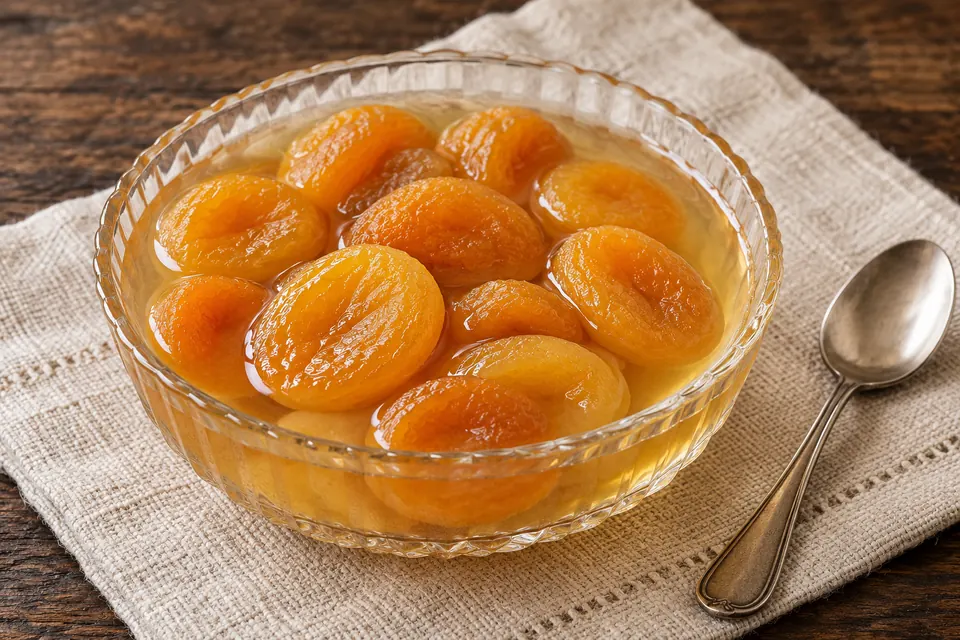
Turkish culinary teaching materials commonly distinguish hoşaf, made with dried fruit, from komposto, made with fresh fruit, while acknowledging both as fruit cooked with sugar and plenty of water. Türkiye's Culture Portal records a particularly spare Isparta version with dried apricots, sugar and water. Its account of Malatya cuisine also places sun-dried apricots among the fruits preserved in summer for winter hoşaf, connecting the bowl to seasonal household practice rather than to a single ceremonial origin. This recipe keeps that three-ingredient structure and gives clear texture and cooling cues for a contemporary home kitchen.
Kuru Kayısı Hoşafı — Recipe Card
Turkish dried-apricot compote served chilled
Makes 6 servings · About 1.2 litres (5 cups)US cup = 240 ml · tablespoon = 15 ml · teaspoon = 5 ml. Cup and weight conversions are approximate. Australian cooks: use a 15 ml measuring tablespoon.
Ingredient quantities and servings are scaled. Cooking times, pan sizes, frying oil depth, and temperatures stay the same; cook larger batches as needed.
Ingredients
How to make Kuru Kayısı Hoşafı
Sort and wash the fruit
Check the dried apricots one by one, discarding any damaged pieces or stray fragments. Rinse them thoroughly under cool running water and drain; there is no need to soak them first.
Dissolve the sugar
Combine the sugar and 960 ml / 4 cups water in a medium saucepan. Stir over medium heat until the sugar dissolves, then bring the liquid to a full boil.
Simmer the apricots
Add the drained apricots and let the liquid return to a boil. Reduce the heat to maintain a gentle simmer and cook uncovered for 15 to 20 minutes, stirring once or twice, until the fruit is plump and tender but not collapsing.
Check the consistency
Lift one apricot with a spoon and press it gently: it should yield while retaining its outline. The liquid should remain plentiful and pourable, not syrupy like jam. If it has reduced too quickly, stir in a little hot water and bring it briefly back to a simmer.
Cool and chill
Transfer the hoşaf to a shallow heatproof container and let the steam subside. Cover and refrigerate within 2 hours of leaving the heat, or within 1 hour when the room is above 32°C / 90°F. Chill for at least 2 hours, then divide both apricots and cold liquid among six bowls or glasses.
Bring this recipe to your kitchen with a printable copy.
Print recipeRecipe from MyTurkishRecipes · https://myturkishrecipes.com/turkish-dried-apricot-compote-kuru-kayisi-hosafi. Quantities reflect your selected serving scale. Cooking times are estimates; follow the doneness cues.
A few helpful kitchen notes
Hoşaf or komposto?
In common Turkish culinary usage, dried fruit points to hoşaf and fresh fruit to komposto, although names and household usage can overlap. With dried apricots, this recipe is properly titled Kuru Kayısı Hoşafı.
Adjusting sweetness
Apricots vary greatly in tartness. For a less sweet version, use 75 g / 6 tablespoons sugar; for very tart fruit, taste only after chilling before deciding whether the next batch needs more.
Optional aroma
Some home cooks add one small cinnamon stick or two cloves while the fruit simmers. Remove either before chilling; the documented Isparta-style base remains unspiced.
Dietary notes
The dish is vegan when made with beet sugar or cane sugar certified for vegan processing. Its ingredients contain no gluten, but anyone avoiding trace gluten should use dried apricots carrying an appropriate gluten-free label and check all packaging.
How to store and reheat Kuru Kayısı Hoşafı
Cool promptly in a shallow covered container and refrigerate within 2 hours of cooking, or within 1 hour above 32°C / 90°F. Keep at 4°C / 40°F or below and use within 3 to 4 days. Serve cold with a clean ladle; do not leave the bowl at room temperature for more than 2 hours. Freeze in small airtight portions for up to 1 month if needed, allowing for softer fruit after thawing. This recipe is not suitable for room-temperature canning.
Kuru Kayısı Hoşafı: questions and answers
Can I make this with fresh apricots?
Fresh apricots make kayısı kompostosu rather than dried-fruit hoşaf in the usual culinary distinction. They also soften much faster, so use a recipe written for fresh fruit instead of substituting them directly here.
Should I use bright orange or dark dried apricots?
Either works. Sulfur-treated apricots usually stay bright orange and taste cleaner and sharper; unsulfured or sun-dried fruit is darker and can taste deeper and more caramel-like. Choose plain, unsweetened fruit and check the label if sulfites matter to you.
Why did my hoşaf become too thick?
It probably simmered too hard, too long or with too little water. While it is still hot, add boiled water a little at a time until the liquid is generous and pourable, simmer briefly, then cool it promptly.