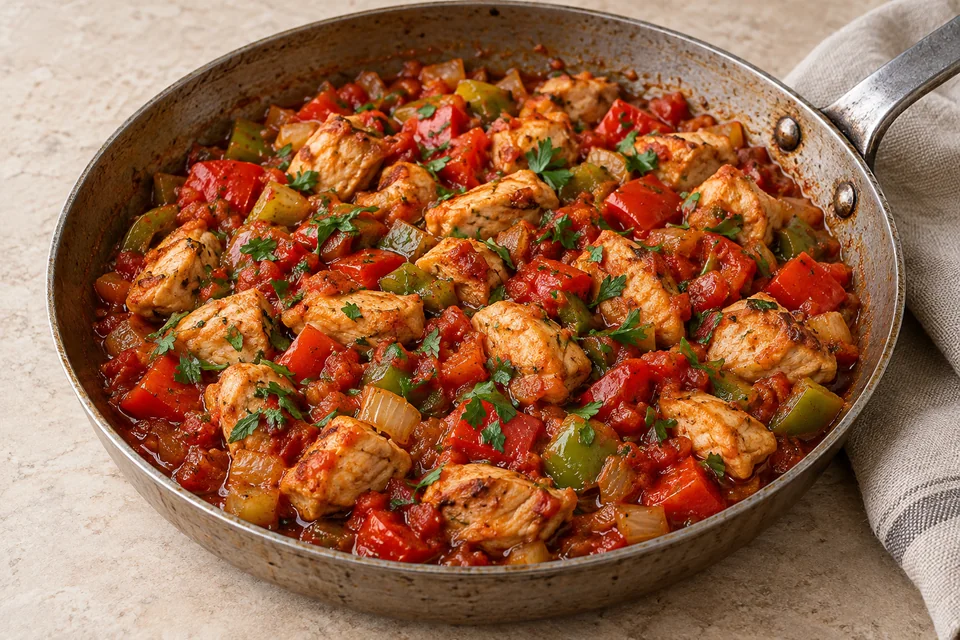
Tavuk sote is a familiar Turkish home-style chicken dish, also served in everyday lokanta restaurants. Recipes differ in their peppers, seasoning and use of mushrooms. This is a tomato-and-pepper version without mushrooms, cream or cheese. Turkish green peppers and kapya are the first choice; bell peppers are a practical alternative outside Türkiye.
Tavuk Sote — Recipe Card
Turkish chicken sauté with tomatoes and peppers
Makes 4 servings · 4 main-course portions, to serve with a separately prepared sideUS cup = 240 ml · tablespoon = 15 ml · teaspoon = 5 ml. Cup and weight conversions are approximate. Australian cooks: use a 15 ml measuring tablespoon.
Ingredient quantities and servings are scaled. Cooking times, pan sizes, frying oil depth, and temperatures stay the same; cook larger batches as needed.
Ingredients
How to make Tavuk Sote
Prepare the ingredients
Dice the vegetables before handling the chicken, then cut the chicken into evenly sized pieces on a separate board. Wash hands and clean equipment after contact with raw poultry. Keep the parsley separate for the finish. Set a clean serving dish aside so the plate used for partly cooked chicken is not reused for serving.
Brown the chicken in batches
Warm a wide, deep skillet over medium-high heat. Add half the oil and half the chicken in a single layer. Leave briefly to take on color, then turn and cook for about 4–5 minutes per batch. Transfer to a holding plate and repeat with the remaining oil and chicken. It will finish cooking in the sauce; continue with the recipe straight away.
Soften the peppers and onion
Reduce the heat to medium. Add the onion and both peppers to the same pan. Stir for 7–8 minutes, until the onion softens and the peppers begin to relax. If browned juices catch on the bottom, loosen them with a small splash from the measured water. Stir in the garlic for 30 seconds.
Build the tomato base
Add both pastes, pul biber and black pepper. Stir for about 1 minute without scorching. Add the tomatoes and cook for 3–4 minutes, stirring and scraping up the browned bits. The tomatoes should begin to soften and release their juice.
Finish cooking in the sauce
Return the chicken and all juices from its holding plate. Add the remaining measured water and the salt. Bring to a simmer, cover loosely and cook over medium-low heat for about 10–12 minutes, stirring occasionally. Use a food thermometer to check several large chicken pieces: each must reach at least 165°F (74°C). Cook longer if needed; timing alone is not the safety check.
Adjust the sauce and serve
If the sauce is watery once the chicken is cooked, simmer uncovered briefly. If it becomes dry before the chicken is ready, add water a tablespoon at a time. Taste the cooked sauce before adding more salt, stir in the parsley and serve hot. Bread, plain pilaf or cacık can be served separately.
Bring this recipe to your kitchen with a printable copy.
Print recipeRecipe from MyTurkishRecipes · https://myturkishrecipes.com/turkish-chicken-saute-tavuk-sote. Quantities reflect your selected serving scale. Cooking times are estimates; follow the doneness cues.
Make it work in your kitchen
Ingredient Substitutions
These swaps change flavor or texture as described. Keep the original ingredients for the closest version of the dish.
Pul biber
Use the same amount of mild paprika for color and a gentler flavor. For heat, add a small pinch of chili flakes, then taste; chili flakes can be much hotter.
Turkish green peppers
Use the same weight of mild green Italian frying peppers. Green bell pepper also works, but tastes sweeter and has thicker flesh; dice it finely and cook until tender.
Turkish red pepper paste
Use the same quantity of tomato paste, then add mild paprika to taste. This gives a more tomato-forward flavor and will not reproduce the full pepper flavor.
A few helpful kitchen notes
Choosing peppers
Use mild çarliston or sivri peppers if available, checking their heat, and a sweet red kapya. The weighed amounts are after removing stalks and seeds. Bell peppers are an accessible substitute, with a slightly different texture.
No pepper paste?
Replace the 15 g pepper paste with another 15 g tomato paste and add 1/2 teaspoon sweet paprika with the seasonings. This is a practical substitute for this version. Salça brands vary in salt, so season cautiously.
Chicken breast option
Use the same weight of boneless breast, cut to the same size. Begin checking its temperature early during the final simmer and stop cooking once it is safely cooked; a long simmer can make breast meat dry.
Measuring and timing
A cup is 240 ml, a tablespoon 15 ml and a teaspoon 5 ml. Paste weights per spoon vary by brand; use the gram weight where possible. Allow about 50 minutes overall. A smaller pan or wetter tomatoes can extend the cooking time.
How to store and reheat Tavuk Sote
Divide leftovers into shallow containers and refrigerate promptly, within 2 hours of cooking, or within 1 hour above 90°F (32°C). Keep at 40°F (4°C) or below and use within 3–4 days. Freeze promptly in sealed portions at 0°F (-18°C) or below; use within 2 months for best texture. Thaw in the refrigerator. Reheat the portion needed in a covered pan, adding a splash of water and stirring until the chicken and sauce reach 165°F (74°C) throughout. Do not leave the pan on the counter to cool completely.
Tavuk Sote: questions and answers
Is tavuk sote spicy?
This version is gently seasoned when made with mild green peppers and sweet pepper paste. Pul biber and Turkish green peppers vary in heat. Use a mild brand, or omit the flakes for a less spicy result.
Do I need to add mushrooms?
No. Mushroom versions are common, but this recipe is written for chicken, peppers and tomatoes. Adding mushrooms changes the amount of liquid in the pan; they are not included in the quantities or timing here.
Can I use canned tomatoes?
Use 300 g canned chopped tomatoes with their juice instead of fresh tomatoes. Hold back some of the measured water at first and add it only if needed. Reduce an overly loose sauce after the chicken is cooked.
Why is my sauce thin?
Tomatoes, peppers and chicken release varying amounts of liquid. Use a wide pan and brown in batches. Once the chicken has reached its safe temperature, a short uncovered simmer can reduce excess liquid.