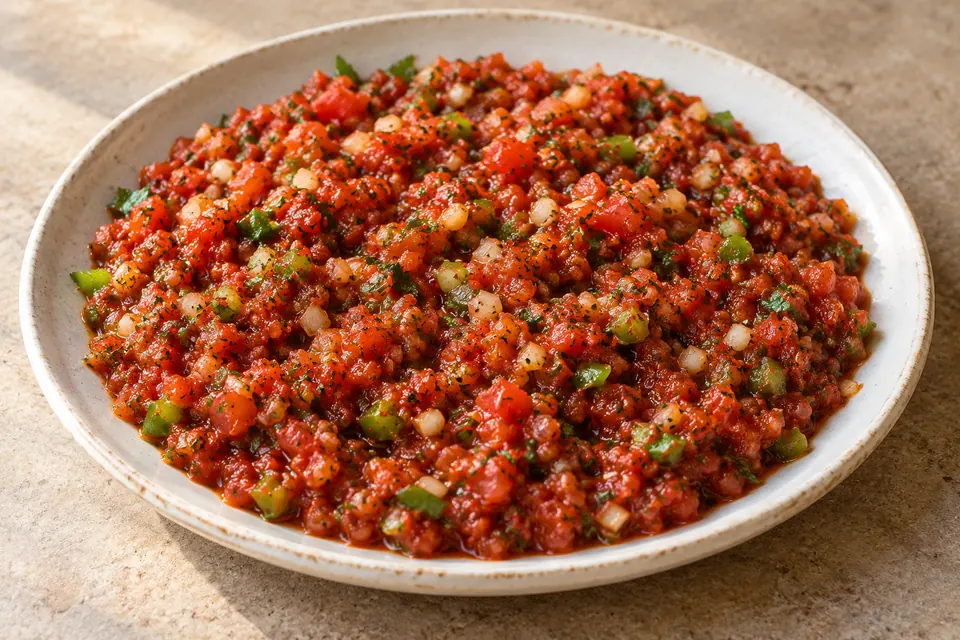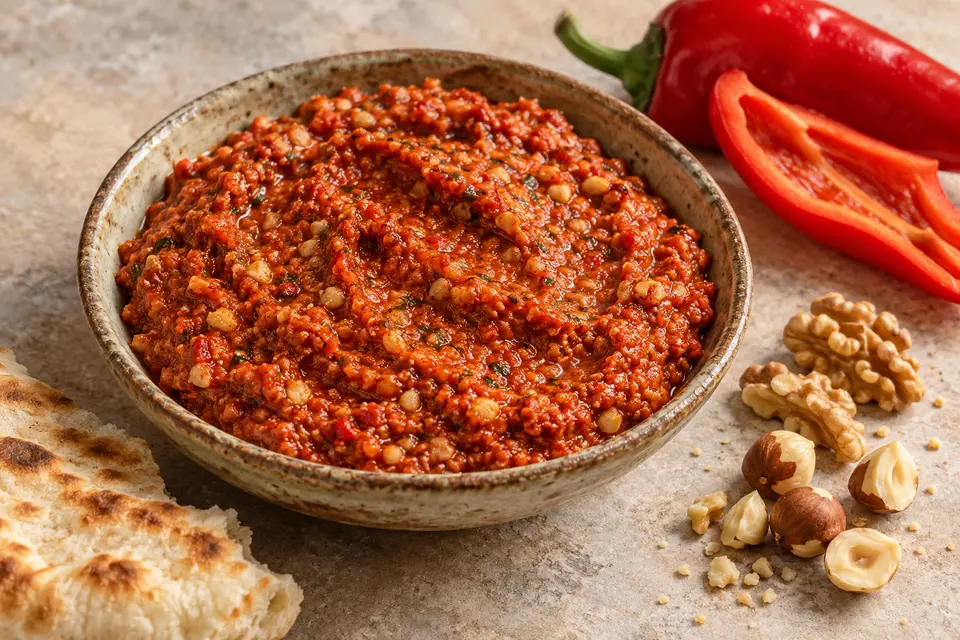
Düzce Acıkası belongs to Düzce in Türkiye's western Black Sea region and has been protected as a mahreç geographical indication since 2017. The registered formula combines red pepper paste with walnuts, locally grown roasted hazelnuts, sunflower oil, butter, garlic, coriander, cumin, red pepper, oregano, basil and cıbrısa, also called azıbra. The protected name applies to production carried out in Düzce under its specification. This home recipe scales the official ratios and method for readers elsewhere; it is an interpretation of that regional formula, not a certified Düzce product.
Düzce Acıkası — Recipe Card
Turkish red pepper, walnut and hazelnut spread
Makes 8 servings · Makes about 1½ cups, or 8 small meze portions.US cup = 240 ml · tablespoon = 15 ml · teaspoon = 5 ml. Cup and weight conversions are approximate. Australian cooks: use a 15 ml measuring tablespoon.
Ingredient quantities and servings are scaled. Cooking times, pan sizes, frying oil depth, and temperatures stay the same; cook larger batches as needed.
Ingredients
How to make Düzce Acıkası
Soften the peppers
Put the chopped peppers in a wide heavy saucepan, cover and cook over medium-low heat for 18–20 minutes. Stir every few minutes; the peppers will release their own liquid. Cook until completely soft but not browned.
Drain
Transfer the peppers and their liquid to a fine-mesh sieve set over a bowl. Leave for 20 minutes, then press gently with the back of a spoon. Discard the drained liquid.
Make the pepper paste
Process the drained peppers until evenly puréed. You should have about 200 g / 7 oz thick pepper purée; a small variation is fine.
Prepare the nuts
Pulse the walnuts and roasted hazelnuts in a food processor until they resemble fine crumbs. Stop before they become oily or form a paste.
Reduce with oil
Return the pepper purée to the wiped saucepan and stir in the sunflower oil. Simmer uncovered over low heat for 20–25 minutes, stirring often and protecting your hands from splatters, until very thick and a spatula track stays open for 2–3 seconds.
Add the butter
Stir in the butter until fully melted and cook for 1 minute, then remove the pan from the heat.
Season
Immediately stir in the grated garlic, ground nuts, coriander, cumin, paprika, pul biber, oregano, basil, summer savory and salt. Mix thoroughly so the herbs and nuts are distributed evenly.
Cool and serve
Spread the acıkası in a shallow container so it cools quickly. Refrigerate within 2 hours and chill for at least 30 minutes. Let it stand for 10 minutes before serving with bread as part of a Turkish breakfast or meze table.
Bring this recipe to your kitchen with a printable copy.
Print recipeRecipe from MyTurkishRecipes · https://myturkishrecipes.com/turkish-walnut-pepper-spread-duzce-acikasi. Quantities reflect your selected serving scale. Cooking times are estimates; follow the doneness cues.
Make it work in your kitchen
Ingredient Substitutions
These swaps change flavor or texture as described. Keep the original ingredients for the closest version of the dish.
Pul biber
Use the same amount of mild paprika for color and a gentler flavor. For heat, add a small pinch of chili flakes, then taste; chili flakes can be much hotter.
A few helpful kitchen notes
Regional identity
Düzce Acıkası is geographical indication no. 309. The registered product is made in Düzce and specifically uses hazelnuts grown there; a home batch made elsewhere follows the formula but should not be presented as certified.
Pepper-paste shortcut
For convenience, start with 200 g / 7 oz plain sweet red pepper paste with no tomato, sugar or added spices. Skip the first three steps, then reduce it with the sunflower oil for the registered 20–30 minutes. This shortcut misses the defining homemade-paste stage.
Cıbrısa or azıbra
This dried aromatic herb is commonly sold in English as summer savory. It is part of the registered seasoning profile; buy it from a spice shop rather than replacing it with extra oregano if you want the intended balance.
Heat level
Mild to medium. Mild pul biber gives warmth without dominating the sweet pepper. For less heat use sweet Turkish pepper flakes; for a hotter spread use hot pul biber, but keep the measured amount unchanged.
Allergens and dietary notes
Contains walnuts, hazelnuts and milk. For a vegan variation, replace the butter with 10 ml / 2 tsp additional sunflower oil; the flavor will be slightly less rounded. The ingredients are naturally free of gluten, but check spice labels and cross-contact information when this matters medically.
How to store and reheat Düzce Acıkası
Transfer the spread to a clean shallow airtight container and refrigerate within 2 hours. Keep at 4°C / 40°F or below and use within 3–4 days. Freeze in small airtight portions for up to 2 months for best quality, then thaw in the refrigerator and stir well. Because this moist pepper-and-garlic spread has not been tested for canning, do not store it at room temperature or process it in a water-bath canner.
Düzce Acıkası: questions and answers
Is Düzce Acıkası the same as muhammara?
They share red pepper and walnuts, but they are not interchangeable names. The registered Düzce formula also includes roasted hazelnuts, butter, sunflower oil and a specific herb-and-spice profile; it does not rely on pomegranate molasses or breadcrumbs.
Can I use jarred pepper paste?
Yes, use 200 g / 7 oz plain sweet red pepper paste and follow the shortcut note. Check the salt on the label and add the recipe salt only after tasting. Fresh kapya peppers are closer to the Düzce method described by official cultural sources.
Why is there no tomato or pomegranate molasses?
Neither appears in the registered Düzce Acıkası formula. Leaving them out preserves the focus on sweet kapya pepper, nuts, butter and the layered dried herbs.
How is Düzce Acıkası served?
Serve a few spoonfuls at breakfast or as a meze with bazlama, simit or another plain bread. It is also useful as a small accompaniment to grilled vegetables, but it is a spread rather than a cooking sauce.
Can I make it vegan?
Yes. Replace 10 g / 2 tsp butter with 10 ml / 2 tsp sunflower oil. The spread will remain cohesive, though it will lose a little of the dairy richness that distinguishes the registered formula.