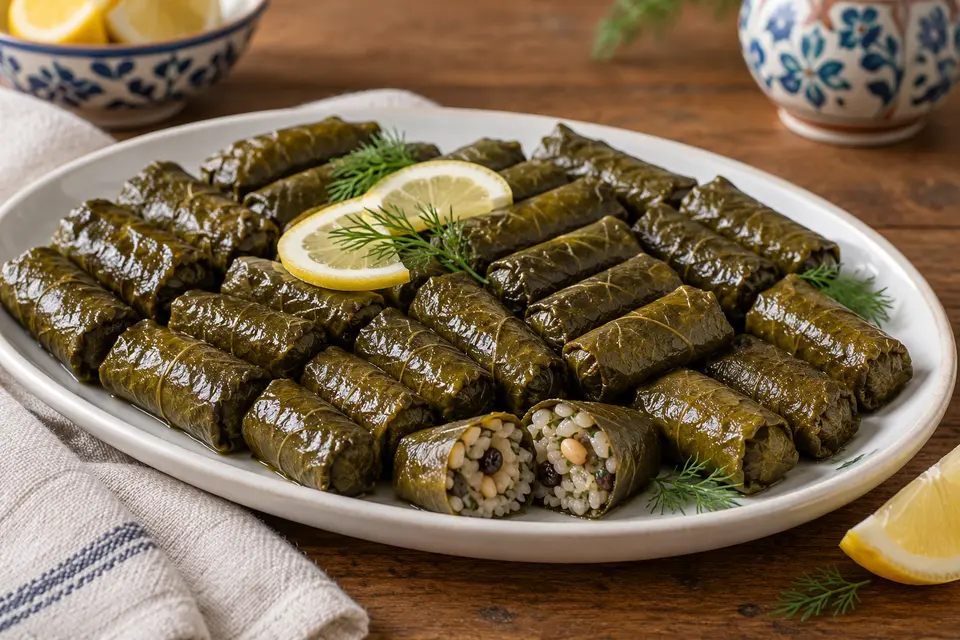
Sarma means a filling wrapped in a leaf, and grape leaves are used across Türkiye for both meat-filled and olive-oil versions. The zeytinyağlı style is traditionally meatless and served cool or at room temperature. Household and regional fillings vary: some include tomato or pepper paste, while this recipe follows the classic rice, onion, herb, pine-nut and currant style. Lemon supplies the characteristic tart finish.
Zeytinyağlı Yaprak Sarma — Recipe Card
Turkish olive-oil grape-leaf rolls with rice, herbs, pine nuts and currants
Makes 6 servings · Makes about 40–45 rollsUS cup = 240 ml · tablespoon = 15 ml · teaspoon = 5 ml. Cup and weight conversions are approximate. Australian cooks: use a 15 ml measuring tablespoon.
Ingredient quantities and servings are scaled. Cooking times, pan sizes, frying oil depth, and temperatures stay the same; cook larger batches as needed.
Ingredients
How to make Zeytinyağlı Yaprak Sarma
Prepare the leaves
Rinse the brined leaves, then soak them in warm water for 20–30 minutes, changing the water once. Taste a small edge; soak longer if it is still very salty. Drain, trim any long stems and reserve torn leaves for lining the pan. If using fresh leaves, blanch them in boiling water for 3–4 minutes, then drain.
Soften the onions
Warm 75 ml (5 tablespoons) of the olive oil in a wide pan over low heat. Add the onions and pine nuts and cook for 12–15 minutes, stirring often, until the onions are soft and the nuts are lightly golden; do not brown the onions.
Part-cook the filling
Stir in the rice, currants, sugar, half the salt and 240 ml (1 cup) of the hot water. Cover and cook over low heat for 8–10 minutes, until the liquid is absorbed but the rice is still firm. Remove from the heat. Fold in the parsley, dill, mint, cinnamon, allspice, black pepper and 30 ml (2 tablespoons) of the lemon juice. Taste and adjust the salt, then cool for 15 minutes.
Fill and roll
Line a wide, heavy-based pot with the reserved torn leaves. Place one good leaf vein-side up with its stem end toward you. Put about 1 heaped teaspoon of filling near the stem end, fold the sides inward, then roll toward the tip into a neat cylinder. Keep the roll secure but loose enough for the rice to expand.
Pack the pot
Arrange the rolls snugly in the pot, seam-side down, making a second layer if needed. Lay the lemon slices over them. Mix the remaining 45 ml (3 tablespoons) olive oil, 240 ml (1 cup) hot water and 15 ml (1 tablespoon) lemon juice and pour it around the rolls. Set a heatproof plate directly on top to keep them closed.
Simmer gently
Cover the pot and bring the liquid just to a gentle simmer. Cook over the lowest heat for 40–50 minutes, until the leaves and rice are tender and most of the liquid has been absorbed. If the pot dries before the rice is tender, add a small splash of hot water around the edge.
Rest and serve
Remove the pot from the heat and leave it covered for 20 minutes. Carefully lift off the plate, then let the rolls cool. Serve cool or at room temperature, with the cooked lemon slices or fresh lemon wedges. Do not leave them at room temperature for more than 2 hours.
Bring this recipe to your kitchen with a printable copy.
Print recipeRecipe from MyTurkishRecipes · https://myturkishrecipes.com/turkish-stuffed-grape-leaves-zeytinyagli-yaprak-sarma. Quantities reflect your selected serving scale. Cooking times are estimates; follow the doneness cues.
A few helpful kitchen notes
Fresh or brined leaves
Brined grape leaves vary greatly in saltiness and tenderness, so soak, taste and adjust the added salt. Fresh young leaves need a 3–4 minute blanch before rolling.
Regional variation
Tomato, garlic or pepper paste appears in some regional and household versions. This recipe uses the classic meatless olive-oil filling with pine nuts and currants; it is not the meat-filled etli style.
Dietary note
The recipe is vegan and vegetarian. It contains no wheat ingredient, but check packaged grape leaves and ground spices for gluten declarations and cross-contact if that matters to you; this is not a coeliac-safety certification.
Heat level
No added chili. For gentle warmth, add 1/4 teaspoon mild pul biber to the filling; for medium heat, use 1/2 teaspoon hot pul biber.
How to store and reheat Zeytinyağlı Yaprak Sarma
Cool promptly, transfer to a shallow covered container and refrigerate within 2 hours of cooking (within 1 hour if the room is above 32°C/90°F). Keep at or below 4°C/40°F and eat within 3–4 days. Serve cool, or take out only the portion needed for 15–20 minutes. If reheating, heat to 74°C/165°F throughout.
Zeytinyağlı Yaprak Sarma: questions and answers
Can I use fresh grape leaves instead of jarred leaves?
Yes. Choose tender young leaves, rinse them and blanch for 3–4 minutes until pliable. Jarred or brined leaves should instead be soaked and tasted so their salt level does not overpower the filling.
Why are my grape leaves still tough?
The leaves may be mature, insufficiently blanched or not cooked long enough. Keep the simmer very gentle and add a little hot water if needed, then continue until both the leaf and rice are tender.
Why did the rolls split or burst?
They were probably overfilled or rolled too tightly. Use about a heaped teaspoon per medium leaf, leave a little expansion room and keep the rolls seam-side down under the plate weight.