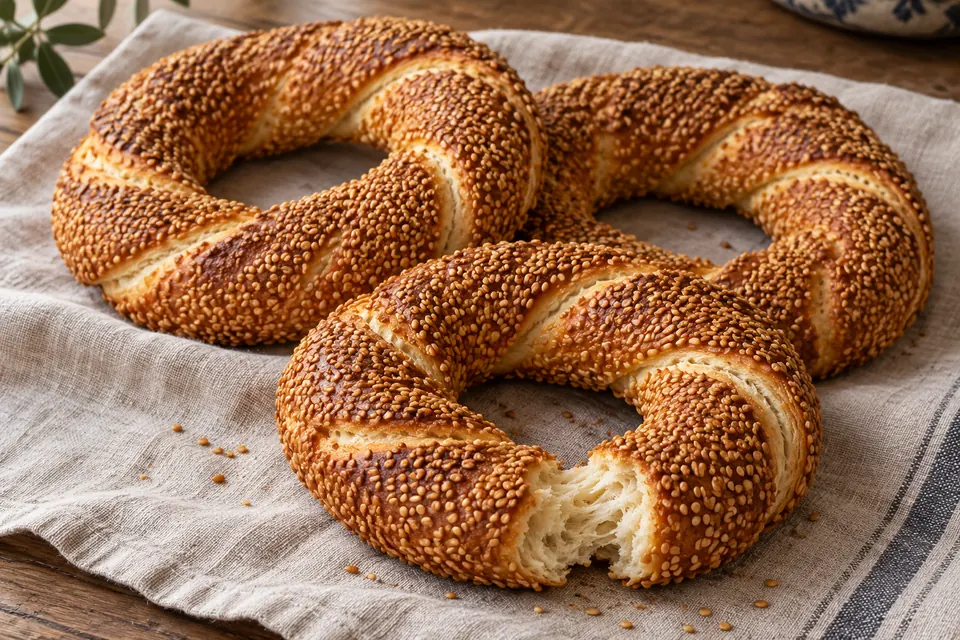
Simit is familiar in Turkish bakeries and street-food culture, but its form is not identical everywhere. Ankara's darker sesame-coated simit and Kastamonu's sesame-free version illustrate that variety. This recipe is a general sesame-ring version for a domestic oven, not a claim to reproduce either geographically indicated product.
Simit — Recipe Card
Turkish twisted bread rings with grape molasses and sesame
Makes 6 servings · Makes 6 large rings; 1 ring is a serving. Rising time varies with room temperature. Coating quantities allow for dipping and some leftovers, which should be discarded.US cup = 240 ml · tablespoon = 15 ml · teaspoon = 5 ml. Cup and weight conversions are approximate. Australian cooks: use a 15 ml measuring tablespoon.
Ingredient quantities and servings are scaled. Cooking times, pan sizes, frying oil depth, and temperatures stay the same; cook larger batches as needed.
Ingredients
How to make Simit
Mix and knead
Mix flour, instant yeast and salt in a large bowl. Add the 300 ml (1¼ cups) dough water, lukewarm at about 30–35°C (86–95°F), and mix into a firm dough. Knead on a clean work surface for 8–10 minutes until smooth and elastic, not wet or sticky. If unusually dry, work in extra water a teaspoon at a time, up to 15 ml (1 tbsp); avoid adding unnecessary flour. Never taste raw dough.
Let the dough rise
Return to the bowl, cover and leave in a comfortably warm place for about 60 minutes, until roughly doubled. Judge the increase in volume as well as the clock; allow about 45–75 minutes depending on the room. Do not place the bowl on a hot surface.
Prepare the coating and oven
While the dough rises, stir the pekmez with the 60 ml (¼ cup) coating water in a shallow bowl. Toast the sesame in a dry pan over medium-low heat for 3–4 minutes, stirring, just until pale golden and fragrant; cool on a wide plate. If already lightly toasted, skip the pan. Line two baking trays with baking parchment rated for the temperature. Preheat a conventional oven to 220°C (425°F) before the shaped rings finish their final rise.
Twist six rings
Gently deflate the dough and divide into 12 equal pieces. Roll each into a rope about 40 cm (16 in) long. Pair two ropes, twist them around each other and bring the ends together into a ring. Overlap the ends slightly and pinch firmly, leaving the center hole open. Repeat to make 6 rings. If the dough springs back while rolling, cover and rest 5 minutes before continuing.
Dip, coat and proof
Dip each ring briefly on both sides in the pekmez mixture, let the excess drip away, then press both sides into sesame. Place 3 rings on each tray with space to expand. Leave uncovered for about 20 minutes, until slightly puffed, not doubled again. Discard leftover dipping liquid and seeds that have touched the raw dough.
Bake and cool
Bake for 22–25 minutes, swapping the trays' positions and turning them halfway through, until deeply golden, firm underneath and fully baked inside. If a ring is opened at the join, the crumb should be set, not gummy raw dough; return to the oven if needed. Do not add water to the hot oven floor. Cool on a rack for at least 10 minutes before serving so the crumb can settle.
Bring this recipe to your kitchen with a printable copy.
Print recipeRecipe from MyTurkishRecipes · https://myturkishrecipes.com/turkish-sesame-bread-rings-simit. Quantities reflect your selected serving scale. Cooking times are estimates; follow the doneness cues.
A few helpful kitchen notes
Flour and yeast
Bread flour gives the intended chewy texture. Use the specified instant yeast; baking powder is not a direct substitute. Weigh the flour, and make only the small water adjustment described if needed. Extra resting time for resistant dough is additional to the listed timings.
Pekmez and sesame
Use grape pekmez rather than pomegranate molasses, which has a different sour flavor. Dark cane molasses is not an identical substitute. Lightly toast raw sesame only; already dark-roasted seeds can burn during baking. This method dips the rings without boiling them.
Dietary notes
The specified dough and coating are vegan, with no egg, milk or honey. Contains wheat and sesame and is not gluten-free. Check packaged ingredients and any accompaniments separately; cheese and butter would change the meal's dietary profile. No one-for-one gluten-free flour substitution is claimed.
Raw-flour hygiene
Flour is raw food. Do not taste the dough or the used dipping mixture. Wash hands, utensils and work surfaces after shaping and keep raw flour away from ready-to-eat foods. Bake the rings fully before eating.
How to store and reheat Simit
Best on the day of baking. Once completely cool, keep plain unfilled simit in a sealed container at cool room temperature for up to 2 days, or freeze airtight for up to 1 month. Thaw at room temperature, then refresh in a 160°C (325°F) oven for about 8–10 minutes. Discard any bread showing mold; do not cut away only the visible patch. Filled simit needs storage appropriate to its filling.
Simit: questions and answers
Why did the rings open at the seam?
The ends were not sealed firmly or the surface was too dry. Overlap and pinch before dipping, keeping a little dough-to-dough contact rather than trapping sesame in the join.
Why is the crust soft after cooling?
A little softening is normal as moisture moves from crumb to crust. Cool on a rack without covering, and avoid sealing warm bread. Brief oven refreshing restores some crispness; a storage bag will not preserve a just-baked crust.
Can I make smaller simit?
The specified yield is six large rings. Smaller rings need a different division and shorter baking time, so do not keep the full 22–25 minutes automatically. For a first attempt, follow the stated size and use color and cooked crumb as checks.