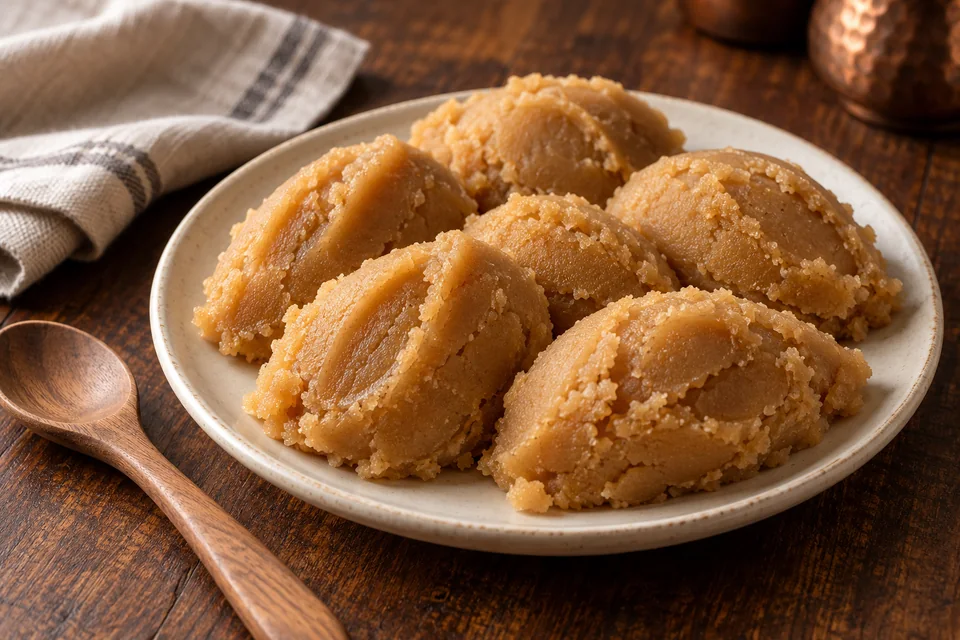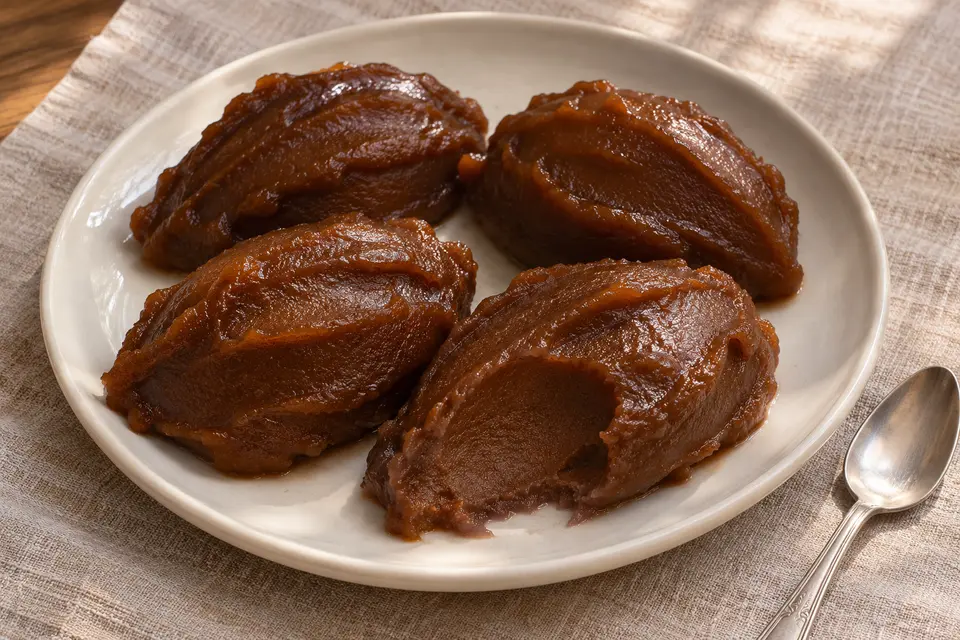
Konya Haside Tatlısı, also named Konya Kara Helvası, was registered as geographical indication No. 861 in 2021. The regional specification uses only wheat flour, unsalted butter and grape pekmez. It calls for warming the pekmez separately to no more than 50°C before combining, then resting the finished helva for about ten minutes.
Konya Haside Tatlısı / Konya Kara Helvası — Recipe Card
Butter-Roasted Flour Helva with Grape Molasses
Makes 4 servings · Makes 4 rich dessert portions.US cup = 240 ml · tablespoon = 15 ml · teaspoon = 5 ml. Cup and weight conversions are approximate. Australian cooks: use a 15 ml measuring tablespoon.
Ingredient quantities and servings are scaled. Cooking times, pan sizes, frying oil depth, and temperatures stay the same; cook larger batches as needed.
Ingredients
How to make Konya Haside Tatlısı / Konya Kara Helvası
Measure and melt the butter
Measure the flour and pekmez before starting; once the flour is roasted, the mixing moves quickly. Melt the butter in a wide, heavy saucepan over low heat without browning it.
Roast the flour slowly
Add the flour and stir continuously with a broad wooden spoon for 15–20 minutes over low heat, scraping the base and corners. The mixture should become pale golden and smell toasted, without dark burnt patches.
Warm the grape pekmez
While stirring the flour, gently warm the pekmez in a separate small saucepan. Use a thermometer and remove it from the heat by 50°C/122°F; do not bring it to a simmer.
Combine off the heat, then thicken
Take the flour pan off the heat. Pour in the warm pekmez steadily while stirring firmly to remove lumps; the mixture may steam. Return to low heat and stir for 3–5 minutes, until the liquid is absorbed and the helva forms a glossy, soft mass that draws together under the spoon.
Rest and portion
Remove from the heat and leave for 10 minutes. Spoon onto four small plates or a shared serving dish and serve warm. Keep the plain presentation to show the dark pekmez color and smooth texture.
Bring this recipe to your kitchen with a printable copy.
Print recipeRecipe from MyTurkishRecipes · https://myturkishrecipes.com/turkish-grape-molasses-helva-konya-haside-tatlisi. Quantities reflect your selected serving scale. Cooking times are estimates; follow the doneness cues.
A few helpful kitchen notes
Cup conversion
The registration gives one cup each of flour and pekmez, and half a cup of butter. This recipe uses 240 ml cups throughout; the flour and butter weights are practical kitchen conversions of those volume ratios.
Choose grape pekmez
Use pure grape molasses rather than blackstrap molasses, pomegranate molasses or a flavored syrup. Those products change the flavor and are not the grape pekmez specified for this helva.
The 50°C step
The 50°C/122°F limit applies to prewarming the pekmez in its separate pan. It is not a maximum temperature for the finished helva, which goes back over low heat after mixing.
Dietary and allergens
Vegetarian; contains milk and wheat. Butter makes this version unsuitable for vegan diets, and the wheat flour prevents a gluten-free label. No nut garnish is included.
Cook the flour
Do not taste the raw flour or uncooked mixture. Complete both the flour-roasting and final cooking stages before tasting or serving.
How to store and reheat Konya Haside Tatlısı / Konya Kara Helvası
Refrigerate leftovers in a shallow covered container within 2 hours at 4°C/40°F or below, or within 1 hour if the room is above 32°C/90°F. Use within 3 days. Serve chilled, or reheat a portion gently in a covered microwave-safe dish in short bursts, stirring between bursts, until it reaches 74°C/165°F throughout. Refrigerated helva becomes firmer than the freshly cooked dessert.
Konya Haside Tatlısı / Konya Kara Helvası: questions and answers
Why is it called kara helva?
Kara means dark or black in this dish name. Grape pekmez supplies the deep brown color; the flour should be toasted, not burned.
Do I add sugar, milk or water?
No. This version follows the three-ingredient formula of flour, unsalted butter and grape pekmez, without a separate sugar syrup or milk.
How do I avoid lumps?
Keep stirring the flour during roasting, take the pan off the heat before adding the warm pekmez and work the mixture firmly across the base. Break up any small lumps before returning it to low heat.