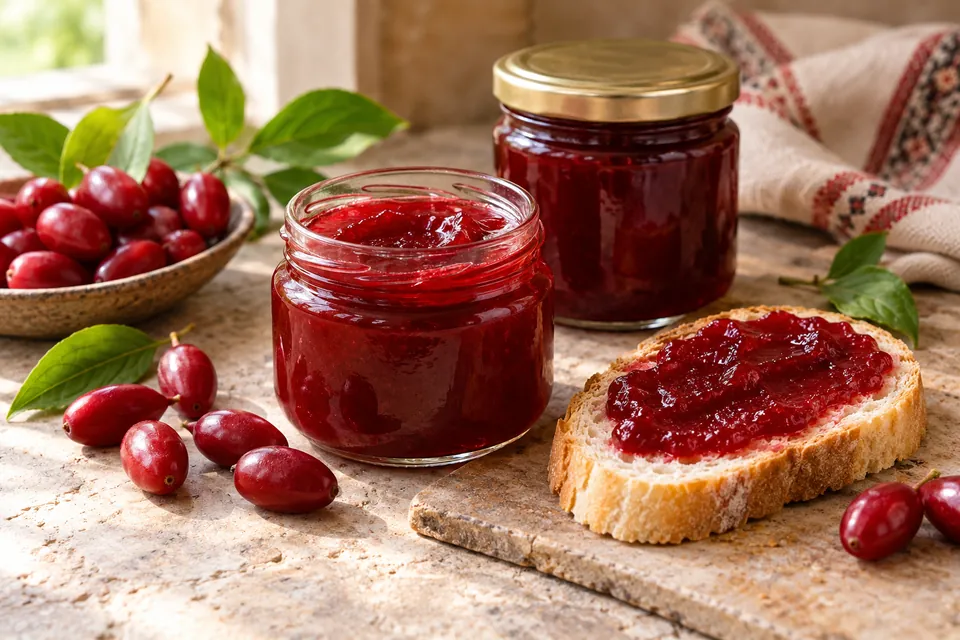
The Ministry of Culture and Tourism's Zonguldak entry records a local method built around 2 kilograms of kızılcık and 800 grams of sugar: the fruit is boiled until soft, pushed through a sieve, and the purée is cooked with sugar before a little citric acid is added. This recipe scales that 5:2 fruit-to-sugar ratio down for a home kitchen and uses the same soften, sieve and reduce sequence. Kızılcık is Cornus mas, commonly called Cornelian cherry in English; it is distinct from sour cherry and cranberry. The finished preserve belongs at breakfast with bread, but its brisk acidity also works well with plain yogurt.
Kızılcık Marmeladı — Recipe Card
Turkish Cornelian Cherry Marmalade
Makes 48 servings · Makes about 3 cups (720 ml), approximately 48 one-tablespoon servings.US cup = 240 ml · tablespoon = 15 ml · teaspoon = 5 ml. Cup and weight conversions are approximate. Australian cooks: use a 15 ml measuring tablespoon.
Ingredient quantities and servings are scaled. Cooking times, pan sizes, frying oil depth, and temperatures stay the same; cook larger batches as needed.
Ingredients
How to make Kızılcık Marmeladı
Chill the test plates
Place two small plates in the freezer. Wash two or three heat-safe jars and their lids in hot soapy water, rinse well and leave them to air-dry. These jars are for refrigerated storage, not shelf-stable canning.
Soften the fruit
Put the Cornelian cherries and 360 ml (1 1/2 cups) water in a wide, nonreactive saucepan. Bring to a boil over medium-high heat, then reduce to a steady simmer. Cook for 15–20 minutes, stirring twice, until the skins split and the fruit crushes easily against the side of the pan.
Remove the stones
Let the fruit cool for 5 minutes so it is safer to handle. Set a sturdy medium-mesh sieve over a clean wide saucepan. Transfer the fruit and cooking liquid in batches, then press firmly with a wooden spoon until only the stones and tough skins remain. Scrape the purée from the underside of the sieve and discard the solids.
Reduce with sugar
Stir the sugar into the purée and bring it to a lively simmer over medium heat. Cook for 15–25 minutes, stirring more often as it thickens and lowering the heat if it spatters. Start testing at 15 minutes: place a teaspoon on a frozen plate, wait 30 seconds, then push it with a finger. It is ready when the surface wrinkles and the path closes slowly, or when the mixture reaches about 220°F (104°C).
Finish and refrigerate
Dissolve the citric acid in 15 ml (1 tablespoon) water, stir it into the marmalade and boil for 1–2 minutes. Remove from the heat and skim any foam. Ladle into the clean heat-safe jars, leaving 1 cm (about 1/2 inch) at the top. Cool for about 30 minutes, cover and refrigerate; get the jars into the refrigerator within 2 hours of cooking. Let the marmalade finish setting during the 1-hour cooling period.
Bring this recipe to your kitchen with a printable copy.
Print recipeRecipe from MyTurkishRecipes · https://myturkishrecipes.com/turkish-cornelian-cherry-marmalade-kizilcik-marmeladi. Quantities reflect your selected serving scale. Cooking times are estimates; follow the doneness cues.
A few helpful kitchen notes
Choose the correct fruit
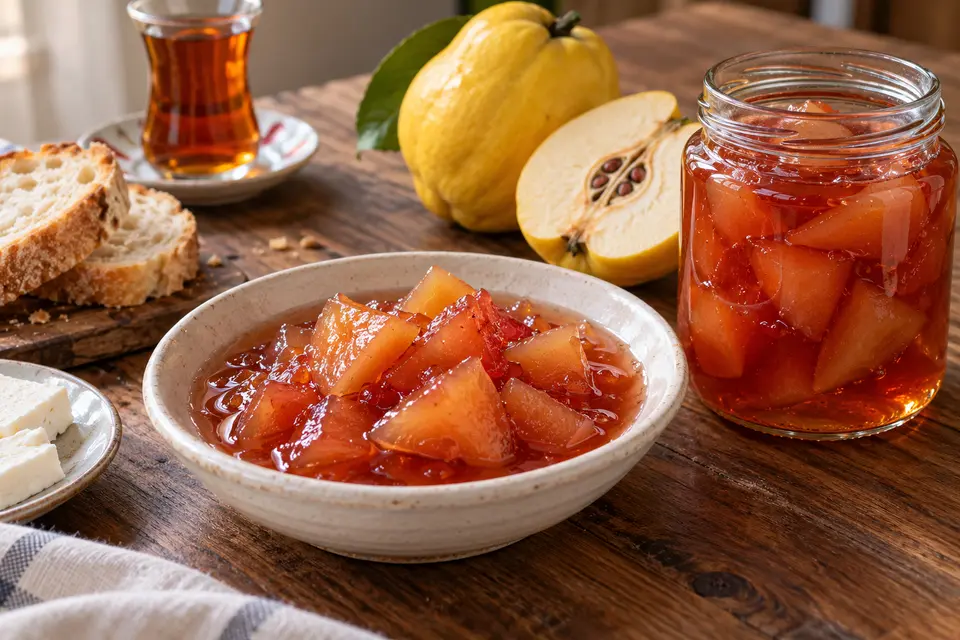
Use ripe, deep-red Cornelian cherries (Cornus mas), called kızılcık in Turkish. They are small oval fruits with hard stones; sour cherries, cranberries and common sweet cherries will not give the same flavor or texture.
Fresh or frozen
Frozen Cornelian cherries work when fresh fruit is unavailable. Thaw them completely, include their released juice and begin with 300 ml (1 1/4 cups) of the listed water, adding the rest only if the fruit needs it to soften.
Citric acid
Use food-grade citric acid. For this refrigerated batch, 10 ml (2 teaspoons) lemon juice may replace it, although the flavor will be softer and more lemony; that substitution does not make the preserve shelf-stable.
Dietary notes
The listed recipe is vegan and vegetarian. Use clean utensils each time you serve it and return the jar promptly to the refrigerator.
Serving ideas
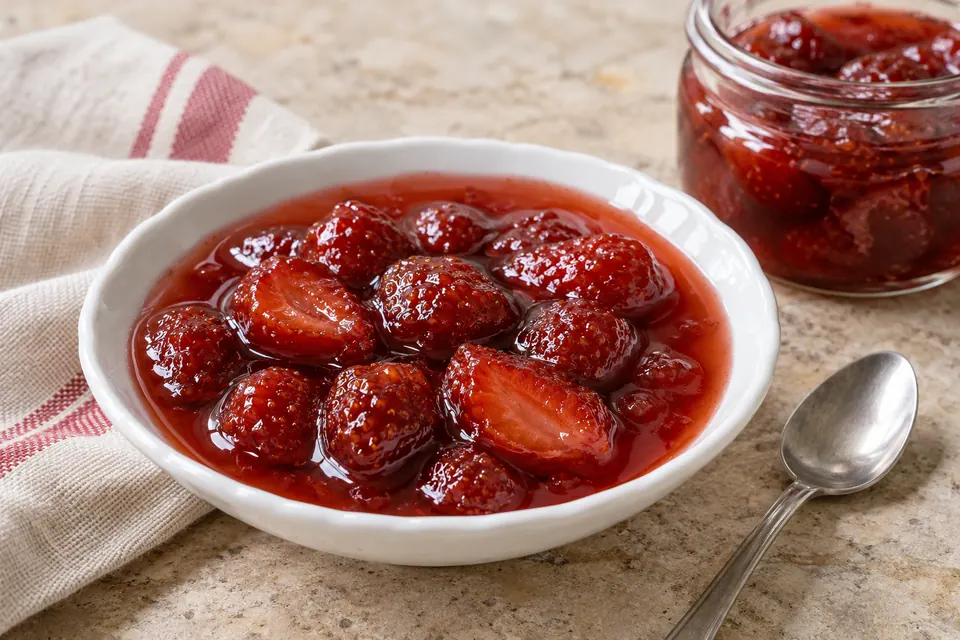
Serve 15 ml (1 tablespoon) with bread, bazlama or pişi, swirl it into plain yogurt, or use a thin layer between simple cake layers. Its tartness is more pronounced than strawberry jam.
How to store and reheat Kızılcık Marmeladı
Spoon the hot marmalade into clean, dry, heat-safe jars, cool for about 30 minutes, then cover and refrigerate at 40°F (4°C) or colder; refrigerate within 2 hours of cooking. Use within 3 weeks. Freeze in freezer-safe containers with headspace for up to 3 months for best quality. This recipe has not been tested for room-temperature canning, so do not store sealed jars in the pantry. Discard the entire jar if you see mold, bubbling, leakage or smell fermentation.
Kızılcık Marmeladı: questions and answers
What does Kızılcık Marmeladı taste like?
It is tart, fruity and lightly tannic, with a flavor between red plum and sour cherry but distinctly its own. The 5:2 fruit-to-sugar ratio keeps this version bright rather than candy-sweet.
Can I leave the stones in while the fruit cooks?
Yes. Simmering the whole fruit loosens the flesh from the stones. Press everything through a sturdy sieve afterward and discard every stone before adding the sugar.
How do I know the marmalade is ready?
Begin testing after about 15 minutes of reducing. A spoonful on a frozen plate should cool quickly, wrinkle when pushed and leave a path that closes slowly; an instant-read thermometer may read about 220°F (104°C).
Can I water-bath can this recipe?
No. The quantities and process here are written for refrigerator or freezer storage and have not been validated for shelf-stable canning. Use a laboratory-tested canning formula if you want pantry storage.