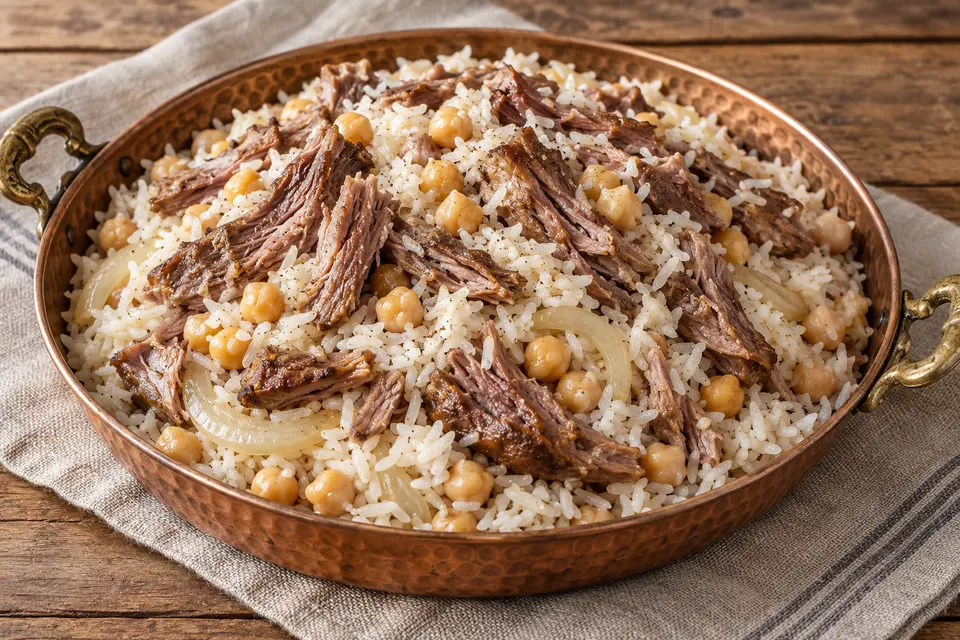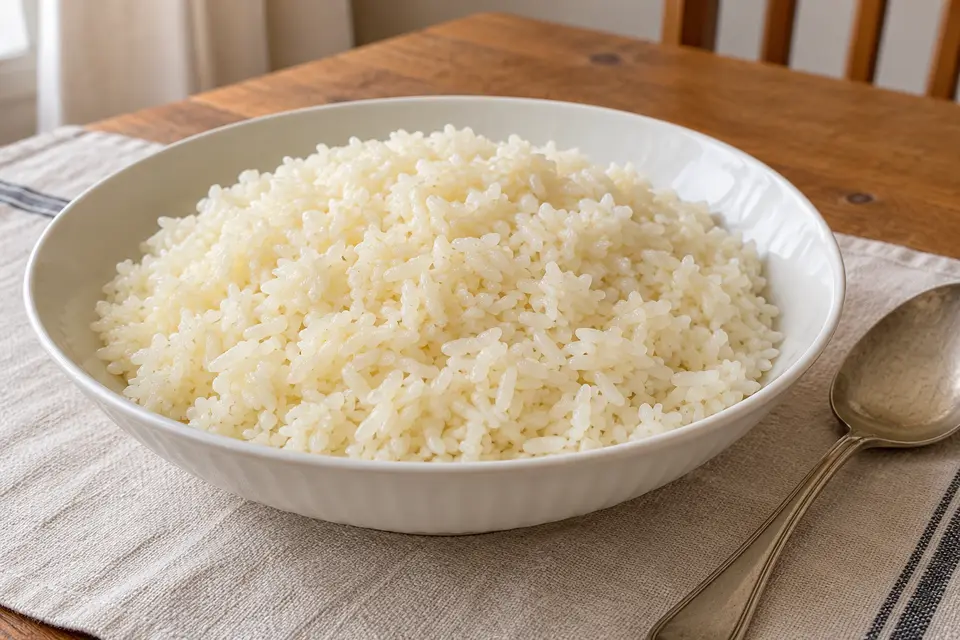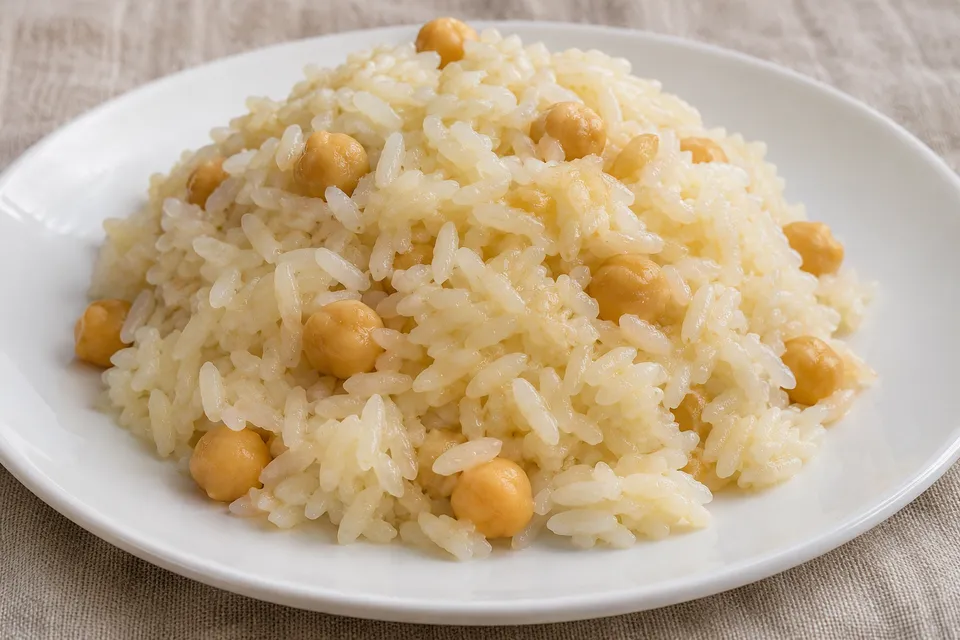
Nohutlu pilav belongs to Turkey’s rice-and-legume pilaf repertoire. Turkish vocational cooking material describes adding cooked chickpeas before the water or after the rice cooks. Here they go in before the water, so they warm through with the rice.
Nohutlu Pilav — Recipe Card
Buttery rice pilaf with tender chickpeas
Makes 4 servings · Four generous side portions.US cup = 240 ml · tablespoon = 15 ml · teaspoon = 5 ml. Cup and weight conversions are approximate. Australian cooks: use a 15 ml measuring tablespoon.
Ingredient quantities and servings are scaled. Cooking times, pan sizes, frying oil depth, and temperatures stay the same; cook larger batches as needed.
Ingredients
How to make Nohutlu Pilav
Rinse and drain
Rinse the rice in several changes of cold water until the water is much less cloudy. Drain thoroughly. Rinse canned chickpeas and drain; they must already be fully cooked and tender.
Coat the rice
Melt the butter with the oil in a medium heavy saucepan over medium-low heat. Add the rice and stir gently for 3–4 minutes, coating the grains without browning. Fold in the chickpeas.
Simmer gently
Add the measured hot water and salt carefully. Stir once, bring to a gentle boil, then cover and reduce to the lowest heat. Cook for 15–18 minutes without stirring. Check for tender rice and absorbed liquid. If the center is still chalky and the pan is dry, add 15–30 ml (1–2 tbsp) boiling water, cover and cook another 2–3 minutes.
Rest and fluff
Remove from the heat and leave covered for 10 minutes. Fluff gently with a fork, lifting rather than crushing the grains. Serve hot in four side portions.
Bring this recipe to your kitchen with a printable copy.
Print recipeRecipe from MyTurkishRecipes · https://myturkishrecipes.com/turkish-chickpea-rice-pilaf-nohutlu-pilav. Quantities reflect your selected serving scale. Cooking times are estimates; follow the doneness cues.
A few helpful kitchen notes
Dietary notes
Contains milk from butter. Water and plain chickpeas keep the base vegetarian and gluten-free; use gluten-free-labelled canned chickpeas. Do not replace water with unverified stock.
Heat level
No added chili. For a hotter serving, sprinkle up to 1 g (½ tsp) hot pul biber over the finished pilaf; leave it off for the mild base.
Rice and chickpeas
Use fully cooked chickpeas, not soaked raw ones. Different rice brands absorb different amounts of water; the small hot-water adjustment in the method prevents a dry, hard center.
How to store and reheat Nohutlu Pilav
Divide leftovers into shallow containers and refrigerate promptly, ideally within 1 hour, at 4°C (40°F) or below. Use within 24 hours. Reheat only once, covered with a small splash of water, until steaming throughout and at least 74°C (165°F). Discard rice left cooling for too long; reheating does not undo unsafe storage.
Nohutlu Pilav: questions and answers
Can I make it without butter?
Replace the 25 g (0.9 oz) butter with 25 ml (1 tbsp plus 2 tsp) olive oil, in addition to the listed oil. This makes the stated base vegan, with a different flavor.
Why did the rice become sticky?
Poor draining and frequent stirring can encourage clumping. Rinse well, drain thoroughly, stir only once after adding water, and fluff after the covered rest.