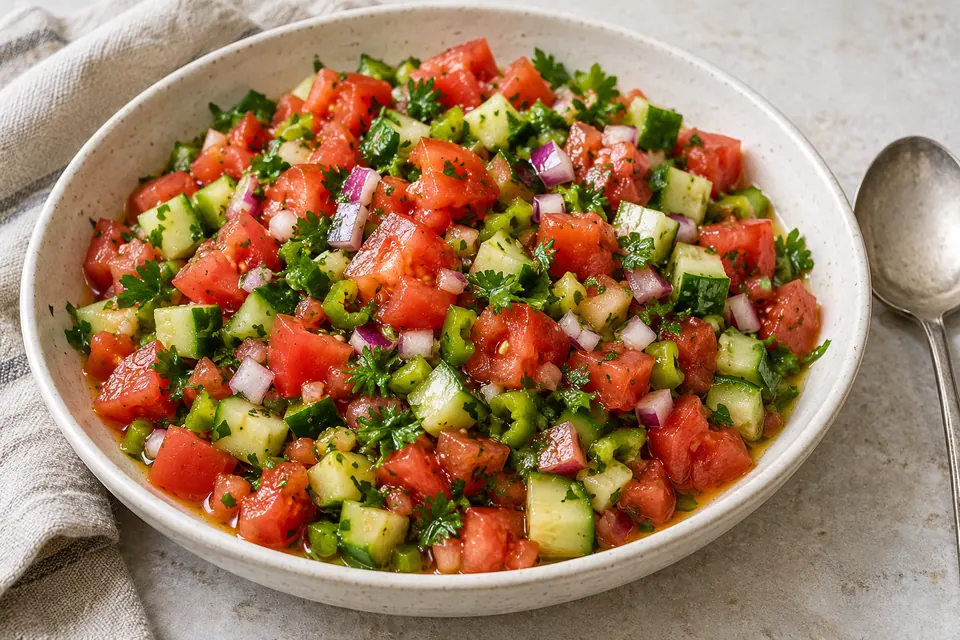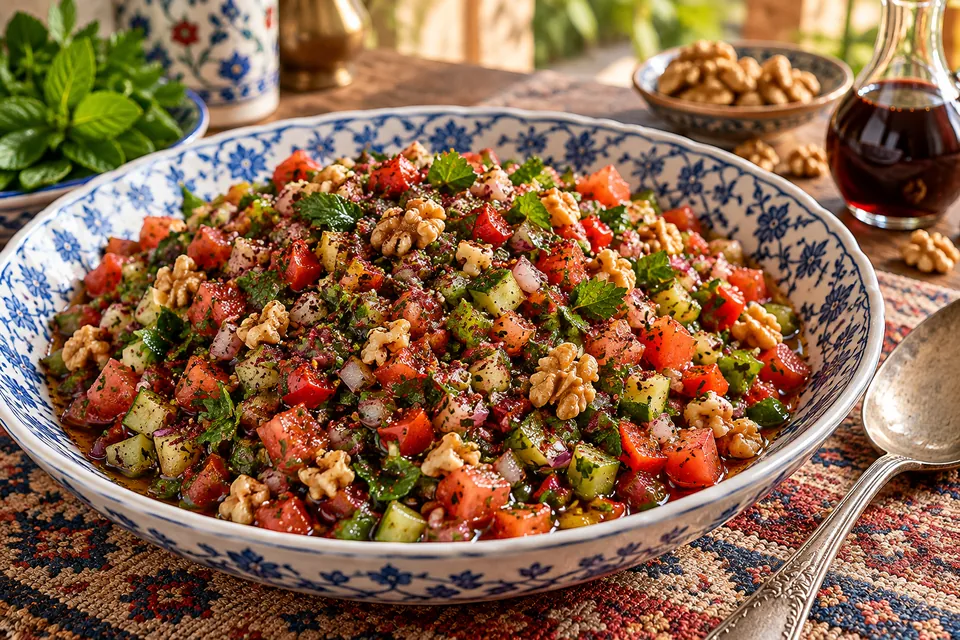
The salad is closely associated with Gaziantep and the cooking of southeastern Türkiye. Gaziantep's provincial culture authority describes a local preference for very finely chopped, peppery and sour salads served juicy enough to eat with a spoon. This version follows that style while using the walnuts and pomegranate molasses widely associated with Gavurdağı Salatası. TÜRKPATENT lists a geographical-indication application filed by Gaziantep Metropolitan Municipality on 15 October 2025; the portal currently records it as an application rather than a completed registration.
Gavurdağı Salatası — Recipe Card
Turkish tomato and walnut spoon salad
Makes 6 servings · Makes about 1.25 kg / 6 side-dish servings.US cup = 240 ml · tablespoon = 15 ml · teaspoon = 5 ml. Cup and weight conversions are approximate. Australian cooks: use a 15 ml measuring tablespoon.
Ingredient quantities and servings are scaled. Cooking times, pan sizes, frying oil depth, and temperatures stay the same; cook larger batches as needed.
Ingredients
How to make Gavurdağı Salatası
Wash and dry the produce
Wash all whole vegetables and herbs under cool running water without soap. Dry them thoroughly with a clean towel so the dressing will not become diluted.
Season the onion
Cut the red onion into a very fine 3–4 mm dice. Put it in a large bowl with half of the sumac and a small pinch of the salt, rub gently for 20 seconds, and leave it while you chop the remaining ingredients.
Finely dice the vegetables
Cut the cucumbers, green peppers, red pepper and tomatoes into even 3–4 mm pieces. Work with a sharp knife rather than a food processor so the vegetables stay distinct. Add them, including the tomato juices, to the onion.
Add herbs and walnuts
Thinly slice the scallions and finely chop the parsley and fresh mint. Add them to the bowl with most of the walnuts, reserving about 1 tablespoon for the top.
Whisk the dressing
In a small bowl, whisk the olive oil, pomegranate molasses, dried mint, remaining sumac and remaining salt until glossy and evenly combined.
Dress just before serving
Pour the dressing over the salad and fold gently until every finely diced piece is coated. Taste and add a small pinch of salt only if needed; the pomegranate molasses should taste tart rather than candy-sweet.
Finish and serve
Spoon the salad and its juices into a shallow serving bowl. Scatter over the reserved walnuts and serve immediately with a spoon alongside grilled meat, köfte or pilaf.
Bring this recipe to your kitchen with a printable copy.
Print recipeRecipe from MyTurkishRecipes · https://myturkishrecipes.com/turkish-tomato-walnut-salad-gavurdagi-salatasi. Quantities reflect your selected serving scale. Cooking times are estimates; follow the doneness cues.
Make it work in your kitchen
Ingredient Substitutions
These swaps change flavor or texture as described. Keep the original ingredients for the closest version of the dish.
Pomegranate molasses
If unavailable, omit it and add lemon juice gradually to taste. This is a flavor adjustment, not a like-for-like replacement: the result will be less fruity and less sweet.
A few helpful kitchen notes
Regional variations
Cucumber, red pepper and the choice of fresh herbs vary between households. The very fine dice, walnuts and tart dressing define the Gaziantep-style version presented here.
Choosing pomegranate molasses
Use a tart product labelled pomegranate molasses or nar ekşisi rather than grenadine. If your product is a sweetened pomegranate sauce, begin with 1½ tablespoons and adjust to taste.
Dietary notes
The base recipe is vegan and vegetarian and contains walnuts. It has no wheat ingredient, but check the labels on packaged pomegranate molasses and sumac if you must avoid gluten or other cross-contact.
Heat level
No added chili. Use mild green peppers for the base recipe. For medium heat, add ½ teaspoon pul biber; for a hotter salad, replace one mild pepper with a finely diced hot green pepper.
How to store and reheat Gavurdağı Salatası
Gavurdağı Salatası is best immediately after dressing. Cover and refrigerate at 4°C/40°F or below within 2 hours and use within 24 hours; stir gently before serving. Keep it cold and discard it if left above 4°C/40°F for more than 2 hours, or more than 1 hour above 32°C/90°F. Do not freeze, because the vegetables lose their crisp texture.
Gavurdağı Salatası: questions and answers
Can I prepare Gavurdağı Salatası ahead?
You can wash, dry and chop the vegetables and herbs a few hours ahead, then keep them covered and cold. Store the dressing and walnuts separately and combine everything just before serving.
Is pomegranate molasses the same as grenadine?
No. Pomegranate molasses is concentrated pomegranate juice with a tart, fruity flavor. Grenadine is a sweet drink syrup and will make this salad too sugary.
Why is Gavurdağı Salatası eaten with a spoon?
The vegetables are cut much finer than in a typical chopped salad, and their juices mingle with the tart dressing. A spoon gathers the small dice, walnuts and dressing together in each bite.