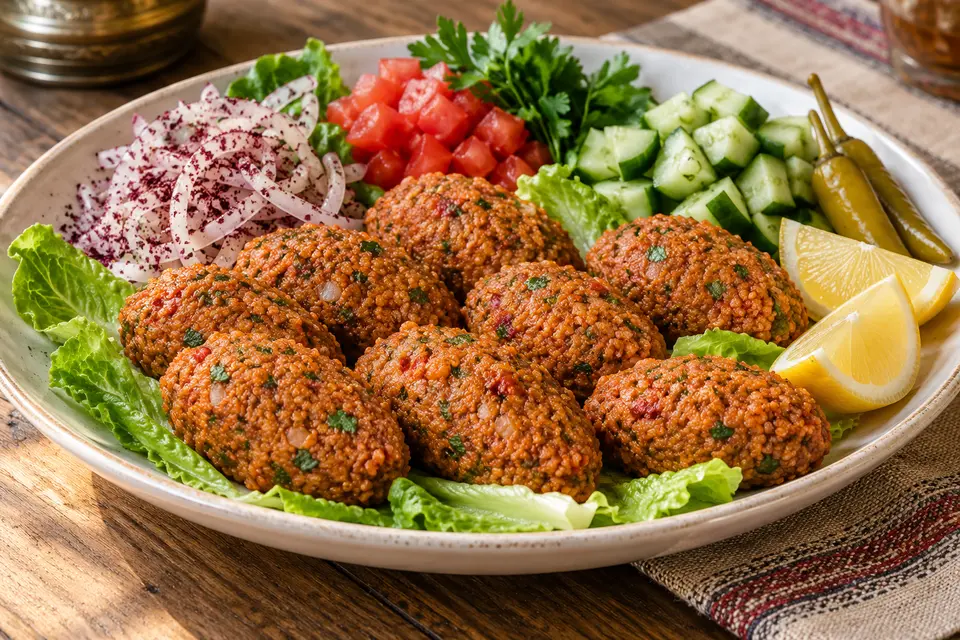
Türkiye’s Culture Portal records Karaman Batırık as a mezze made by rubbing düğürcük—very fine bulgur—with grated tomato, pepper paste, onion, fresh pepper, parsley, toasted tahini and spices until the grain loses its hard bite. It may be served as compact sıkma or loosened with water. Regional versions also use walnut, menengiç, sesame or peanut; this recipe keeps the tahini-based Karaman style and serves the firm version with sumac onion, tomato, cucumber, lettuce and pickled pepper.
Batırık — Recipe Card
Karaman-style tahini and fine-bulgur mezze
Makes 6 servingsUS cup = 240 ml · tablespoon = 15 ml · teaspoon = 5 ml. Cup and weight conversions are approximate. Australian cooks: use a 15 ml measuring tablespoon.
Ingredient quantities and servings are scaled. Cooking times, pan sizes, frying oil depth, and temperatures stay the same; cook larger batches as needed.
Ingredients
How to make Batırık
Prepare the produce
Rinse the tomatoes, peppers, cucumber, herbs and lettuce under running water and dry them. Grate the 600 g tomatoes and discard their skins. Finely prepare the onion, peppers, parsley and mint; keep the serving vegetables separate.
Warm the tahini
Put the tahini in a small dry skillet over low heat. Stir continuously for 2–3 minutes, just until fluid and fragrant; do not let it scorch or darken. Remove from the heat.
Knead the bulgur
Spread the extra-fine bulgur in a wide tray. Add the grated tomatoes, pepper paste, yellow onion, green peppers, half the parsley, half the mint, 1 tablespoon sumac, cumin, pul biber and salt. Knead firmly for 8–10 minutes, scraping and folding the mixture, until the bulgur is tender with no hard center. If it remains dry, work in the cold water 1 tablespoon at a time, using no more than 60 ml (1/4 cup).
Finish and rest
Knead in the warm tahini and lemon juice for 3–4 minutes, then fold in the remaining parsley and mint. Cover and rest for 15 minutes so the fine bulgur finishes absorbing the tomato juices. Taste and adjust only the salt or lemon.
Shape and serve
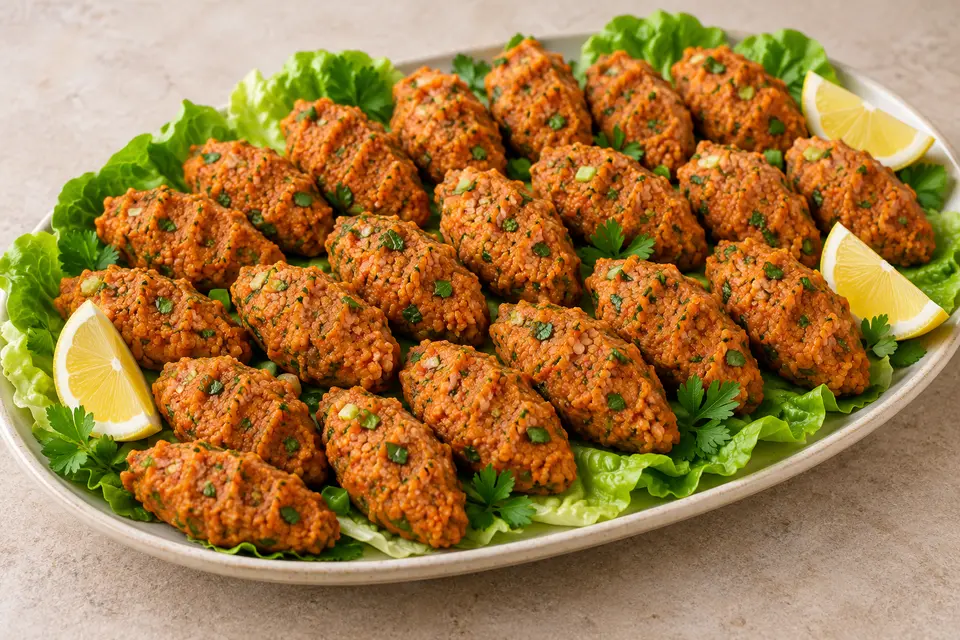
Toss the sliced red onion with the remaining 1 tablespoon sumac. With damp hands, compress the Batırık into 12–18 small oval portions. Arrange on lettuce and serve cool with the sumac onion, diced cucumber, diced tomato and pickled green peppers.
Bring this recipe to your kitchen with a printable copy.
Print recipeRecipe from MyTurkishRecipes · https://myturkishrecipes.com/turkish-tahini-bulgur-mezze-batirik-recipe. Quantities reflect your selected serving scale. Cooking times are estimates; follow the doneness cues.
Make it work in your kitchen
Ingredient Substitutions
These swaps change flavor or texture as described. Keep the original ingredients for the closest version of the dish.
Pul biber
Use the same amount of mild paprika for color and a gentler flavor. For heat, add a small pinch of chili flakes, then taste; chili flakes can be much hotter.
Turkish red pepper paste
Use the same quantity of tomato paste, then add mild paprika to taste. This gives a more tomato-forward flavor and will not reproduce the full pepper flavor.
Fine bulgur
Look for fine bulgur labelled köftelik or #1. Coarse pilaf bulgur needs different hydration and cooking; do not replace it directly in this recipe.
A few helpful kitchen notes
Regional variations
Karaman’s official culinary record notes tahini or walnut and also mentions menengiç, sesame and peanut versions. Treat those as distinct regional or household variations; this base recipe uses tahini only.
Heat level
Mild. Use mild pepper paste and mild green peppers for the base recipe. For a hotter Batırık, increase the pul biber to 1 1/2 teaspoons or use hot pepper paste; reduce the mild paste by the same amount.
Dietary and allergens
The base recipe is vegan and contains sesame from tahini. Bulgur is wheat, so this recipe is not gluten-free. Check the labels on pepper paste and pickled peppers if you need to avoid particular additives or allergens.
Serving style
The Culture Portal also records a sulu version. To serve it loose rather than shaped, place each portion in a bowl and stir in chilled water gradually until spoonable; keep the prepared mixture cold.
How to store and reheat Batırık
Refrigerate Batırık in a shallow airtight container at 4°C/40°F or below within 2 hours of preparation, or within 1 hour when the air temperature is above 32°C/90°F. Keep the lettuce and garnishes separate and eat within 3 days; the texture is best on the first day. Do not freeze, because the raw vegetables become watery. Serve cold; reheating is not needed.
Batırık: questions and answers
What is düğürcük?
Düğürcük is the very fine bulgur used for kneaded dishes. Look for extra-fine or köftelik bulgur; coarse pilaf bulgur will not soften or bind correctly here.
Can I make Batırık without tahini?
Yes, but it becomes a different established variation. The Karaman source also records walnut, menengiç, sesame and peanut versions. For a walnut version, use finely ground walnuts and adjust the water only as needed.
Why is my Batırık falling apart?
The bulgur may be too coarse, too dry or not kneaded long enough. Continue kneading and add cold water one tablespoon at a time until the grains soften and the mixture holds a pressed oval.