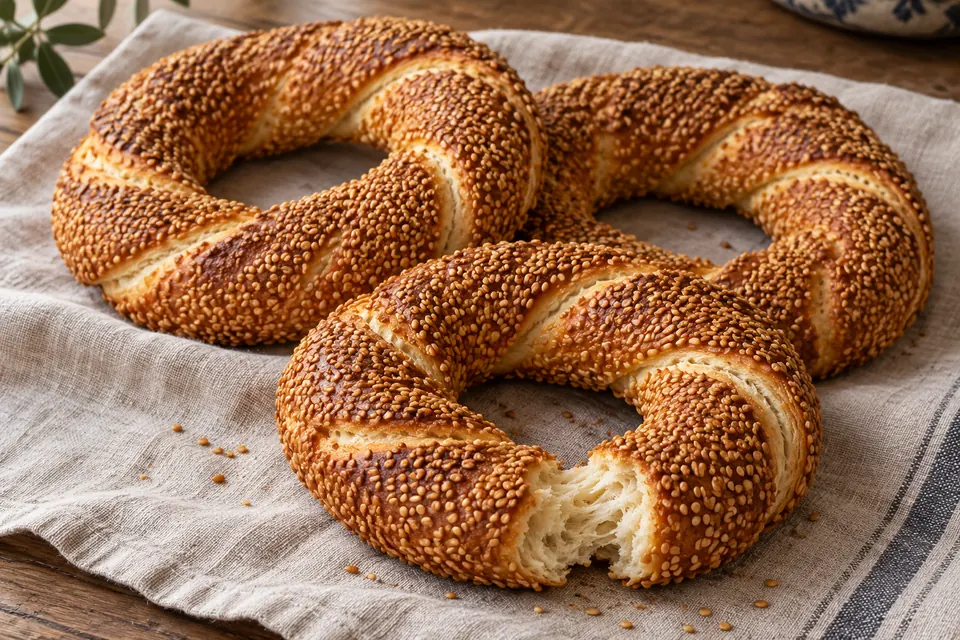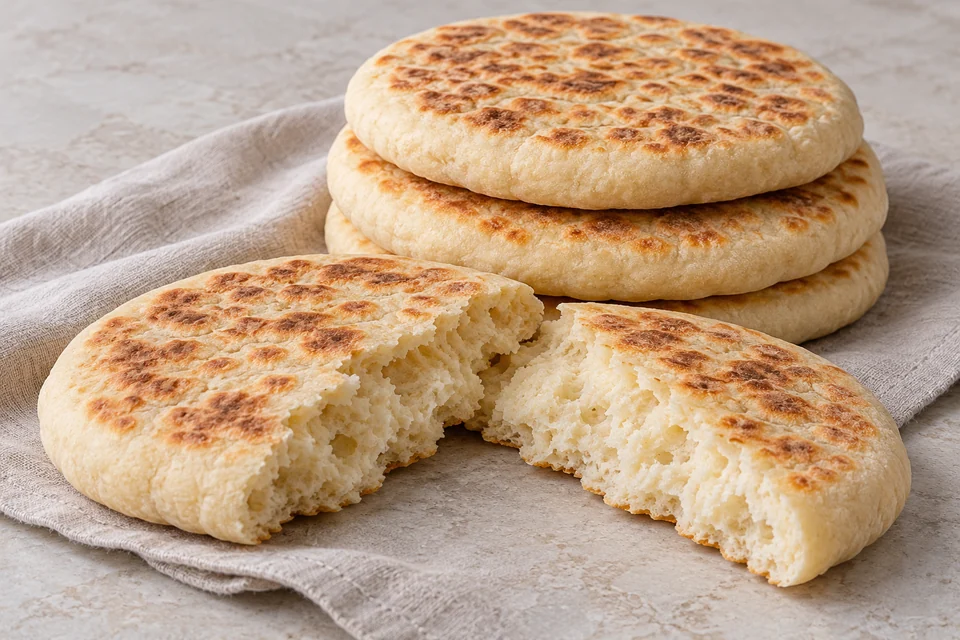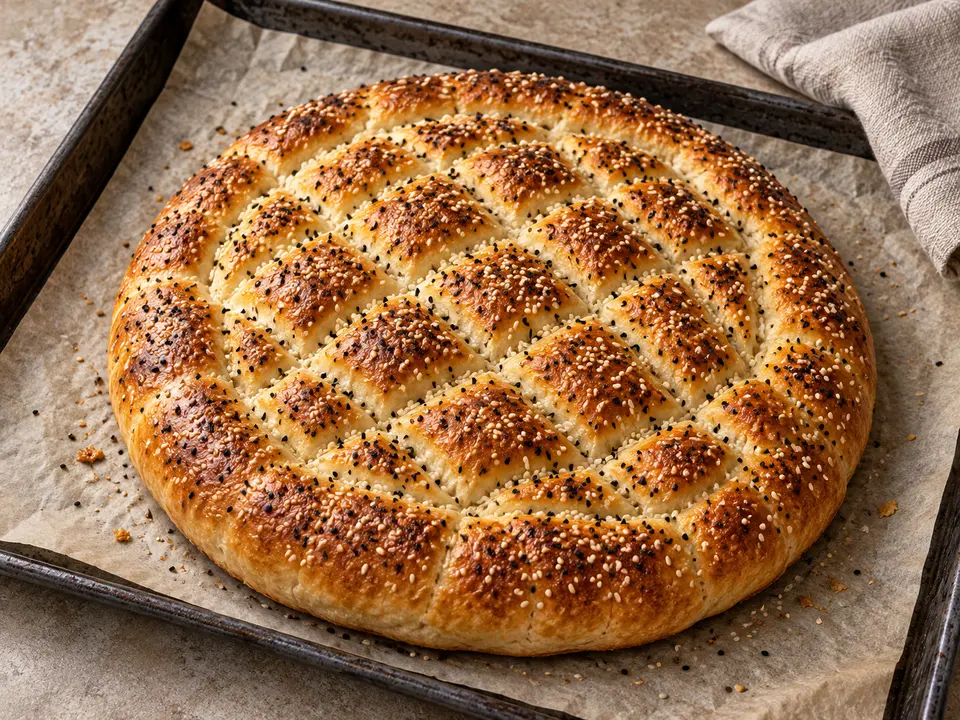
In Türkiye, Ramazan pidesi is closely associated with the month of Ramadan. Bakeries prepare the round, seed-topped loaves before iftar, and queues often form near sunset for bread fresh from the oven. The version here follows that familiar round shape and patterned surface while using one standard home-oven tray.
Ramazan Pidesi — Recipe Card
Turkish Ramadan bread with sesame and nigella seeds
Makes 8 servingsUS cup = 240 ml · tablespoon = 15 ml · teaspoon = 5 ml. Cup and weight conversions are approximate. Australian cooks: use a 15 ml measuring tablespoon.
Ingredient quantities and servings are scaled. Cooking times, pan sizes, frying oil depth, and temperatures stay the same; cook larger batches as needed.
Ingredients
How to make Ramazan Pidesi
Start the dough
Whisk the lukewarm water, yeast and sugar in a large bowl. Leave for 5 minutes; a few bubbles should appear. Stir in the olive oil.
Mix and knead
Add the bread flour and salt. Mix until no dry flour remains, then knead for 8–10 minutes by hand or 6–7 minutes with a dough hook on low speed. The dough should be smooth, elastic and slightly tacky; avoid adding extra flour unless it is truly fluid.
First rise
Cover the bowl and let the dough rise in a draft-free place for 55–60 minutes, until roughly doubled.
Preheat and shape
Place a heavy baking sheet upside down on the middle rack and preheat the oven to 450°F (230°C) for at least 30 minutes. Turn the dough onto a sheet of parchment, form a round and press it evenly into a 12-inch (30 cm) circle. Cover loosely and rest for 15 minutes.
Make the glaze
Whisk the egg yolk, yogurt and 1 tablespoon (15 ml) water until smooth. Spread the glaze gently over the rested dough, reaching the edge.
Press the pattern
Lightly oil your fingertips. Press a deep circular groove about 1 inch (2.5 cm) inside the edge, then press diagonal lines in both directions to make a diamond lattice. Press almost to the parchment without cutting through the dough.
Top and bake
Scatter the sesame and nigella seeds evenly over the surface. Slide the parchment and dough onto the hot baking sheet. Bake for 15–18 minutes, until deeply golden and the center reaches about 200°F (93°C).
Cool briefly
Transfer the pide to a wire rack and cover loosely with a clean kitchen towel for 10 minutes. Let it stand another 10 minutes before tearing or slicing so the crumb can set.
Bring this recipe to your kitchen with a printable copy.
Print recipeRecipe from MyTurkishRecipes · https://myturkishrecipes.com/turkish-ramadan-bread-ramazan-pidesi. Quantities reflect your selected serving scale. Cooking times are estimates; follow the doneness cues.
A few helpful kitchen notes
Flour and texture
Bread flour gives the best chew and helps the wet dough hold its shape. Weigh the flour if possible; excess flour makes the pide dense.
Surface glaze
The egg-yogurt glaze gives the traditional-looking golden, glossy finish and helps the seeds adhere. Apply it only after the final rest, immediately before pressing the pattern.
Dietary notes
The base recipe is vegetarian. It contains wheat/gluten, egg, dairy and sesame; the recipe is not gluten-free or vegan.
Nigella seeds
Nigella seeds are also sold as çörek otu or black seed. They are not the same as cumin; if unavailable, omit them and use a little more sesame.
How to store and reheat Ramazan Pidesi
Cool completely, then keep airtight at room temperature for up to 2 days. For longer storage, wrap well and freeze for up to 1 month. Thaw at room temperature and reheat in a 350°F (180°C) oven for 6–8 minutes; do not refrigerate, which speeds staling.
Ramazan Pidesi: questions and answers
Why is the dough sticky?
A moderately wet dough produces the soft, open crumb. Knead until elastic and use lightly oiled hands rather than working in large amounts of extra flour.
Why did the diamond pattern disappear?
The grooves were probably too shallow or the dough rested after it was patterned. Press firmly after the final rest, add the seeds and bake immediately.
How do I know the pide is baked through?
The surface should be deeply golden, the underside should feel firm and the center should register about 200°F (93°C) on an instant-read thermometer.
Can I make Ramazan pidesi without a baking stone?
Yes. Preheat a heavy baking sheet upside down and slide the parchment onto it; the hot metal helps the base set quickly.