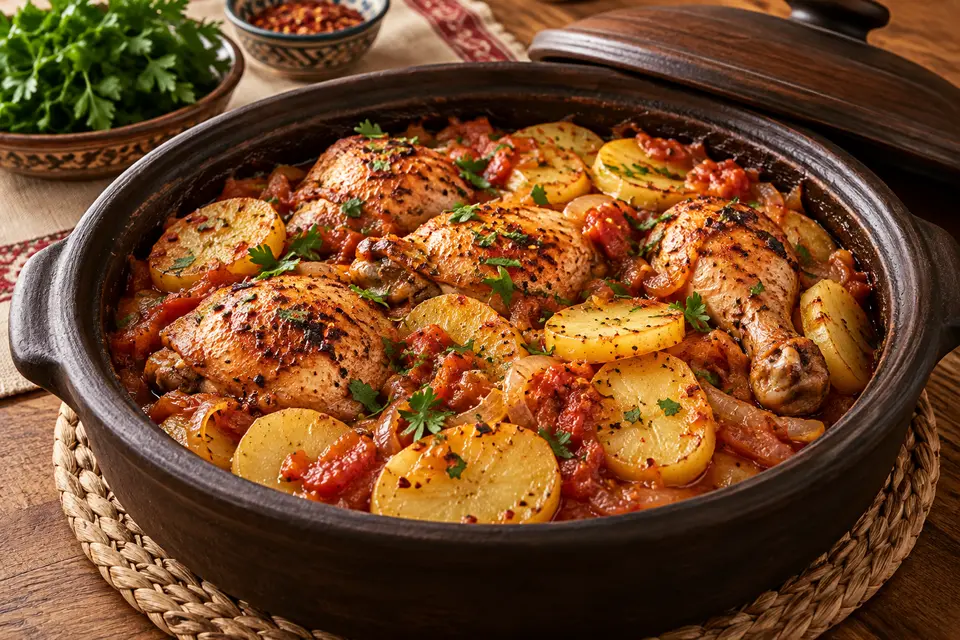
This version follows the Antalya preparation recorded by Türkiye’s Culture Portal: chicken pieces are browned, onions and tomatoes are cooked in the same pan, and the covered casserole receives partly fried potato slices after about an hour. A lidded ovenproof casserole stands in for the traditional clay güveç while preserving the dish’s layered method. The optional lower-oil route in the notes also comes from the same regional source.
Tavuk Güveci — Recipe Card
Antalya-style chicken casserole with tomatoes and potatoes
Makes 4 servings · Serves 4 as a main dishUS cup = 240 ml · tablespoon = 15 ml · teaspoon = 5 ml. Cup and weight conversions are approximate. Australian cooks: use a 15 ml measuring tablespoon.
Ingredient quantities and servings are scaled. Cooking times, pan sizes, frying oil depth, and temperatures stay the same; cook larger batches as needed.
Ingredients
How to make Tavuk Güveci
Heat the oven
Set the oven to 200°C/400°F. Put a rack in the middle. Pat the chicken dry rather than rinsing it, then season all over with half the salt.
Brown the chicken
Melt the butter in a wide skillet over medium-high heat. Brown the chicken in batches for 10–12 minutes total, turning until the surfaces are well colored; it will not yet be cooked through. Transfer the pieces to a lidded ovenproof casserole.
Build the tomato base
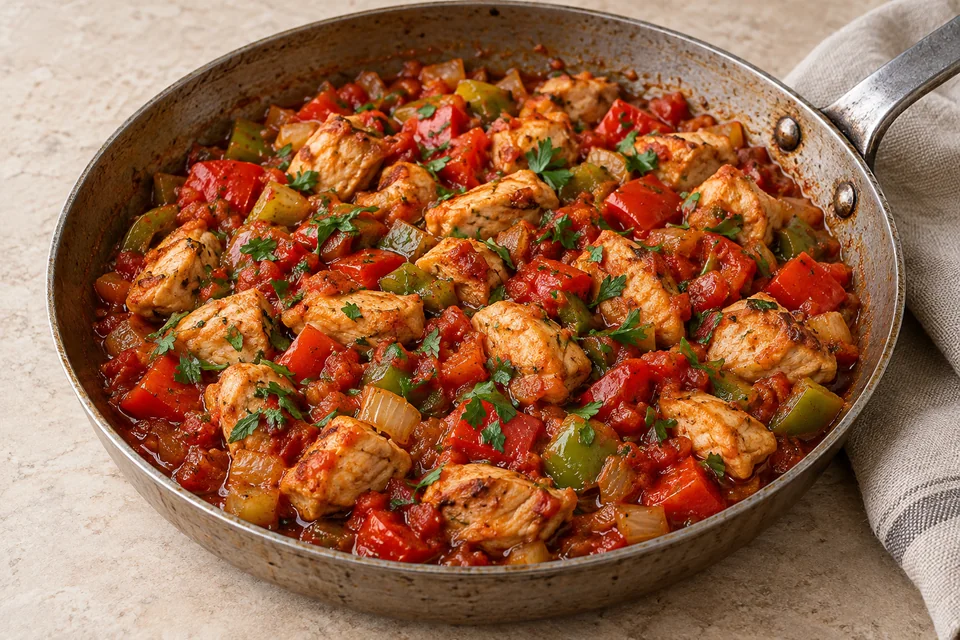
Lower the heat to medium. Add the onions to the same skillet and cook for 7–8 minutes until softened and lightly golden. Stir in the grated tomatoes, half the pul biber and the remaining salt; cook for 10–12 minutes, stirring occasionally, until the mixture is thick rather than watery.
Assemble the casserole
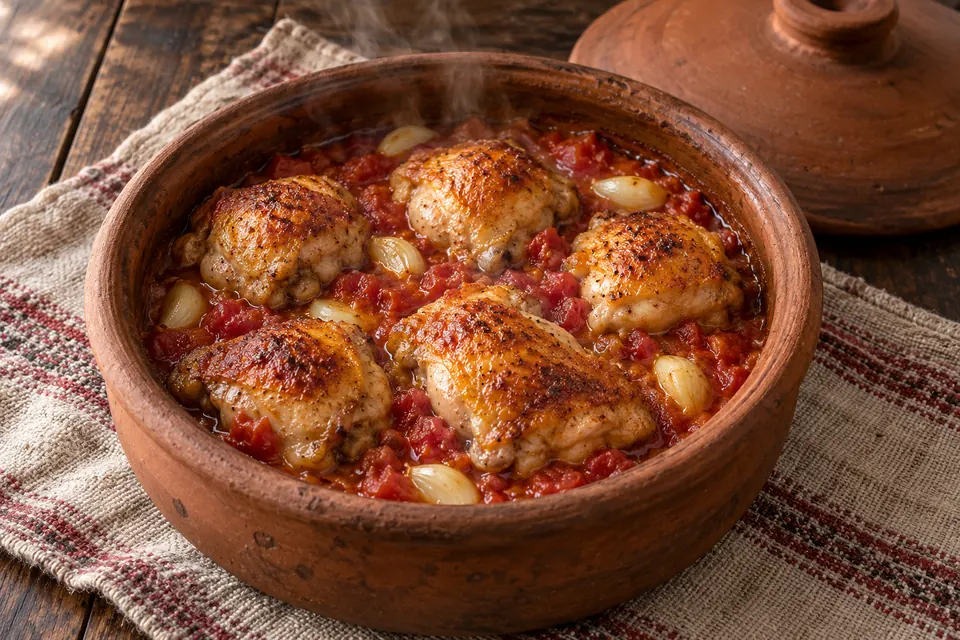
Spread the onion-tomato mixture over and around the chicken. Pour in the hot water; it should reach roughly halfway up the chicken pieces. Cover tightly with the lid.
Begin baking
Bake the covered casserole for 60 minutes. The sauce should be simmering steadily and the chicken should have begun to tenderize.
Partly fry the potatoes
During the last 15 minutes, heat the olive oil in a clean skillet over medium-high heat. Shallow-fry the potato rounds in batches for 8–10 minutes per batch, turning once, until the edges are pale gold but the centers remain firm. Drain well.
Finish with the potatoes
Arrange the partly fried potatoes over the chicken, sprinkle with the remaining pul biber, cover again and bake for 30–40 minutes. The potatoes must be completely tender and the thickest chicken pieces must reach 74°C/165°F away from the bone.
Rest and serve
Remove the casserole from the oven and rest it, covered, for 10 minutes. Scatter over the parsley and serve from the baking dish with the tomato-onion sauce spooned over each portion.
Bring this recipe to your kitchen with a printable copy.
Print recipeRecipe from MyTurkishRecipes · https://myturkishrecipes.com/turkish-chicken-casserole-tavuk-guveci. Quantities reflect your selected serving scale. Cooking times are estimates; follow the doneness cues.
Make it work in your kitchen
Ingredient Substitutions
These swaps change flavor or texture as described. Keep the original ingredients for the closest version of the dish.
Pul biber
Use the same amount of mild paprika for color and a gentler flavor. For heat, add a small pinch of chili flakes, then taste; chili flakes can be much hotter.
A few helpful kitchen notes
Regional method
The Antalya source uses a güveç or another heatproof covered dish. A heavy lidded casserole gives the closest practical result in a home oven; a deep baking dish sealed tightly with foil also works.
Lower-oil variation
The regional source also permits adding the raw potato slices with the cooked onions instead of frying them. Use 30 ml/2 tbsp olive oil, layer the potatoes into the casserole from the start and expect a softer potato texture without browned edges.
Heat level
Mild with mild pul biber. For a hotter casserole, use the same amount of hot pul biber; keep the base amount unchanged so the pepper does not overwhelm the tomato sauce.
Chicken safety
Keep raw chicken and its utensils away from ready-to-eat ingredients. Use a thermometer on the thickest pieces and cook to 74°C/165°F; do not rely on color alone.
How to store and reheat Tavuk Güveci
Refrigerate leftovers within 2 hours in shallow covered containers at 4°C/40°F or colder. Eat within 3–4 days and reheat once to 74°C/165°F throughout. Freeze portions if they will not be used within that time; thaw safely in the refrigerator before reheating.
Tavuk Güveci: questions and answers
Can I use boneless chicken?
Bone-in pieces best match the regional casserole and stay succulent during the long covered bake. Boneless thighs can work, but begin checking them and the potatoes 20–25 minutes earlier; still verify 74°C/165°F.
Do the potatoes have to be fried first?
No. The Antalya source explicitly allows adding them unfried with the onion mixture. Follow the lower-oil note and expect tender, sauce-soaked slices rather than lightly browned edges.
Can I use canned tomatoes?
Yes. When ripe fresh tomatoes are unavailable, use 600 g/21 oz canned crushed tomatoes and simmer them until thick before assembling the casserole.
What goes well with Tavuk Güveci?
Serve it with Turkish rice pilaf or a crisp shepherd’s salad. Because the casserole already contains potatoes, a simple salad is the lighter accompaniment.