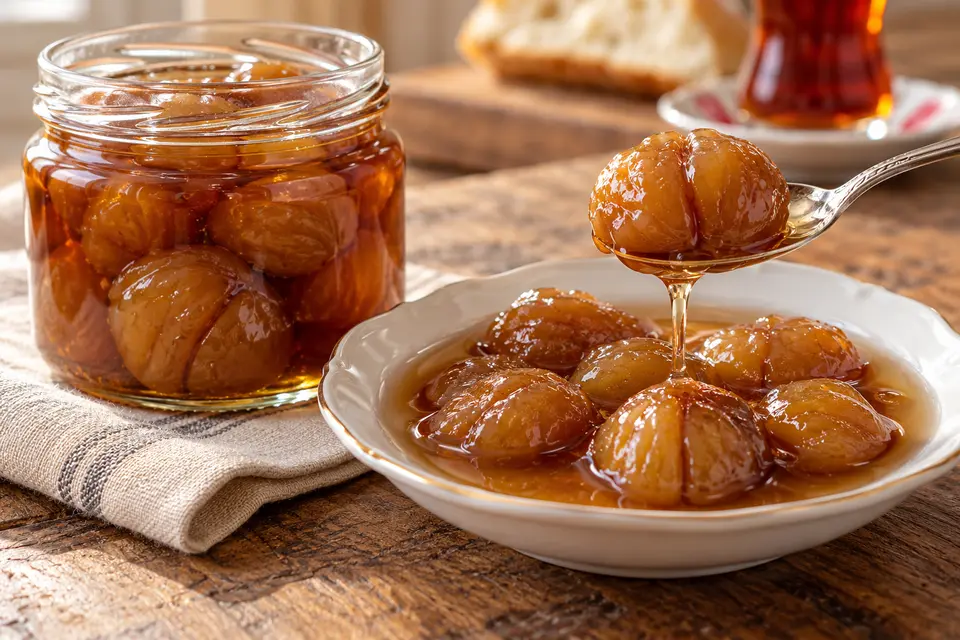
Türkiye's official Culture Portal records this chestnut preserve in Zonguldak's regional kitchen, using chestnuts, sugar, water, vanilla and limon tuzu. It is a spoonable reçel with chestnuts held in syrup, not the individually glazed kestane şekeri associated with Bursa. This home version follows the Zonguldak sequence and is intentionally treated as a refrigerated preserve because the regional method is not a tested shelf-stable canning process.
Kestane Reçeli — Recipe Card
Zonguldak-style whole chestnuts in vanilla syrup
Makes 24 servings · About 1 kg (2.2 lb) finished preserveUS cup = 240 ml · tablespoon = 15 ml · teaspoon = 5 ml. Cup and weight conversions are approximate. Australian cooks: use a 15 ml measuring tablespoon.
Ingredient quantities and servings are scaled. Cooking times, pan sizes, frying oil depth, and temperatures stay the same; cook larger batches as needed.
Ingredients
How to make Kestane Reçeli
Score the chestnuts
Wash and dry the chestnuts. Set each one flat-side down on a folded kitchen towel and, with a small sharp knife, cut a deep X through the shell on the rounded side without cutting far into the flesh. Discard any chestnut with a hole, mold or a sour smell.
Boil briefly
Bring a large pot of water to a full boil. Add the scored chestnuts and boil for 10 minutes. Drain well and spread them in a single layer on a rimmed baking sheet.
Heat under the broiler
Heat the oven broiler to high and place a rack about 15 cm (6 inches) below it. Broil the chestnuts for 8–10 minutes, turn them, then broil the second side for 8–10 minutes. Watch closely: the shells should curl back at the cuts, not burn black.
Peel and tenderize
Working while the chestnuts are still warm, remove both the hard outer shell and the thin inner skin. Return the peeled chestnuts to fresh gently boiling water for 10 minutes, then drain. They should be almost tender when pierced but still hold their shape.
Make the syrup
Put the sugar and 200 ml (0.83 cup) water in a wide heavy saucepan. Warm over medium-low heat, stirring only until the sugar dissolves. Bring to a gentle simmer, then add the chestnuts in one layer if possible.
Simmer without breaking
Cook at a quiet simmer for 35–40 minutes. Every few minutes, lift and swirl the pan or turn the chestnuts very gently with a wooden spoon. The preserve is ready when the chestnuts look glossy and the syrup falls from a cool spoon in a thick sheet; it will thicken further as it cools.
Finish and refrigerate
Dissolve the citric acid in 15 ml (1 tablespoon) of the hot syrup, return it to the pan and add the vanilla. Simmer for 2 minutes, then remove from the heat. Spoon the hot preserve into clean heatproof jars, keeping the chestnuts covered with syrup. Cool for no longer than 1 hour, cover and refrigerate within 2 hours. This recipe is for refrigerator storage, not pantry canning.
Bring this recipe to your kitchen with a printable copy.
Print recipeRecipe from MyTurkishRecipes · https://myturkishrecipes.com/turkish-chestnut-preserve-kestane-receli. Quantities reflect your selected serving scale. Cooking times are estimates; follow the doneness cues.
A few helpful kitchen notes
Choosing chestnuts
Choose heavy, firm chestnuts with smooth shells. Older nuts dry out and are harder to peel. If a peeled chestnut is blackened, moldy or smells fermented, discard it rather than trimming it into the preserve.
What limon tuzu means
Limon tuzu is food-grade citric acid, not lemon-flavored table salt. It brightens the syrup and balances the sugar. Weigh 5 g when possible because spoon volume varies with crystal size.
Refrigerator preserve only
The regional recipe does not supply a research-tested water-bath canning time. Do not store these jars at room temperature or infer a vacuum seal from a closed lid. Use a separately tested canning recipe if shelf-stable storage is the goal.
Dietary and allergy note
The base recipe is vegan and contains chestnuts. Anyone with a chestnut or related food allergy should avoid it. For strict gluten avoidance, verify the packaged vanilla and citric acid labels and consider cross-contact in the kitchen; no coeliac certification is implied.
How to store and reheat Kestane Reçeli
Keep covered at 4°C (40°F) or below and use within 3 weeks. Always use a clean spoon and return the jar promptly to the refrigerator. Discard the entire jar if you see mold, bubbling that was not present when packed, or smell yeast, alcohol or any other off odor; do not scrape off mold. This recipe is not shelf-stable and should not be stored in a pantry.
Kestane Reçeli: questions and answers
Is kestane reçeli the same as kestane şekeri?
No. Both feature chestnuts and syrup, but this Zonguldak-style reçel is served by the spoon with ample syrup. Bursa's kestane şekeri is known as an individually candied or glazed chestnut sweet.
Why did my chestnuts break apart?
They may have become too soft during the second boil or the syrup may have boiled too hard. Keep the second boil to 10 minutes, use a wide pan and swirl it instead of stirring forcefully once the chestnuts are tender.
Can I use vacuum-packed cooked chestnuts?
They are already fully tender and often break during a 40-minute syrup simmer. For the whole-chestnut texture in this recipe, start with raw chestnuts in their shells; a separate quick preserve would need different timing and liquid.
How is kestane reçeli served?
Serve one or two chestnuts with a little syrup at a Turkish breakfast, or offer a small spoonful after a meal. Plain yogurt or kaymak provides a tart or creamy contrast, but keep those additions separate from the storage jar.