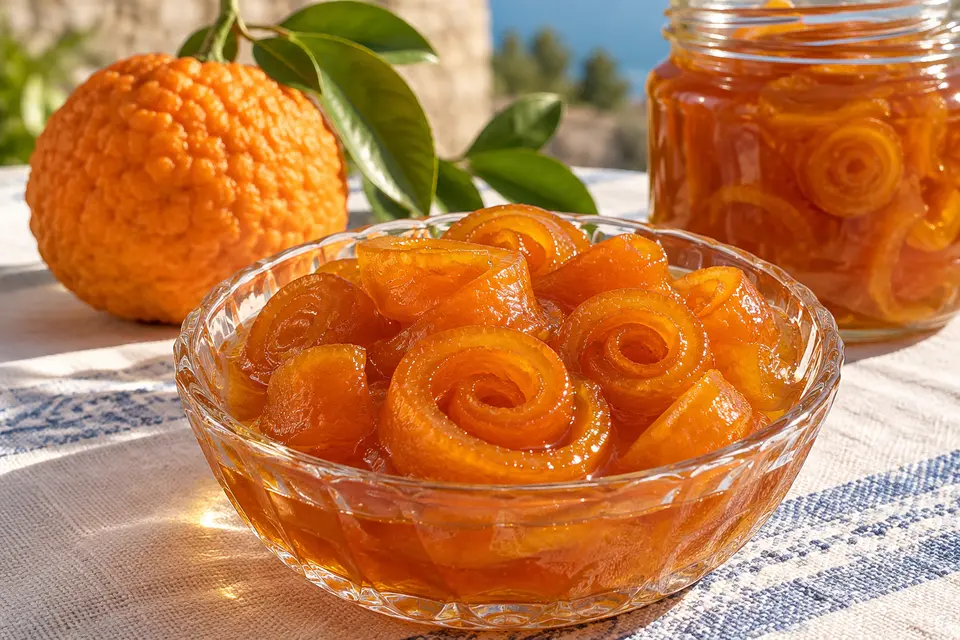
Antalya’s Culture and Tourism Directorate records bitter orange as an important fruit in the region’s living home-preserve tradition. Its account emphasizes the labor behind the finished jar: peeling the fruit, rolling and threading the strips, softening them in hot water, removing their strong bitterness in cold water and finally cooking them with sugar. The result is closer to a whole-peel preserve than a shredded breakfast marmalade.
Turunç Reçeli — Recipe Card
Antalya Bitter Orange Peel Preserve
Makes 24 servings · Makes about three 250 ml jars; one serving is about 2 tablespoons.US cup = 240 ml · tablespoon = 15 ml · teaspoon = 5 ml. Cup and weight conversions are approximate. Australian cooks: use a 15 ml measuring tablespoon.
Ingredient quantities and servings are scaled. Cooking times, pan sizes, frying oil depth, and temperatures stay the same; cook larger batches as needed.
Ingredients
How to make Turunç Reçeli
Prepare the peel
Wash and dry the bitter oranges. Score each fruit from top to bottom into wide panels, then lift off the peel. With a small sharp knife, trim away most of the thick white pith without cutting through the orange outer layer. Cut the peel into ribbons about 2–3 cm (3/4–1 1/4 inches) wide.
Roll and thread the ribbons
Roll each ribbon tightly with the orange side facing outward. Using a clean large needle and food-safe cotton kitchen string, thread through the center of every spiral so the curls sit close together. Tie the ends securely, leaving enough string to lift the bundle.
Blanch three times
Bring three pots of water to a boil and prepare a bowl of cold water. Boil the threaded peels in the first pot for 8 minutes, then move them immediately to the cold water and drain. Repeat twice more with fresh boiling water and refreshed cold water, for three 8-minute blanching rounds in total.
Macerate with sugar
Place the drained peel strings in a wide, nonreactive saucepan and distribute the sugar over them. Cover and leave at cool room temperature for 3–4 hours, until moisture from the peel begins to wet the sugar.
Cook the preserve
Add the water and bring slowly to a gentle boil, stirring only enough to dissolve any sugar on the base. Simmer uncovered for 15–20 minutes, until the spirals look translucent and the syrup lightly coats a spoon. Skim away any foam.
Finish with lemon
Stir in the lemon juice and boil for 1–2 minutes. Remove from the heat. With clean tongs and scissors, snip each string and carefully slide the hot peel spirals back into the syrup, keeping the curls intact.
Jar and chill
Ladle the hot peel and syrup into clean, heatproof jars, leaving a little room at the top. Close the lids, cool for no longer than 2 hours and refrigerate. This recipe is for refrigerator storage and has not been validated for room-temperature canning.
Bring this recipe to your kitchen with a printable copy.
Print recipeRecipe from MyTurkishRecipes · https://myturkishrecipes.com/turkish-bitter-orange-peel-preserve-turunc-receli. Quantities reflect your selected serving scale. Cooking times are estimates; follow the doneness cues.
A few helpful kitchen notes
Choosing the fruit
Use true bitter or Seville oranges with untreated, unwaxed peel because the peel is the part eaten. Sweet oranges do not give the same aromatic bitterness or traditional character.
Controlling bitterness
Three separate 8-minute blanching rounds follow the Antalya method. Taste a tiny cooled edge after the third round: it should retain a pleasant citrus bitterness without tasting harsh. Do not extend the blanching until the peel becomes fragile.
Refrigerator preserve
The traditional source describes hot filling and turning the jars over, but that is not a tested shelf-stable canning process. Keep this version refrigerated at 4°C/40°F or below for up to 3 weeks. Use a clean spoon and discard the entire jar if you see mold, bubbling, or smell fermentation.
Dietary notes
The base recipe is vegan, vegetarian and made without gluten-containing ingredients. These labels describe the ingredients and do not guarantee freedom from cross-contact.
How to store and reheat Turunç Reçeli
Cool the closed jars for no longer than 2 hours, then refrigerate at 4°C/40°F or below. Use within 3 weeks and return the jar to the refrigerator promptly after each serving. Always use a clean spoon. Discard the entire jar if mold, unexpected bubbling, a yeasty or alcoholic odor, or other spoilage appears. Do not store this batch at room temperature.
Turunç Reçeli: questions and answers
Is Turunç Reçeli the same as orange marmalade?
No. This Antalya preserve keeps bitter-orange peel in distinct rolled spirals in syrup, while marmalade usually suspends smaller pieces or shreds of peel in a gelled citrus spread.
Why is the peel boiled three times?
The repeated blanching softens the thick peel and removes excessive bitterness while the string helps each spiral retain its decorative shape.
Can I reduce the sugar?
For this version, keep the stated amount so the syrup and texture remain balanced. Changing sugar also changes keeping quality; any altered batch should still be refrigerated and watched closely for spoilage.