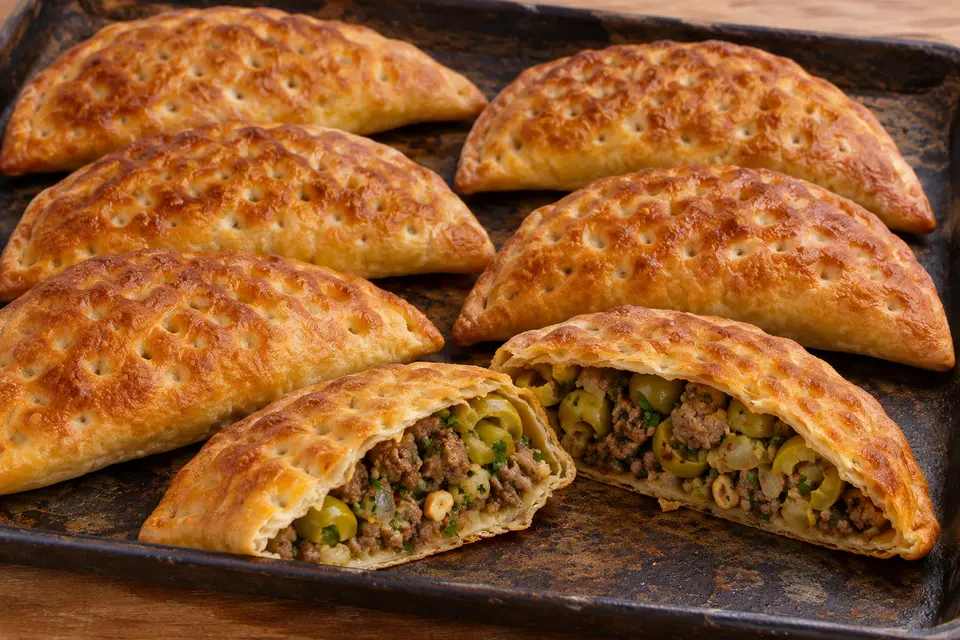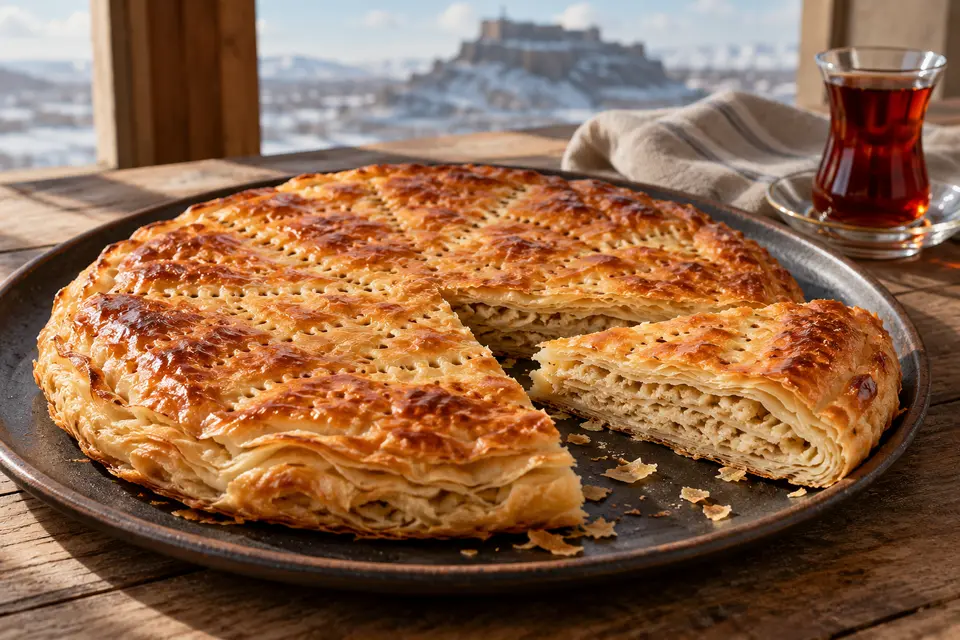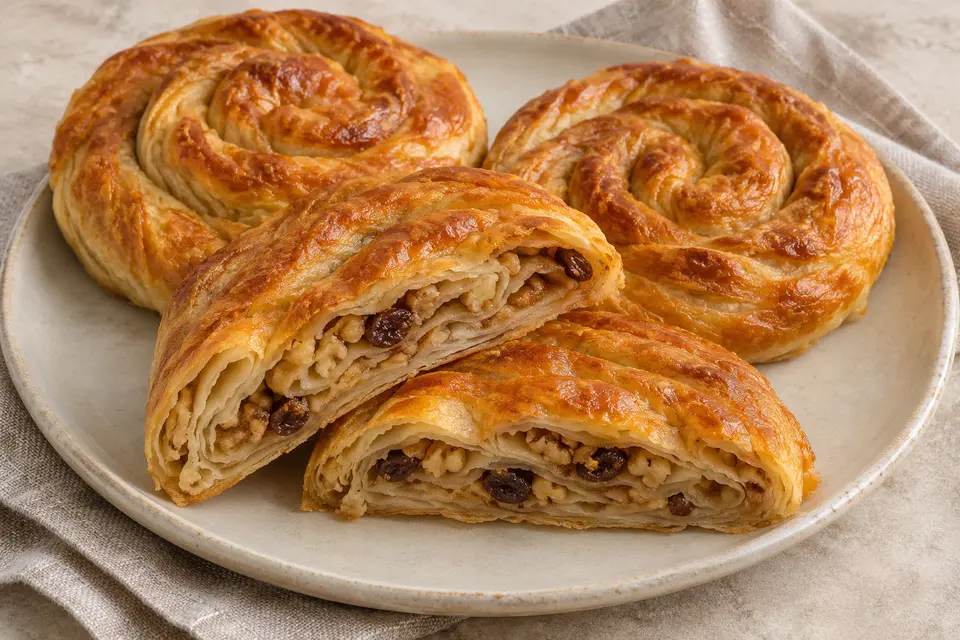
Sinop Nokulu is a registered geographical indication with two recognized fillings: minced meat and walnut-raisin. The registration describes a hand-rolled sheet 1.5–2 mm thick and records a tradition of roughly two centuries. Historical accounts associate nokul with provisions carried by workers on ships calling at Sinop's shipyard and with holiday hospitality, especially Ramadan Bayram. This recipe prepares the sweet walnut-raisin form and uses weighed flour to make the local tourism directorate's soft milk-water-oil dough repeatable at home.
Üzümlü-Cevizli Sinop Nokulu — Recipe Card
Sinop Walnut and Raisin Rolled Pastry
Makes 20 servings · Makes 3 medium spiral pastries, cut into about 20 portions after cooling.US cup = 240 ml · tablespoon = 15 ml · teaspoon = 5 ml. Cup and weight conversions are approximate. Australian cooks: use a 15 ml measuring tablespoon.
Ingredient quantities and servings are scaled. Cooking times, pan sizes, frying oil depth, and temperatures stay the same; cook larger batches as needed.
Ingredients
How to make Üzümlü-Cevizli Sinop Nokulu
Mix the warm liquids
Combine the warm milk and water; they should feel comfortably warm, about 38°C/100°F, not hot. Stir in 50 g (1/4 cup) of the sugar and the yeast, then leave for 5 minutes while you measure the remaining ingredients.
Make the soft dough
Place 800 g of the flour and the salt in a large bowl. Add the yeast mixture, whole egg and 100 ml of the oil. Mix, then knead for 8–10 minutes, adding only as much of the remaining 50 g flour as needed. The finished dough should be smooth, soft and slightly tacky but should release from clean hands. Do not make it stiff.
Give the dough its first rest
Shape the dough into a ball, cover the bowl and rest in a warm, draft-free place for 15 minutes. It will relax and begin to rise but does not need to double.
Divide and prepare the filling
Divide the dough into 3 equal balls. Cover and rest for another 20 minutes. Meanwhile, mix the walnuts, raisins and remaining 200 g (1 cup) sugar in a bowl. Line two large baking sheets with parchment.
Roll very thin sheets
On a lightly floured surface, roll the first ball into a roughly round sheet 1.5–2 mm thick, turning it often so it does not stick. Keep the other balls covered. Brush the sheet with one-third of the remaining 50 ml oil.
Fill and roll
Scatter one-third of the walnut-raisin mixture evenly over the sheet, reaching close to the edges. Roll the dough into a long, even rope without crushing the layers. Repeat with the other two dough balls, oil and filling.
Coil and glaze
Coil each rope around itself into a compact round spiral, keeping the seam underneath, and place the spirals well apart on the prepared sheets. If a raisin escapes, tuck it back inside so it does not burn. Beat the egg yolk with 1 teaspoon water and brush a thin layer over the tops.
Bake and cool
Heat the oven to 175°C/350°F. Bake for 35–40 minutes, rotating the sheets after 20 minutes, until the tops and lower edges are evenly deep golden and no pale raw dough remains between the coils. Cool on the sheets for 10 minutes, then transfer to a rack and cool at least 10 minutes more before slicing.
Bring this recipe to your kitchen with a printable copy.
Print recipeRecipe from MyTurkishRecipes · https://myturkishrecipes.com/sinop-walnut-raisin-pastry-uzumlu-cevizli-nokul. Quantities reflect your selected serving scale. Cooking times are estimates; follow the doneness cues.
A few helpful kitchen notes
Official records and home adaptation
The geographical-indication record defines 1.5–2 mm hand-rolled dough, 100 g walnuts, 100 g raisins, 200 g sugar and a 170–180°C bake. Sinop's tourism directorate also records a soft dough made with warm milk, water and oil but lists flour only as 'as needed.' This version fixes that flour at 850 g for repeatability while preserving the registered filling, thickness and baking range.
Shaping the spiral
The registered method rolls the filled sheet into a rope and coils it into a circle. Keep the rope evenly thick and avoid pulling it tight; an over-tight coil prevents the inner layers from expanding and can leave a dense center.
Raw dough safety
Flour and eggs are raw foods. Do not taste the dough before baking, and wash hands, utensils and work surfaces after they contact raw flour, egg or dough. Bake until the pastry is evenly browned and fully cooked through.
Dietary and allergen notes
This version is vegetarian and contains wheat, milk, egg and walnuts. It is not gluten-free and is not suitable for a vegan diet. These statements do not guarantee freedom from cross-contact.
The sweet variation
Sinop Nokulu also has a registered minced-meat version. Walnut-raisin and meat nokul are separate recognized fillings; do not add cinnamon, sesame or other nuts if you want this batch to follow the documented walnut-raisin profile.
How to store and reheat Üzümlü-Cevizli Sinop Nokulu
Cool completely before storing so trapped steam does not soften the crust. Keep airtight at cool room temperature for up to 2 days or refrigerate for up to 4 days. Rewarm at 150°C/300°F for 8–10 minutes. Freeze well wrapped for up to 2 months and thaw before reheating. Discard if mold or an off odor appears.
Üzümlü-Cevizli Sinop Nokulu: questions and answers
Is Sinop Nokulu the same as a cinnamon roll?
No. This registered Sinop pastry uses a very thin hand-rolled yeasted sheet with walnuts, raisins and sugar, then forms the filled rope into a coil. It contains no cinnamon or icing and has thinner savory-pastry-like layers.
Can I use fresh yeast?
Yes. Replace 10 g instant yeast with about 30 g fresh yeast. Crumble it into the warm milk-water mixture with the first 50 g sugar and wait until it begins to foam before mixing the dough.
Why are the dough rests short?
The registered method gives a 15-minute first rest and 20 minutes after dividing. These rests relax the dough enough for very thin rolling while keeping the finished pastry layered rather than bread-like.
Can I omit the raisins?
You can make a personal walnut pastry, but it will no longer reproduce the registered walnut-raisin variation. For the documented Sinop profile, use both walnuts and raisins in the stated amounts.