Blog
Walnuts in Turkish Cooking: Sauces, Noodles and Autumn Sweets
Walnuts are easy to recognize when scattered over a dish, but their role in Turkish cooking reaches well beyond a finishing garnish. They can become the substance of a sauce, provide a coarse contrast to soft noodles or form the center of a grape-based sweet. Following those changes in texture offers a useful way to explore regional food traditions without treating them as one uniform cuisine.
When the walnut becomes the sauce
Çerkez Tavuğu shows why the size and treatment of a nut matter. In the Düzce preparation documented by the Culture Portal, ground walnuts join bread moistened with chicken broth, while shredded chicken is folded into the mixture. A separate walnut-and-red-pepper preparation finishes the dish. Here the walnut is integral to the body of the food, rather than something sprinkled on at the end.
The regional account also records seasonings and choices that deserve to remain attached to that version. It should not be read as a decree for every household’s Çerkez Tavuğu. When comparing recipes, look at the walnut mixture, the thickening ingredient and the seasoning together. Changing one can alter the balance of the whole dish, even if the familiar Turkish name remains.
Two regional ways with erişte
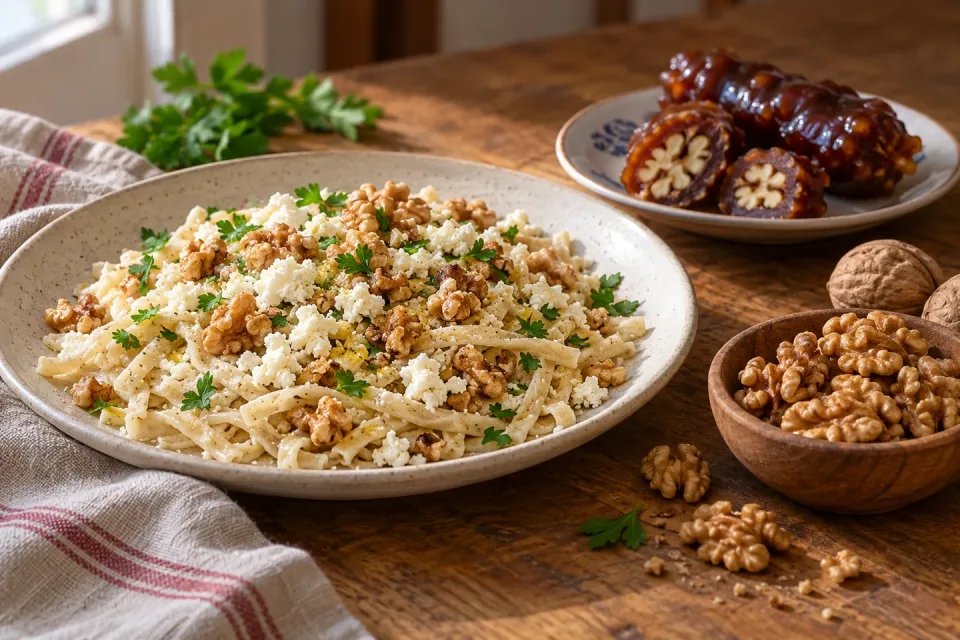
Bolu’s keşli cevizli erişte brings walnuts into a different relationship with food. The documented preparation combines noodles with walnuts, butter and grated keş, a dried dairy ingredient. Some of the walnut-and-keş mixture is heated with butter, while layers and toppings distribute it through the noodles. This is a substantial element of the plate, not simply decoration.
Niğde’s cevizli erişte provides a helpful comparison. Its published regional version uses crumbled white cheese, coarsely crushed walnuts and parsley over buttered noodles. These examples share a family resemblance, yet the dairy ingredients and finishing methods differ. Keeping those details visible makes regional comparison more informative than declaring a single correct walnut noodle dish for all of Türkiye.
Mardin’s autumn combination of grapes and walnuts
The word sucuk does not always point to meat. Cevizli sucuk is a sweet preparation, and the Mardin account describes selected walnuts threaded on string and combined with a thickened preparation of juice from local Mazruna grapes. The walnut becomes a visible center surrounded by a grape coating, creating a different experience from both a ground sauce and a coarse noodle topping.
The same account places its making in autumn, after grapes and walnuts mature, and recalls household preparation for winter consumption. That seasonal context is more useful than assuming every product bearing the name has identical ingredients. Other local versions and commercial packages need their own descriptions. Read the label for the actual coating and allergens rather than transferring the Mardin account to every sweet on the shelf.
Explore the ingredient without repeating the whole menu
For a first comparison at home, choose one walnut-centered dish and keep the accompaniments simple. Çerkez Tavuğu can sit beside a fresh vegetable dish and bread; there is no need to make every course rich with nuts. Düzce Acıkası and Gavurdağı Salatası offer further recipe paths for exploring walnuts on separate occasions, each with a different texture and supporting ingredients.
Notice whether walnuts are ground, crushed or left in larger pieces before deciding to change their preparation. Texture is part of what a dish communicates. When sharing food, identify walnuts clearly and check the complete recipe for other allergens, including bread and dairy where present. A regional name is a starting point for curiosity, while the actual ingredients explain what reaches the table.
Recipes
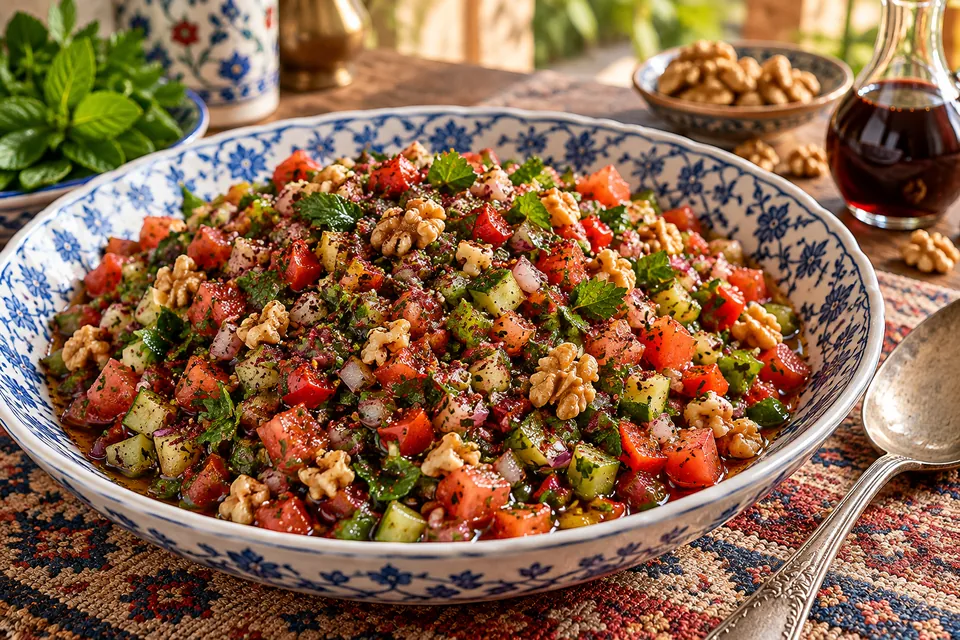
Turkish Tomato Walnut Salad — Gavurdağı Salatası
Turkish tomato and walnut spoon salad
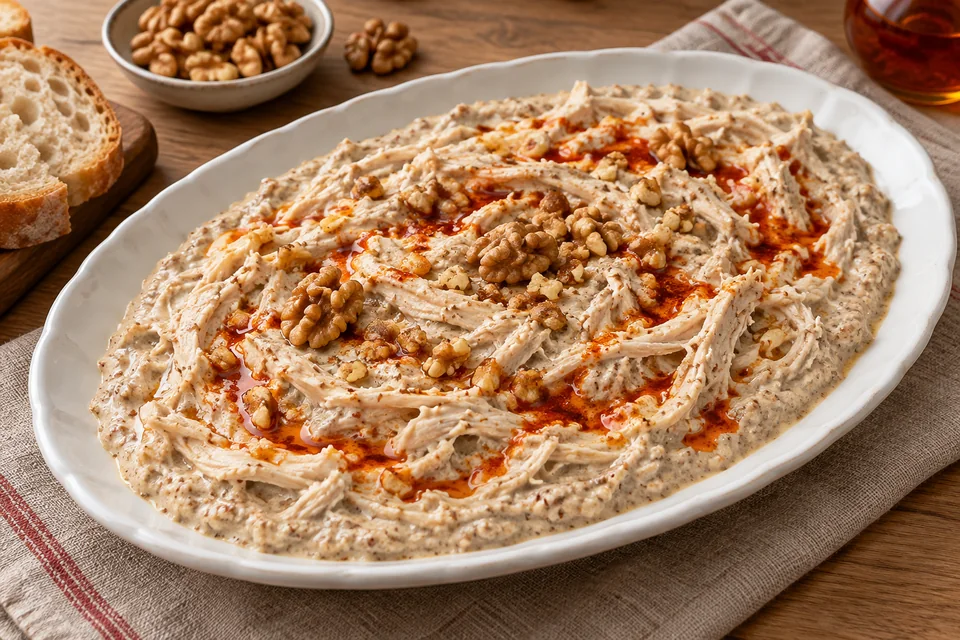
Turkish Circassian Chicken — Çerkez Tavuğu
Turkish shredded chicken with walnut-garlic sauce
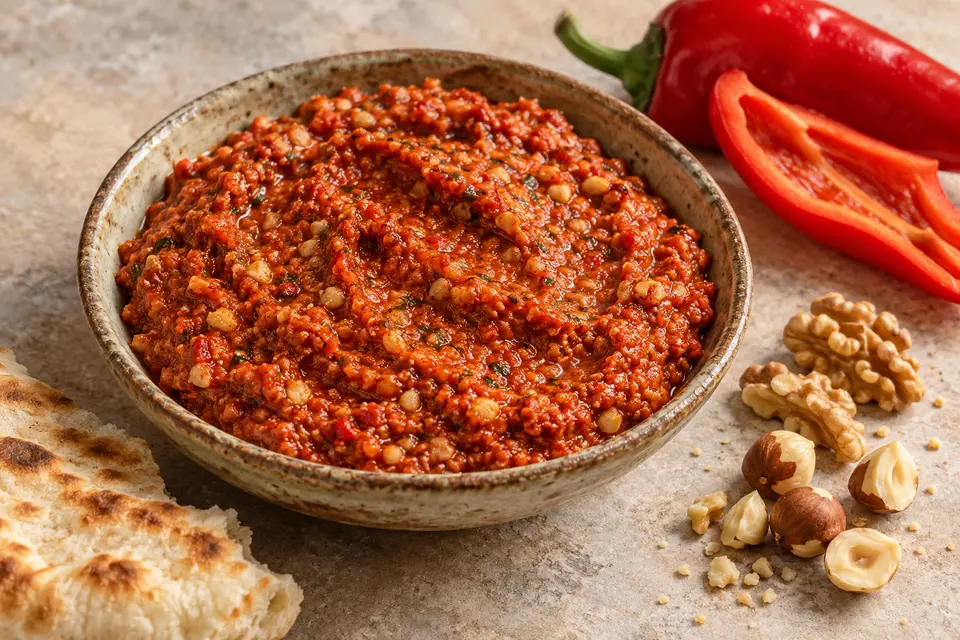
Turkish Walnut Pepper Spread — Düzce Acıkası
Turkish red pepper, walnut and hazelnut spread