Blog
Turkish Coffee: From Cezve to Conversation
Turkish coffee is defined as much by its method and setting as by the beans in the cup. Finely ground coffee is prepared in a cezve, poured unfiltered into a small fincan and allowed to settle before the final sip. Around that compact service grew a culture of hospitality, conversation, craft and ceremony. UNESCO added Turkish coffee culture and tradition to the Representative List of the Intangible Cultural Heritage of Humanity in 2013, recognizing a living practice rather than a single standardized drink.
The method shapes the cup
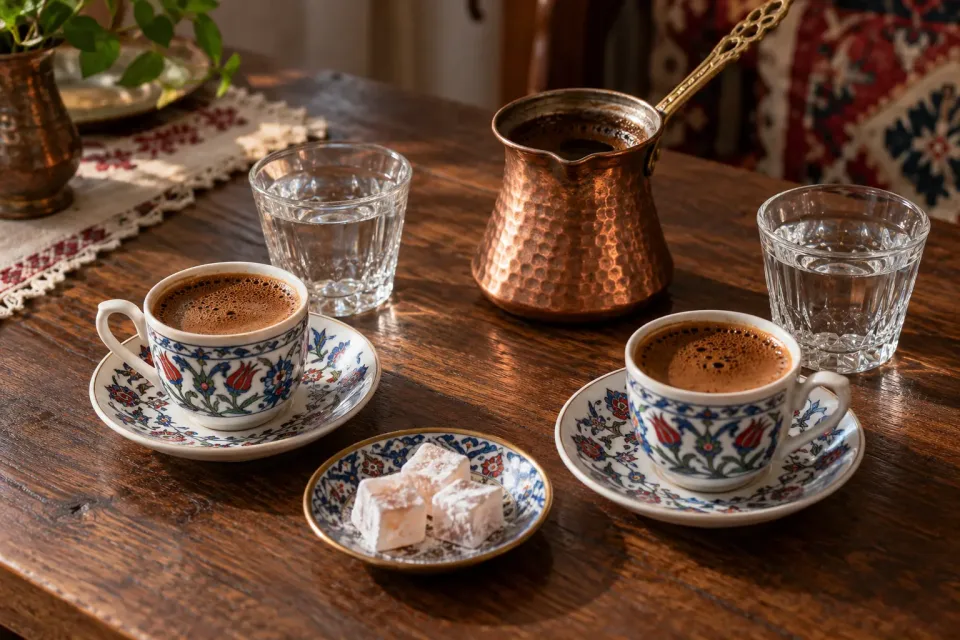
The characteristic texture begins with coffee ground almost to a powder. Water, coffee and any requested sugar are combined in the cezve before heating. The mixture is warmed gently until foam rises, then poured into small cups without filtering. Because the grounds remain in the cup, drinkers pause long enough for them to sink. The last muddy layer is left behind rather than swallowed. This slow sequence is part of the experience: the cup is small, the aroma concentrated and the pace deliberately unhurried.
There is no need to turn the process into a performance. Ask each guest how sweet they prefer the coffee before beginning, because sugar is traditionally added during preparation rather than stirred into the finished cup. A glass of water commonly accompanies the coffee, and a small piece of lokum may be offered. The water, sweet and decorative tray can support the welcome, but the essential elements are the cezve, fincan, finely ground coffee and time to sit together. For exact quantities and heating cues, use the linked Türk Kahvesi recipe.
A drink made for conversation
Official cultural records trace the public life of Turkish coffee in İstanbul to the sixteenth century, when coffeehouses became places for talking, exchanging news, reading and spending time together. Coffee later became equally at home in domestic hospitality. Offering a cup to a visitor can mark a pause in the day and create a reason to stay at the table. The familiar saying that one cup carries forty years of remembrance expresses the social debt of kindness, not a claim about the drink itself.
That social role does not mean every household follows one rigid script. Cups, trays, sweetness and accompaniments vary, as do the moments chosen for coffee. Some people serve it after a meal; others make it during an afternoon visit. What remains recognizable is the invitation to share attention. Serving two carefully prepared cups while continuing a conversation is closer to the tradition than assembling an elaborate display that leaves the host too busy to join the guest.
Objects carry memory and skill
The culture also supports distinctive crafts. Cezve forms, porcelain fincan sets, metal trays, hand mills and mortars show how a preparation method can influence household objects. Older or ceremonial sets may be more ornate than everyday ones, but decoration is not a requirement for authenticity. A practical cezve needs a size suited to the number of cups, a handle that is comfortable to control and a lip that pours cleanly. A small cup helps present the concentrated drink in an appropriate portion.
Knowledge has traditionally moved through observation and participation: someone watches the foam, learns when to lift the cezve and gradually develops a steady pour. Coffeehouses have also passed on professional skill. This informal teaching helps explain why the UNESCO inscription concerns a culture and tradition, not merely an ingredient list. The value lies in the combined method, utensils, social setting and knowledge shared between people.
Ceremony, play and regional variation
Turkish coffee appears at engagement gatherings and other social occasions, but popular customs should be described with care. In some marriage-proposal gatherings, the prospective bride prepares coffee for the visitors; playful stories about adding salt to one cup are widely told, yet no single version represents every family. Reading patterns left by the grounds is another familiar pastime. It is social entertainment and folk practice, not a reliable way to predict events.
Across Türkiye, people also encounter regional drinks and preparation styles associated with names such as menengiç, dibek or mırra. These should not be treated as interchangeable labels for one national formula: their ingredients, grind, strength and local context can differ. Begin with a classic cezve preparation, serve it without rushing, and let any sweet remain modest. If you want a Turkish dessert alongside it, a small portion of İrmik Helvası makes a practical pairing without obscuring the coffee.
Recipes
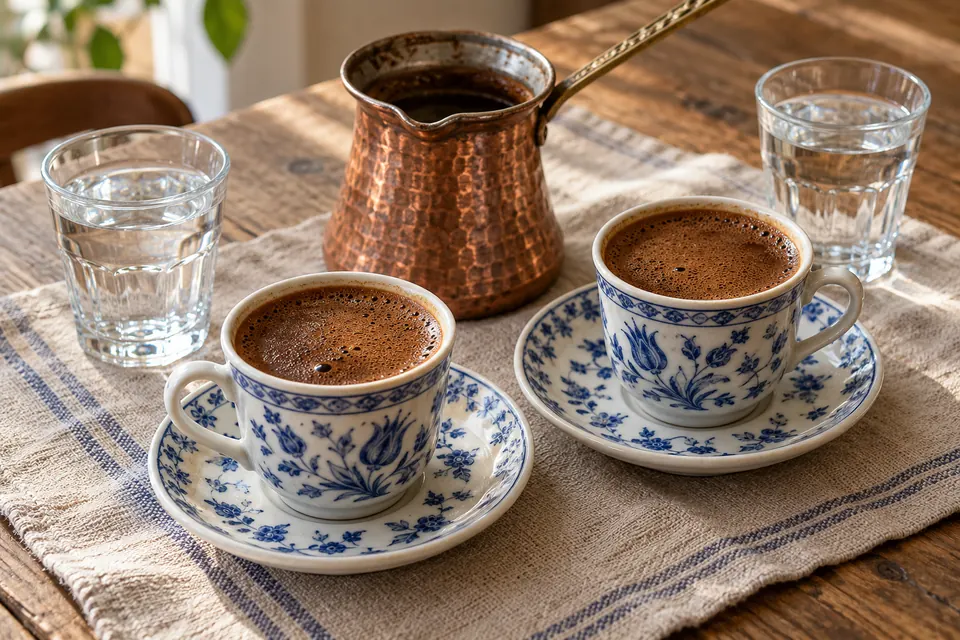
Turkish Coffee Recipe — Türk Kahvesi
Unfiltered Turkish coffee brewed slowly in a cezve
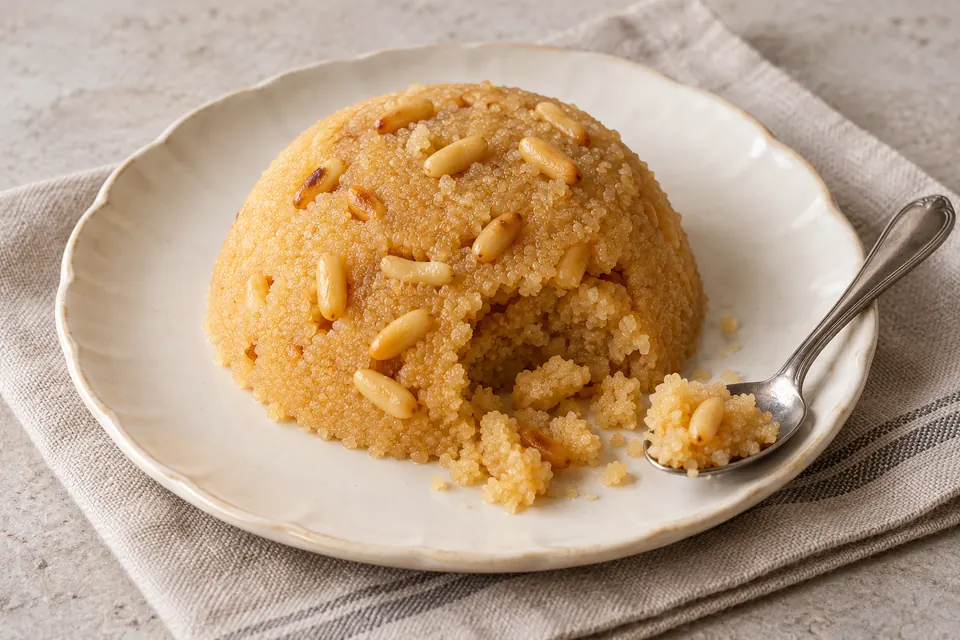
Turkish Semolina Halva — İrmik Helvası
Turkish milk-based semolina halva with pine nuts