Blog
How to Plan a Turkish Meze Table at Home
A Turkish meze table invites people to share small dishes and enjoy different flavors together. For a first gathering, keep the menu focused: one cool yogurt dish, one bright bulgur salad and one warm, crisp pastry give you a useful starting point. This is a practical home menu, rather than a rule about how every Turkish household serves meze.
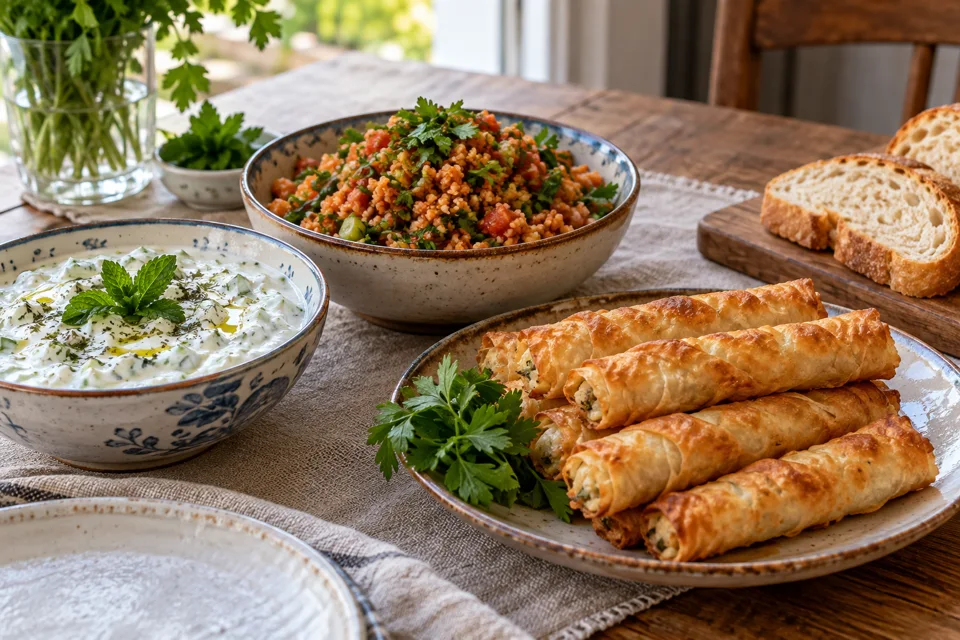
Choose dishes that do different jobs
Start with cacık for a cool, spoonable element. Add kısır for herbs, vegetables and a more substantial texture, then prepare sigara böreği as the warm dish. These three recipes give the table contrast without requiring a long list of unrelated ingredients. Use the linked recipes for exact quantities and methods; this guide helps you organize the meal.
Decide whether these plates are a starter or the center of the meal before shopping. If a main course follows, avoid making full dinner portions of every dish. If the meze is the meal, check each recipe’s stated yield against your guest count and add a simple vegetable plate or bread as needed. Appetite and the rest of the menu matter more than a fixed number of bowls.
Plan the work around the warm dish
Read all three recipes before starting and identify which parts can be prepared ahead according to their individual guidance. Set out serving bowls, utensils and ingredients first. Keep the chilled components refrigerated while you organize the remaining work, and leave the final cooking of the pastry until you are ready to serve.
Do not finish everything at the same moment simply for the photograph. A practical sequence is to have the cool dishes ready, then bring the freshly cooked rolls to the table. Follow the recipe-specific storage instructions for leftovers. If you are unsure about a preparation or storage step, resolve that question before guests arrive rather than improvising a new method.
Make the table easy to share
Choose bowls that leave room for plates and glasses. Give each shared dish its own serving spoon or fork, and keep any extra bread on a separate plate. Small serving bowls can be replenished instead of filling every available space. This makes the food easier to reach and helps guests choose what they want.
Taste the dishes separately before placing them together. Keep optional chili and extra lemon alongside the meal so guests can adjust their own plates. The menu should offer different textures and flavors; it does not need every dish to be equally garlicky, equally hot or heavily dressed.
Adapt the menu honestly
Ask about dietary requirements before choosing substitutions. This suggested menu contains dairy in the yogurt dish, wheat in the bulgur and pastry, and usually cheese in the rolls. It is therefore neither vegan nor gluten-free as written. Check the exact ingredients in the recipes and the labels of purchased products rather than relying on the names of the dishes.
If a guest needs a different menu, choose suitable complete recipes and keep serving utensils separate where needed. A major substitution can change texture and preparation, so do not assume one flour, grain or dairy alternative behaves like another. A smaller menu that everyone can understand is more useful than many dishes with unclear ingredients.
Recipes

Turkish Cheese Rolls Recipe — Sigara Böreği
Crisp cheese & parsley pastry rolls
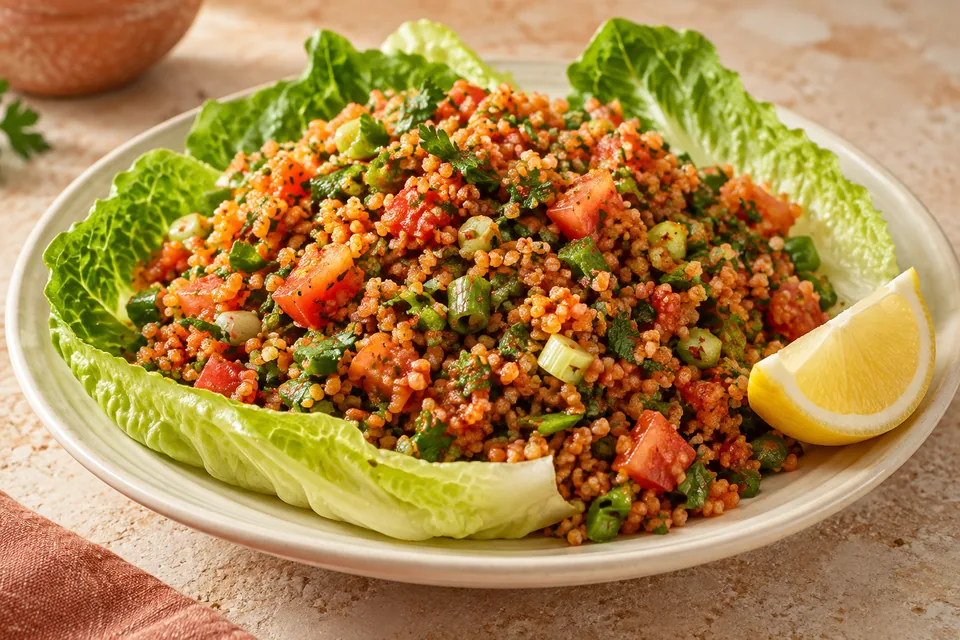
Turkish Bulgur Salad Recipe — Kısır
Herby bulgur salad with pomegranate
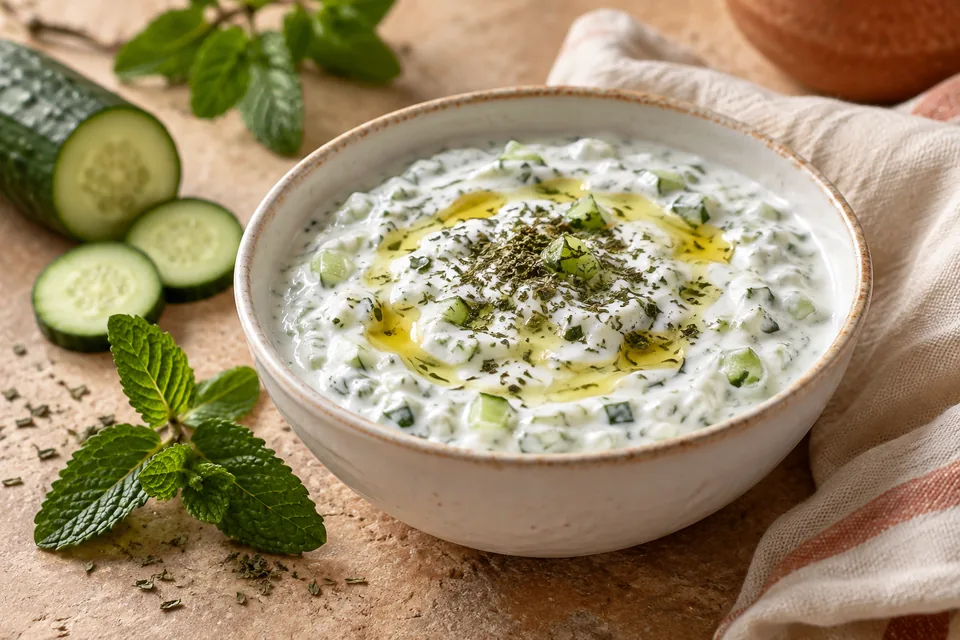
Turkish Cucumber Yogurt Dip Recipe — Cacık
Cooling cucumber & yogurt with mint