Blog
Kuru Fasulye and Pilav: Understanding a Turkish Table Pairing
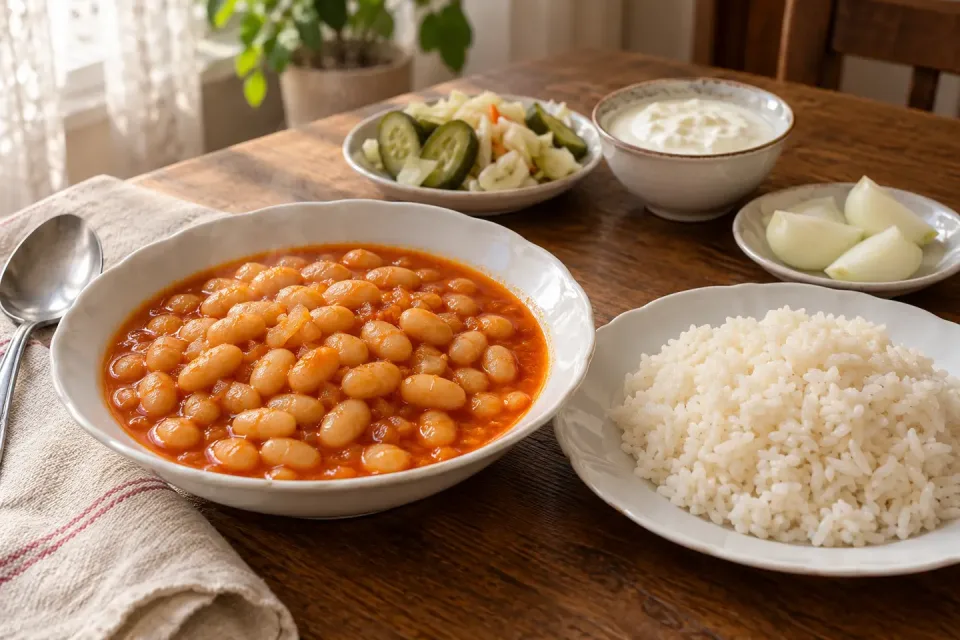
A bowl of white beans in tomato sauce beside a plate of pilav makes a meal with a clear center. Kuru fasulye supplies the tender beans and sauce; the pilaf offers a separate grain texture. Understanding this familiar Turkish pairing is more useful than treating it as one fixed recipe: the beans, cooking fat, meat and accompaniments can all change.
Why the two dishes belong together
The Ministry of Culture and Tourism gives white rice pilaf with beans in tomato sauce a particularly prominent place in its account of Turkish cooking. Describing the combination as a national favorite conveys its cultural familiarity; it does not mean every household prepares it identically or that it has an exclusive, single origin.
At the table, the appeal is easy to understand. Spoonable sauce and soft beans sit alongside rice with distinct grains. Keeping them in separate dishes lets each diner decide how much to combine. Serving beans over part of the rice is another practical choice, rather than a requirement for an authentic meal.
Kuru fasulye names a family of preparations
The words kuru fasulye refer to dried beans and, on a menu, commonly to the cooked bean dish. They do not by themselves establish whether a preparation contains meat. The ministry documents versions with fresh meat, pastırma and no meat, so the fuller dish description matters more than the short name.
Regional bean names also carry meaning. The Culture Portal highlights beans associated with Gümüşhane, İspir, Hınıs and Akkuş. These names point to local ingredients and traditions, not interchangeable guarantees about every pot. For a home meal abroad, following a recipe suited to the beans available is more sensible than assuming that one imported variety is essential.
Çayeli shows why regional detail matters
Çayeli Kuru Fasulye Yemeği is a specifically registered regional preparation. Its Culture Portal description calls for large white şeker beans, beef, clarified butter, onion and tomato paste, with a covered oven stage and a rest. Those details distinguish it from a generic tomato-based bean stew.
The same description lists pilav, yogurt, raw onion and pickles as possible accompaniments, served singly or together. This is useful evidence for the surrounding table, but not a rule that every bean meal must include all four. Nor should an ordinary home version be presented as the registered Çayeli dish simply because rice appears beside it.
Rice is familiar, and bulgur belongs too
Plain buttery rice pilaf is a well-documented companion, but it is not the only grain pairing. The ministry's meat-and-bean recipe explicitly suggests bulgur pilaf and vegetable salad. Choosing bulgur therefore need not turn the meal into a modern departure from Turkish cooking.
For a balanced home menu, choose one pilaf and one contrasting side rather than making every possible accompaniment. Plain rice leaves the bean sauce in the foreground; bulgur brings a different grain texture. A chopped tomato-and-cucumber salad adds freshness, while a modest dish of pickles brings acidity and crunch. These are menu choices, not a prescribed serving ceremony.
Plan the meal around the actual ingredients
Start with the white bean stew recipe, then select either rice pilaf or bulgur pilaf and add a salad if wanted. Use the individual recipes for quantities, cooking and storage instructions: this pairing guide does not replace a method for safely cooking dried beans or handling leftovers.
If serving guests, check the whole meal. A meatless bean dish may still use butter or meat stock, and rice pilaf may contain stock or wheat-based pasta. Bulgur is wheat, yogurt contains milk, and pepper paste or pickled peppers can change the heat. Asking about these ingredients preserves the pleasure of a familiar combination while making the menu clear to everyone.
Recipes
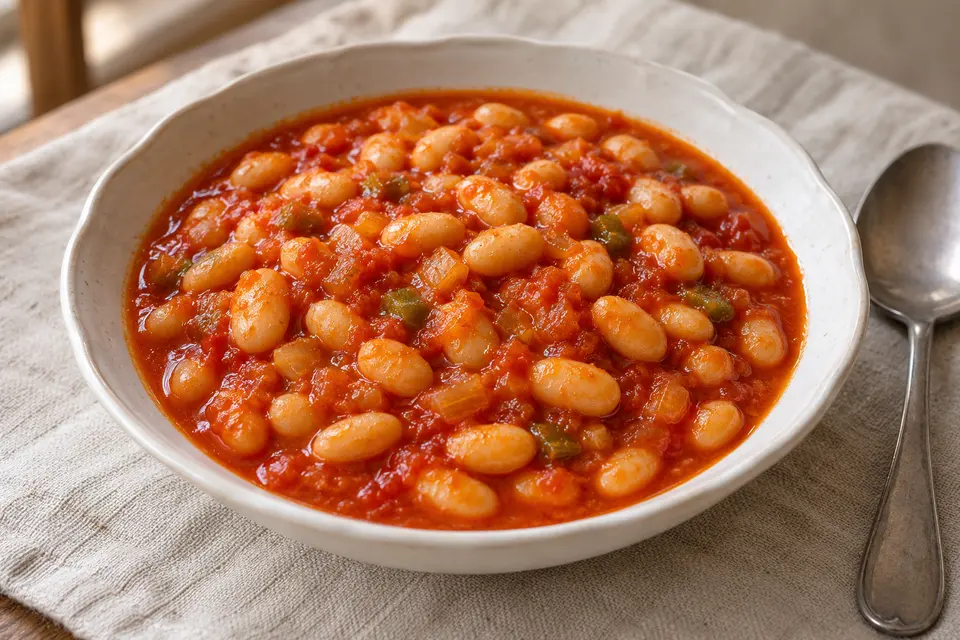
Turkish White Bean Stew — Kuru Fasulye
Turkish white bean stew in a tomato and pepper-paste sauce
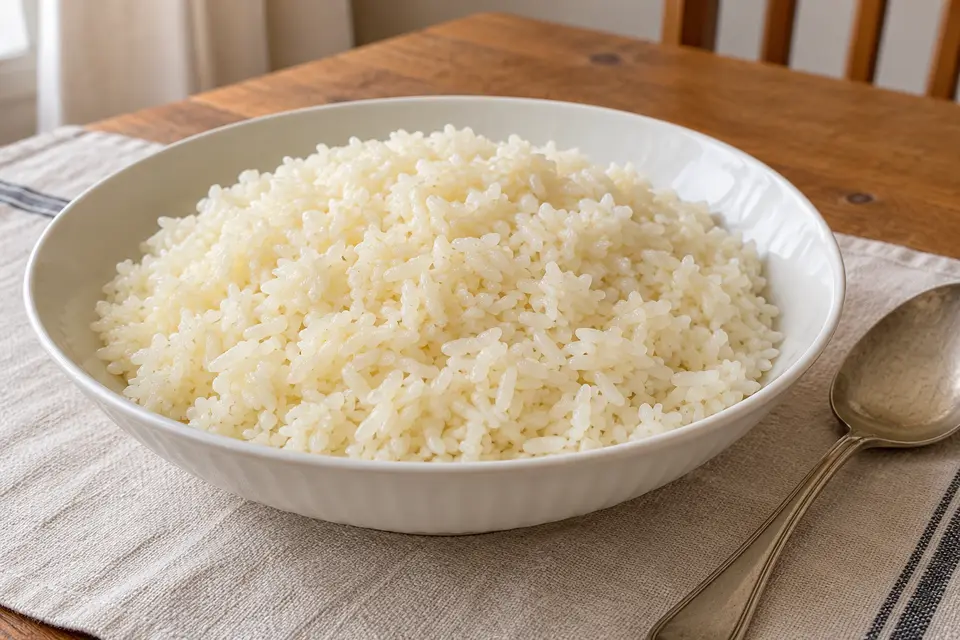
Turkish Buttered Rice Pilaf — Pirinç Pilavı
Turkish buttered rice pilaf with separate, tender grains
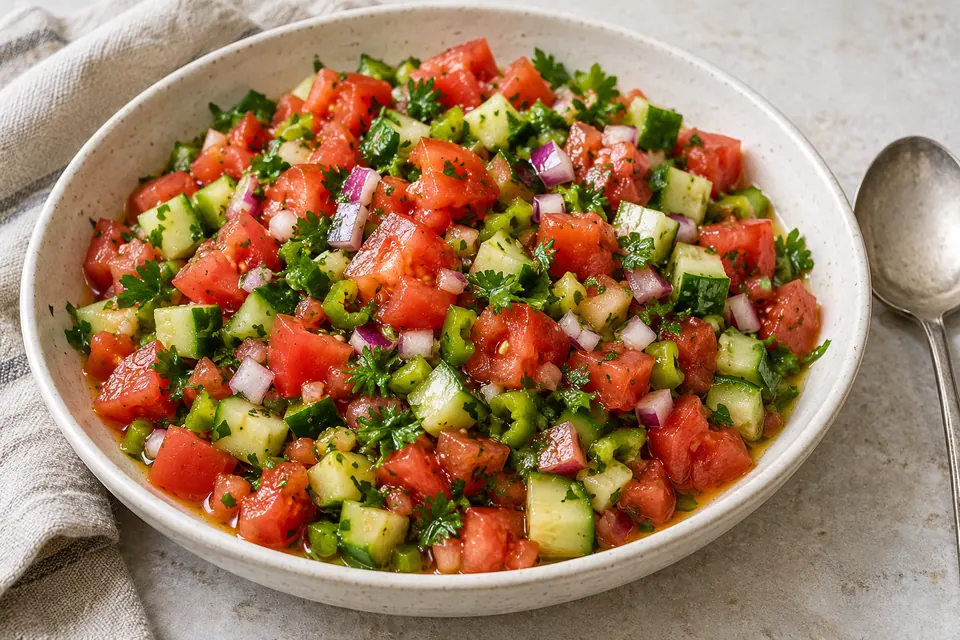
Turkish Shepherd Salad — Çoban Salatası
Turkish chopped tomato and cucumber salad
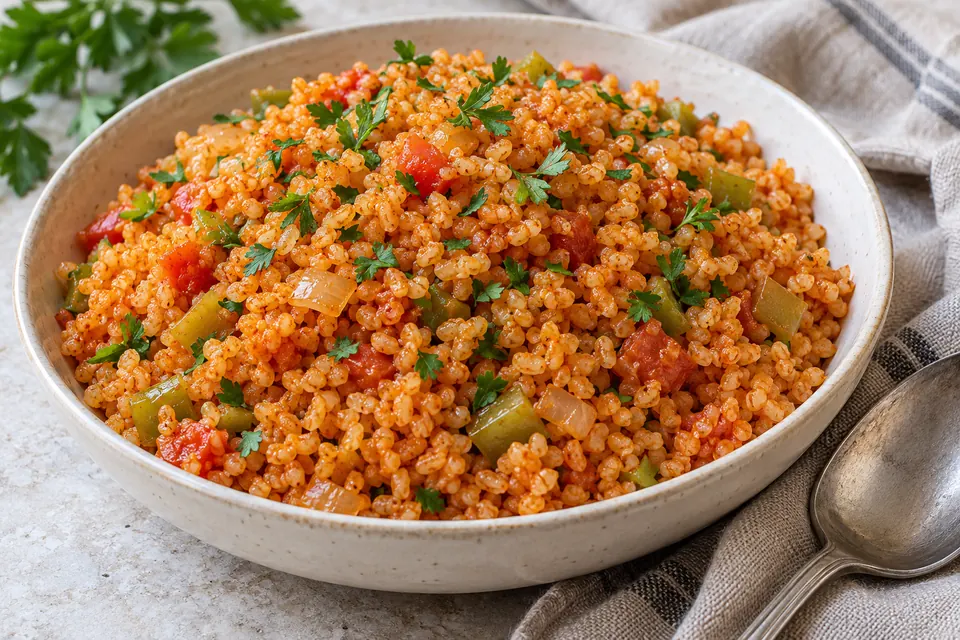
Turkish Bulgur Pilaf — Bulgur Pilavı
Turkish bulgur pilaf with tomatoes and mild green peppers