Blog
Helva in Turkish Culture: From Tahini Slices to Shared Pans
In Türkiye, helva is not one single dessert. The word covers a family of sweets that can be sliced from a firm sesame block or spooned warm from a pan after flour or semolina has been patiently roasted. Their ingredients and textures differ, but they share an ability to turn a few pantry staples into food meant for company. Knowing the main families makes a bakery counter, breakfast table or home-cooked dessert much easier to understand.
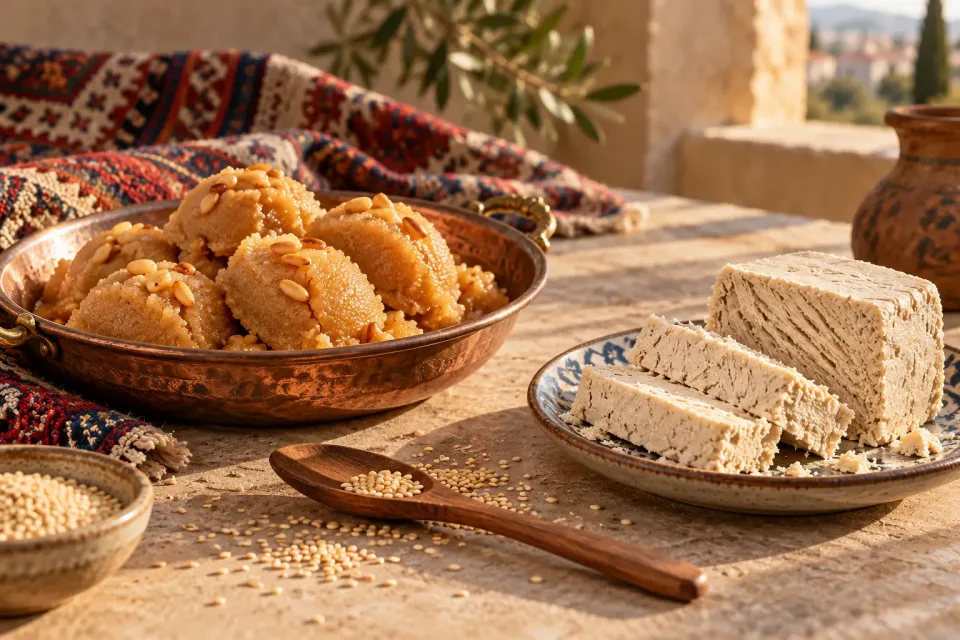
Three familiar meanings of helva
Tahin helvası begins with tahini, the paste made from ground sesame. Sugar and, in many traditional commercial styles, çöven or soapwort extract help create a pale, crumbly and slightly fibrous confection. It is sold in blocks and cut into slices; plain, cocoa and nut versions are common. GoTürkiye describes Pazaryeri Helvası in Bilecik as a geographically indicated example made with double-roasted, stone-ground tahini, sugar and soapwort extract. That specific method belongs to Pazaryeri and is not a universal formula. Un helvası and irmik helvası, by contrast, are cooked in a pan. Flour or semolina is roasted in fat before sweetened liquid is absorbed. Semolina retains tiny grains and has a looser texture; recipes may add pine nuts, walnuts or almonds and use water, milk or both.
The pan, the roast and the wait
The defining work in flour and semolina helva is steady roasting. Colour alone is not enough: the cook watches the grains, notices the aroma changing and stirs so the mixture browns evenly without catching. Adding liquid can make the pan bubble and steam vigorously. The helva is then commonly covered and rested so the grains finish absorbing moisture before it is fluffed or shaped. Antalya’s Provincial Directorate of Culture and Tourism documents a local flour-helva practice using a large dark pan and wooden paddles. People stir rapidly together, add almonds near the end, lift the pan off the fire as a group and wrap it with a cloth to rest. This is one Antalya practice rather than a rule for every Turkish kitchen, but it shows why a simple sweet can carry the memory of shared labour.
A sweet for celebration, mourning and remembrance
Helva crosses emotional boundaries that many desserts do not. The Antalya source records it being prepared and distributed at weddings, funerals and festivals, while GoTürkiye also places helva at birthdays and religious holidays. These occasions do not all use the same recipe, and customs differ by place; the connecting act is making or offering food that can be divided among many people. Regional documentation from Elazığ gives a more specific example: flour helva is offered after a burial and distributed to neighbours on a later day of remembrance. It would be misleading to present that sequence as universal across Türkiye. What it shows is how roasting and sharing helva can make remembrance tangible: the aroma fills a kitchen, stirring takes time, and individual portions carry the act beyond the household.
How to choose and serve it
Choose tahini helva for a ready-to-slice sesame sweet. Its rich, dry-crumbly texture suits small portions; at breakfast it may appear beside bread, while after a meal it can be served simply. Some people add lemon or a hot drink, but those are preferences rather than rules. Check the label when allergies or dietary restrictions matter: sesame is fundamental, while flavourings and additional fats vary by producer. Choose flour or semolina helva when the pleasure is in fresh roasting and warm texture. İrmik helvası can be served warm or at room temperature, plain or with nuts; modern servings sometimes include ice cream, though that is only one option. The linked İrmik Helvası recipe shows the home method, and Turkish coffee provides a bitter contrast. Naming the type is more useful than treating every helva as the same dessert.
Recipes
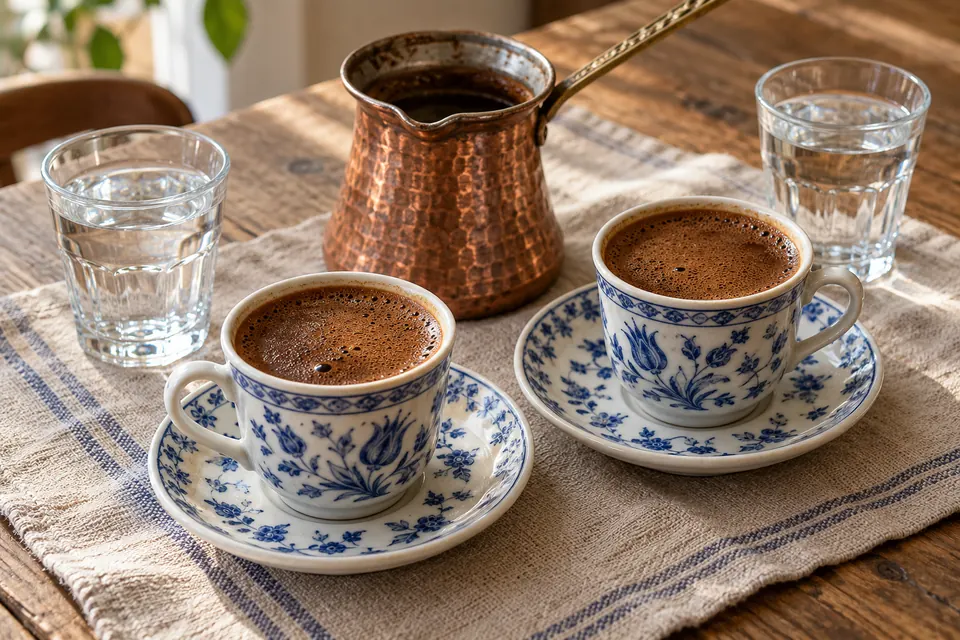
Turkish Coffee Recipe — Türk Kahvesi
Unfiltered Turkish coffee brewed slowly in a cezve
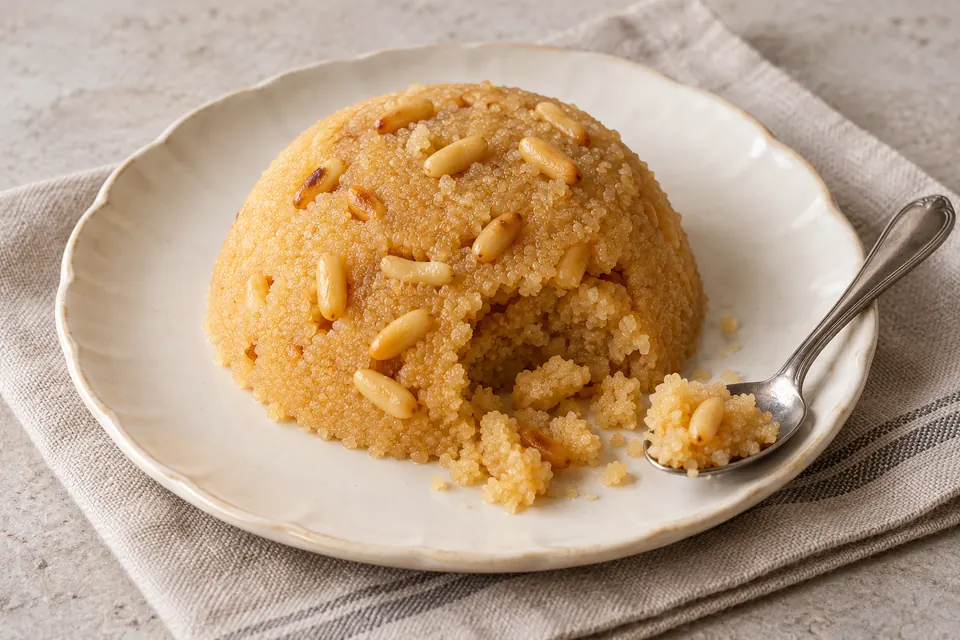
Turkish Semolina Halva — İrmik Helvası
Turkish milk-based semolina halva with pine nuts