Blog
Chestnuts in Turkish Cooking: Bursa Sweets and Savory Rolls
A chestnut can hold its shape in a sweet syrup, break into tender pieces inside a cabbage leaf or disappear partly into toasted flour. Those changes make it an especially useful way to explore Turkish regional cooking. Bursa's famous kestane şekeri is one expression, but the ingredient also belongs to savory food. Looking at the dishes together reveals different kinds of craft rather than a single national formula.
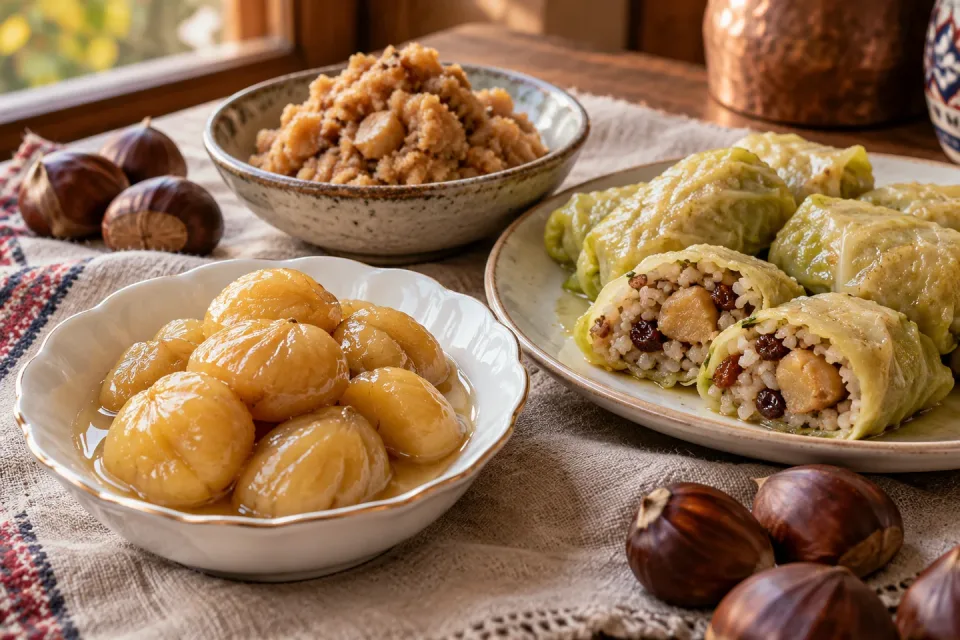
Bursa: a confection built around the whole fruit
Bursa Kestane Şekeri begins with peeled chestnuts cooked in syrup. The Culture Portal connects its reputation to production in Bursa's Şekerciler Çarşısı from the early twentieth century and identifies it as a registered Turkish geographical indication. The described appearance is amber-yellow, rather than deeply caramelized. Easy peeling and a thin shell matter because the fruit itself remains the center of the confection.
A separate Bursa account describes small groups of peeled chestnuts supported in fine cloth while they cook gently in syrup, followed by a long cooling period. The detail helps explain the patience behind an intact piece. This is a description of confectionery practice, not a home-canning method or a promise that any homemade batch will keep unrefrigerated. For purchased sweets, follow the producer's storage instructions.
Chestnuts inside an olive-oil cabbage roll
Bursa's zeytinyağlı kestaneli lahana dolması takes the same ingredient in a different direction. The documented filling combines rice, onion, raisins and chestnuts with olive oil, dried mint, allspice, cinnamon and black pepper. The cabbage is also called kelem in the account. Chestnuts are added after the rice mixture has begun cooking, and the source allows them boiled or roasted.
Here sweetness is part of a savory balance, alongside aromatic spices and the cabbage wrapper. The rolls are cooked together and left to cool. They should not be confused with every lahana sarması: meat-filled cabbage rolls belong to the wider family but have a different filling. Our linked cabbage-roll recipe offers that comparison; it is not presented as this Bursa chestnut preparation.
Zonguldak: chestnuts meet toasted flour
The Culture Portal also records kestaneli un helvası for Zonguldak, crediting the Western Black Sea Development Agency. Roasted chestnut flesh is combined with flour toasted in oil, while milk and water help turn the mixture into a spoonable sweet. This is chestnut-enriched flour helva, not a statement that the flour itself is chestnut flour.
That distinction matters when reading a menu. Un helvası names a flour-based preparation, whereas kestaneli tells you what has been added. Our plain flour-helva recipe is a useful starting comparison for the toasted base, but it does not replace the regional chestnut dish. Similar names can describe noticeably different textures and ingredients.
How to explore the contrast at your own table
Choose one direction for a meal rather than repeating chestnuts in every course. A small portion of candied chestnuts with Turkish coffee could follow a simple savory menu. On another occasion, chestnut-filled cabbage rolls could be the focus, with other dishes kept less sweet and less heavily spiced. These are practical menu suggestions, not fixed regional serving rules.
When buying ingredients, distinguish plain cooked chestnuts from chestnuts already sweetened in syrup. The latter would change a savory filling considerably. Read the complete dish description rather than assuming that a chestnut title tells you everything: the cabbage preparation contains rice, while the Zonguldak helva also includes ordinary flour and milk. Following the ingredient through several dishes makes regional differences easier to appreciate without flattening them into one recipe.
Recipes
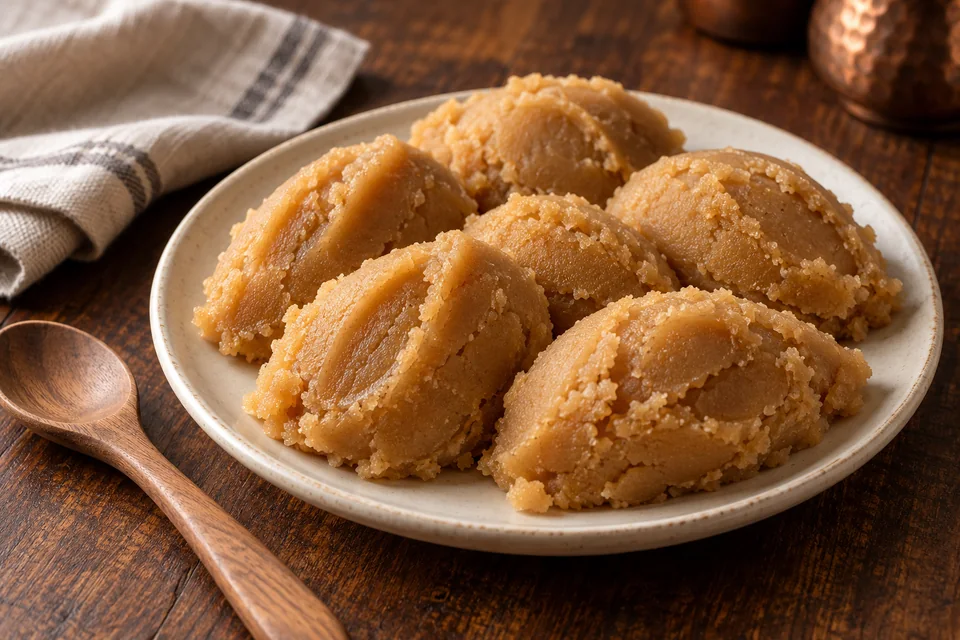
Turkish Flour Halva — Un Helvası
Turkish flour halva slowly toasted in clarified butter and finished with sweetened milk
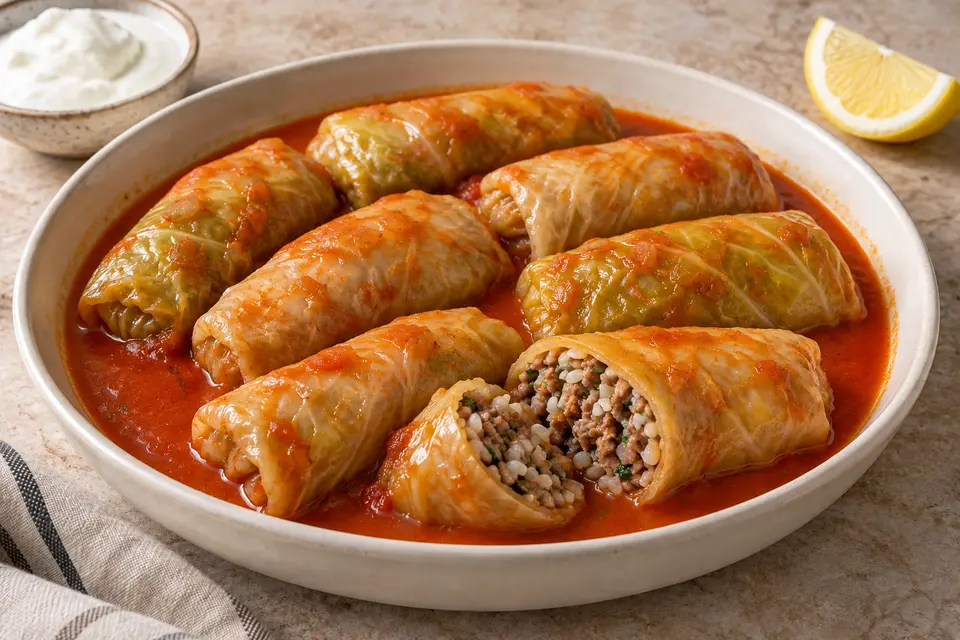
Turkish Stuffed Cabbage Rolls — Etli Lahana Sarması
Turkish cabbage rolls with beef, rice, herbs and tomato-pepper sauce
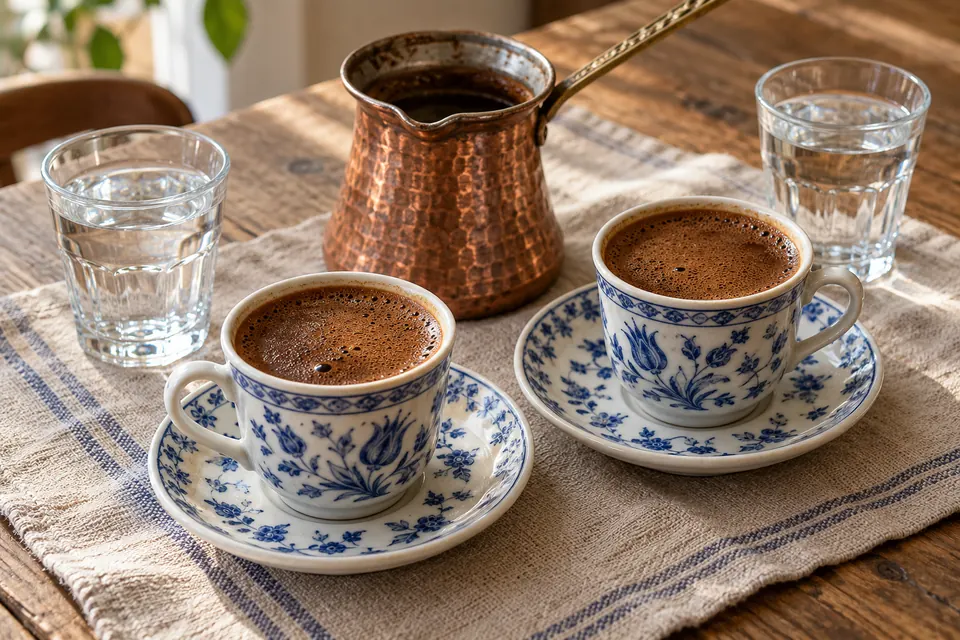
Turkish Coffee Recipe — Türk Kahvesi
Unfiltered Turkish coffee brewed slowly in a cezve