Blog
Ceremonial Keşkek: The Communal Dish of Weddings and Festivals
Keşkek begins with hulled wheat and meat, but its cultural meaning lies in the work around the cauldron. For weddings, religious holidays, circumcisions and seasonal gatherings, people may contribute ingredients, tend the fire, beat the cooked wheat and meat together, and share the finished dish. Türkiye’s ceremonial keşkek tradition entered UNESCO’s Representative List of the Intangible Cultural Heritage of Humanity in 2011. The recognition concerns a living practice of cooperation and transmission—not one compulsory recipe for every region.
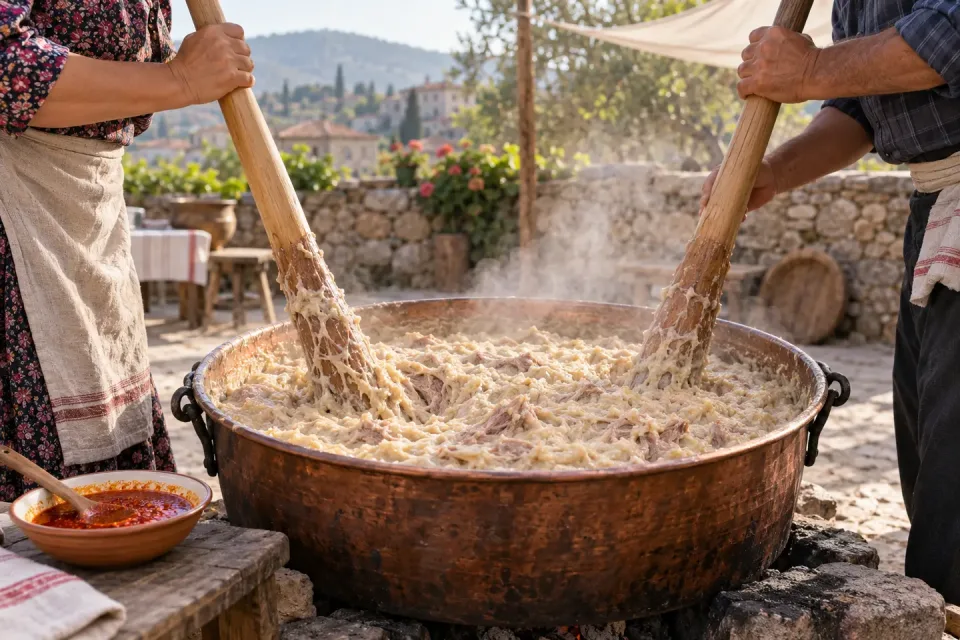
A dish whose preparation is part of the ceremony
In its ceremonial form, keşkek is planned for a gathering rather than cooked as an isolated household meal. UNESCO’s description places it at weddings, circumcision celebrations and religious holidays. Wheat is prepared, meat and water are organized, and a large cauldron is cooked over a fire. Women and men take on different parts of the work, while experienced participants guide the timing and texture.
The long wooden tools used to beat the mixture are central to the public action. Once the wheat is soft and the meat can be pulled into fibers, the contents are worked until they become cohesive and spoonable. In some places, drums and the zurna accompany the beating. The sound, effort and gathered audience turn a cooking technique into a visible statement that the event belongs to the community.
Why shared labor matters as much as the ingredients
The Sinop culture record describes keşkek at Hıdrellez festivities, bolluk aşı gatherings and weddings. Procuring the ingredients, cooking and distributing the food all involve collective participation. Cauldrons are commonly set outdoors, tasks are divided among women and men, and guests eat at shared tables. Local explanations connect this work with unity, abundance and the act of sharing.
That social structure helps explain why ceremonial keşkek cannot be reduced to a list of quantities. Knowledge passes through observation: how to control a large fire, when the wheat is ready to beat, how firmly to use the mallets, and how to serve many guests without losing the dish’s heat or texture. Modern equipment can shorten the physical work, but regional records continue to value the traditional beating because the process itself carries memory and skill.
One name does not mean one regional formula
The basic relationship between hulled wheat and meat appears widely, yet the meat, cooking vessel and finish can change. The İzmir record allows red or white meat and describes soaked wheat and meat being boiled, combined in large cauldrons, beaten, and sometimes finished with a butter, tomato-paste and red-pepper sauce. This western Anatolian version is closely associated with wedding tables.
Around Kaynarca in Sakarya, the official record emphasizes chicken rather than beef and a topping of butter with dartı, a browned dairy preparation made from the rich layer collected from milk. Şuhut Keşkeği in Afyonkarahisar follows another route: local göce wheat, chickpeas and beef cook for 12–15 hours in an unglazed clay pot inside a wood-heated stone oven, then Afyon kaymak is added before extended beating. These are not casual substitutions. They are regional systems with their own ingredients, tools and expectations.
Building a table around keşkek
An İzmir wedding menu may place keşkek beside chickpeas in tomato sauce, rice or bulgur pilaf, ayran or hoşaf. The combination balances the dense, soft keşkek with grains, a cool drink and fruit-based refreshment. At home, those pairings can inspire a smaller meal: choose either Pirinç Pilavı or Bulgur Pilavı, then add Ayran or Kuru Kayısı Hoşafı rather than trying to reproduce an entire ceremonial spread.
The important distinction is scale and purpose. A home dinner can introduce the flavor and texture of keşkek, but the UNESCO-listed tradition is broader than the bowl. It includes the invitation, division of work, public beating, distribution and knowledge shared between generations. Regional versions should therefore be named and described precisely. Doing so preserves both the dish’s variety and the communal practice that gave it cultural significance.
Recipes
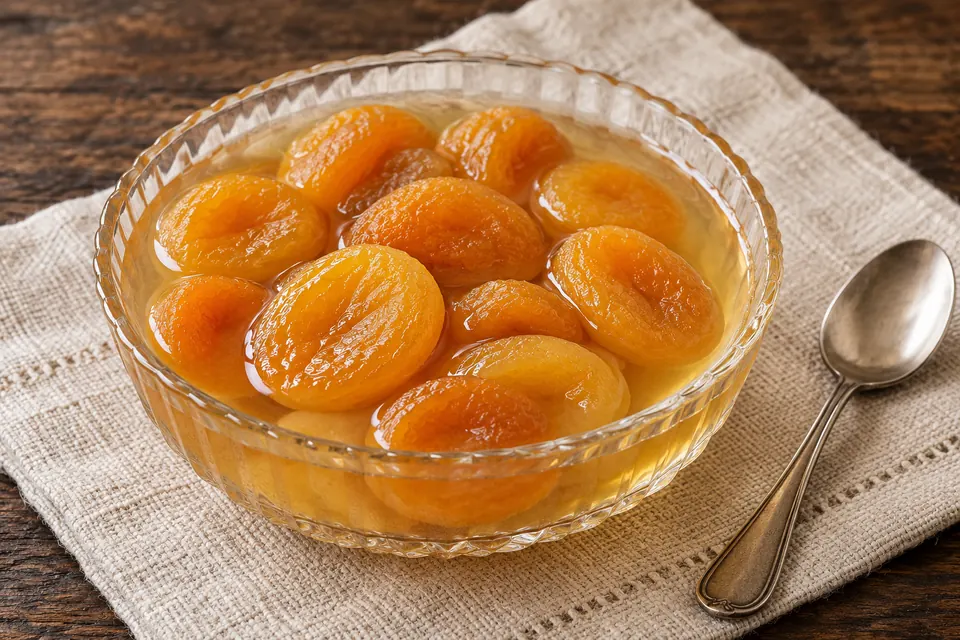
Turkish Dried-Apricot Compote — Kuru Kayısı Hoşafı
Turkish dried-apricot compote served chilled
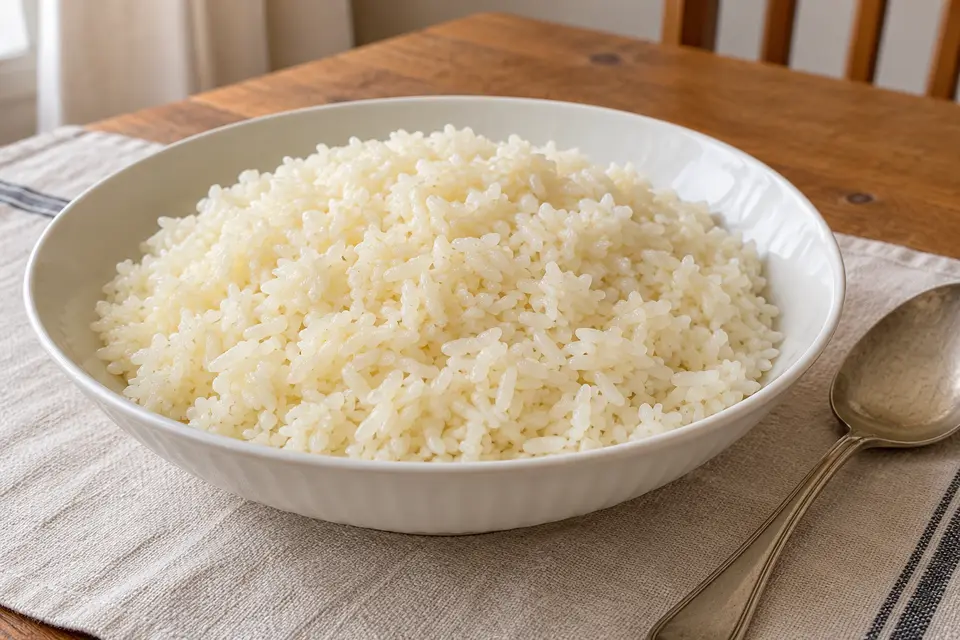
Turkish Buttered Rice Pilaf — Pirinç Pilavı
Turkish buttered rice pilaf with separate, tender grains
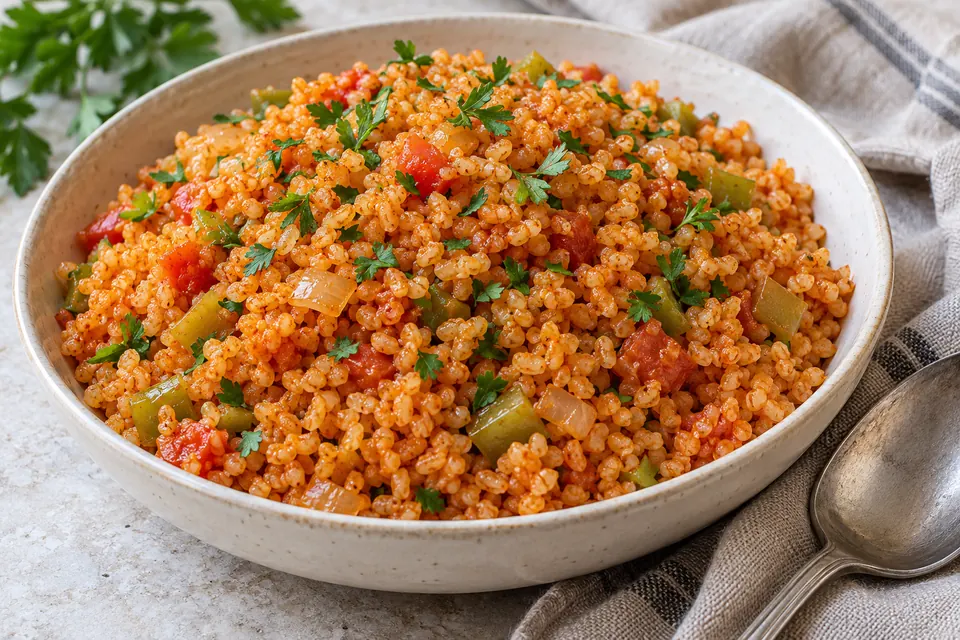
Turkish Bulgur Pilaf — Bulgur Pilavı
Turkish bulgur pilaf with tomatoes and mild green peppers

Turkish Yogurt Drink Recipe — Ayran
A cold, savory Turkish yogurt drink