Blog
Bulgur in Turkish Cooking: Fine, Coarse and When to Use Each
Bulgur is not one single pantry product in Turkish cooking. Its grind determines whether it should swell quietly in a warm mixture, be kneaded into a cohesive shape or simmer in a pot until the grains are tender and separate. Knowing the difference between fine köftelik bulgur and coarser pilavlık bulgur makes familiar dishes such as kısır, mercimek köftesi and bulgur pilavı far easier to understand.
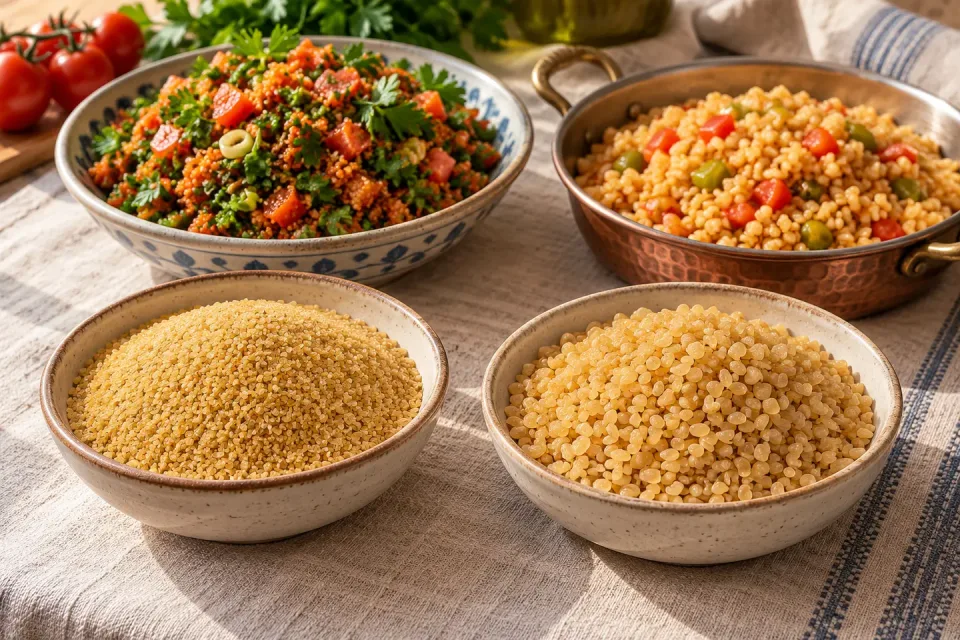
Bulgur is cooked before it reaches the kitchen
Bulgur is sometimes described simply as cracked wheat, but that leaves out an important part of the process. Türkiye’s Culture Portal explains that the wheat is cleaned, cooked, dried, peeled or polished, cracked and finally sorted by size. Durum wheat is commonly used, particularly in major producing regions such as Gaziantep. Because the grain has already been cooked during processing, bulgur behaves differently from raw cracked wheat and can soften comparatively quickly.
The registered description of Antep Bulguru lists several commercial sizes: whole bulgur, pilavlık bulgur, medium pilavlık bulgur, fine bulgur known locally as simit, and very fine çiğ köftelik bulgur. These are not merely marketing names. The size changes how much liquid the grain needs, how quickly it absorbs moisture and whether the finished dish should be fluffy, spoonable or firm enough to shape.
Fine bulgur absorbs; very fine bulgur can be kneaded
Fine bulgur is the practical choice for dishes that hydrate without a long simmer. In kısır, it softens before being mixed with tomato paste, herbs, olive oil, lemon and, in some regional versions, pomegranate molasses. GoTürkiye identifies fine bulgur as the foundation of this cold salad, which is common at gatherings and afternoon tea tables. The goal is a tender grain that still gives the salad definition, not a paste.
Mercimek köftesi uses the same principle in a warmer setting: fine bulgur absorbs moisture from cooked red lentils, then the mixture is seasoned, kneaded and shaped. Very fine çiğ köftelik bulgur is designed for even more intensive kneading. An official Şanlıurfa account of çiğ köfte adds the grain gradually and works it until it softens and binds. In Gaziantep and Kilis, the word simit may refer to fine bulgur rather than the sesame bread ring; the meaning depends on the dish and region.
Pilavlık bulgur needs a pot, liquid and a rest
Coarser pilavlık bulgur is intended to retain distinct grains. It is usually cooked with measured water or stock rather than merely soaked. A Culture Portal recipe for Koçhisar-style bulgur pilaf sautés tomato and green pepper in butter, adds the bulgur, pours in stock, then cooks gently until the liquid is absorbed. The pilaf rests for ten minutes after leaving the heat.
That sequence—briefly coating the grain, simmering it and allowing it to rest—helps produce a pilaf that is tender without becoming compact. Medium and coarse products vary between brands, so the package ratio is a useful starting point. If a Turkish recipe specifically asks for pilavlık bulgur, replacing it with the finest grind can create a soft, clumped result.
How to choose the right bag
For salads and hand-shaped köfte, look for labels such as ince bulgur, köftelik bulgur or çiğ köftelik bulgur. For pilaf, seek pilavlık bulgur or iri bulgur. The exact categories are not perfectly standardized across every exporter, so inspect the grain through a clear window when possible: fine bulgur resembles coarse sand, while pilavlık bulgur has visibly larger, angular pieces.
Couscous, freekeh and raw cracked wheat are not direct substitutes. They come from different processes and need different amounts of liquid and cooking time. Bulgur is made from wheat and therefore contains gluten. Store it in an airtight container away from heat, moisture and direct sunlight; the Antep Bulgur registration specifically recommends a cool place out of direct sun.
One grain, several kinds of Turkish comfort
The difference between fine and coarse bulgur is a useful map of Turkish cooking. Fine grains support bright, herb-filled dishes and mixtures shaped by hand; coarse grains become pilafs that accompany beans, stews, grilled food or yogurt. Regional recipes may change the herbs, pastes, fats and liquids, but the grain size still tells the cook what kind of technique comes next.
Start with the grind named in the recipe rather than treating every bag as interchangeable. That small decision protects the intended texture and helps three very different dishes—kısır, mercimek köftesi and bulgur pilavı—show why bulgur has such a wide place on the Turkish table.
Recipes
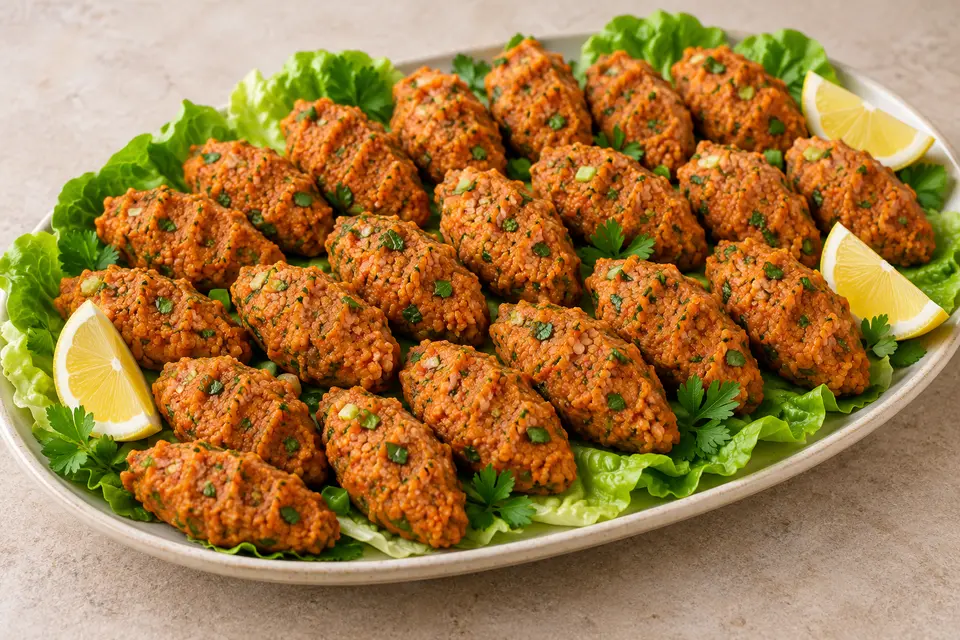
Turkish Lentil Patties — Mercimek Köftesi
Turkish red lentil and bulgur patties with fresh herbs
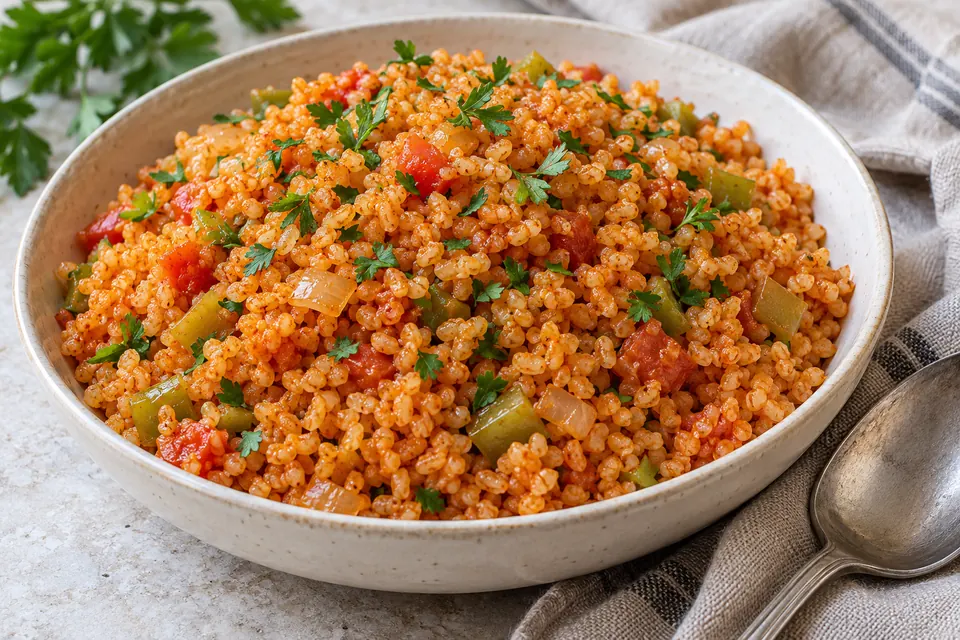
Turkish Bulgur Pilaf — Bulgur Pilavı
Turkish bulgur pilaf with tomatoes and mild green peppers
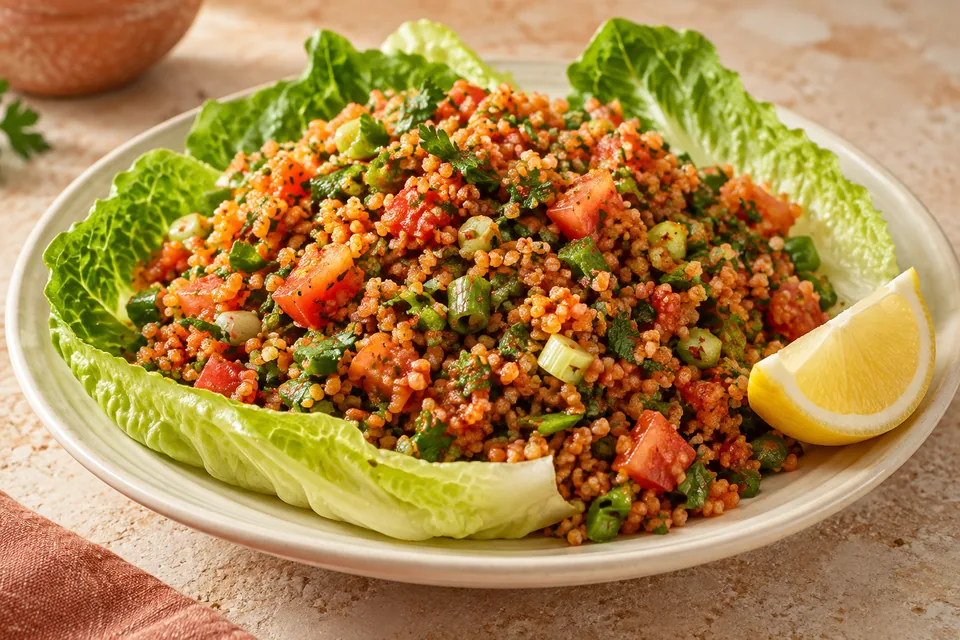
Turkish Bulgur Salad Recipe — Kısır
Herby bulgur salad with pomegranate