Blog
Aşure in Turkish Culture: A Bowl Made for Sharing
Aşure is often introduced in English as Noah’s pudding, but one nickname cannot contain the many meanings the dish carries in Türkiye. It is a thick, softly sweet mixture of wheat, pulses, dried fruit and nuts, prepared especially during Muharram and distributed in bowls to relatives, friends and neighbors. The recipe changes from kitchen to kitchen; the act of making enough to share is the thread that holds the tradition together.
A Muharram Tradition with More Than One Meaning
The Ministry of Culture records aşure as a special-day food traditionally prepared on the tenth day of Muharram, the first month of the Islamic lunar calendar. Different communities connect the day with different religious and historical narratives. Stories about Noah’s Ark are widely repeated, while the remembrance of Hüseyin’s death at Karbala is central for many people. It is therefore more accurate to describe aşure as a shared tradition with several layers of meaning than to insist on a single origin story.
Its timing distinguishes aşure from an everyday pudding, even though some dessert shops may sell it outside the season. In homes, associations and community events, the dish can mark remembrance, gratitude, abundance and fellowship. These meanings are expressed through action: a large pot is cooked, divided into many small portions and carried beyond the household.
Why the Pot Holds So Many Ingredients
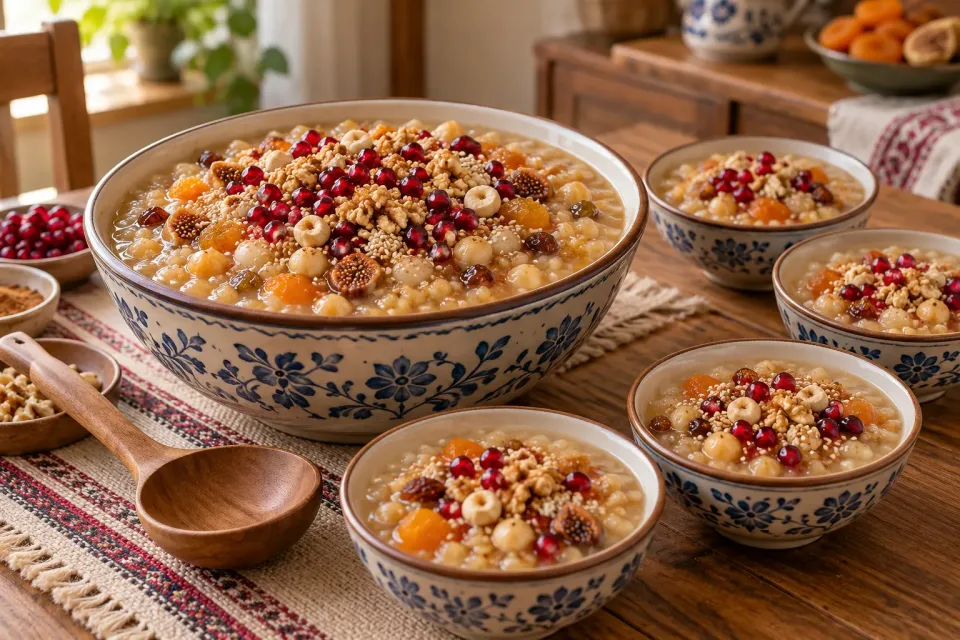
The usual foundation is hulled or pearled wheat cooked until tender and creamy. Chickpeas and white beans add body; raisins, dried apricots and figs bring sweetness and texture. Sugar sweetens the pot, while cinnamon, cloves, walnuts and other nuts build aroma. The ingredients remain visible, so a finished bowl should look like a generous gathering of grains, pulses and fruit rather than a smooth milk pudding.
Numbers such as seven, twelve or forty-one are sometimes attached to the ingredient list, but official cultural records treat these as beliefs, not a universal formula. What belongs in the pot depends on region, household and community. That flexibility is part of the tradition: many separate pantry foods are brought into one bowl without losing their individual character.
Regional Bowls Are Not Identical
Across Türkiye, cooks may add corn, rice, cowpeas or broad beans. Some areas sweeten aşure with pekmez instead of relying only on sugar. Toppings can include pomegranate seeds, sesame, currants, cinnamon and crushed walnuts. The Ministry’s Muğla record is especially rich in corn, nuts and dried fruit and notes the long-standing local practice of sprinkling sesame on top, often together with pomegranate or walnuts.
These differences are not mistakes to be corrected. They show how a calendar tradition adapts to local crops, pantry habits and taste. A pale bowl with a few restrained garnishes and a deeply colored bowl enriched with pekmez can both belong to the aşure family. When describing a version, naming its region or household style is more useful than declaring it the only authentic one.
The Etiquette of Making and Sharing
Aşure is commonly portioned while warm, though it may be enjoyed warm, at room temperature or chilled. Because wheat continues to absorb liquid, the mixture thickens as it rests. Garnishes are best added after ladling so every recipient receives nuts, fruit and spice. For a mixed group, it is considerate to mention wheat gluten and any nuts clearly; a bowl’s generous ingredient list can also hide allergens.
At the table, aşure needs little accompaniment. Serve it as the final course after a light savory meal, or offer it alone with tea. It also makes an instructive contrast with smoother Turkish desserts such as sütlaç and with the toasted richness of semolina helva. Yet its most characteristic presentation is not an elaborate dessert plate: it is a row of simple bowls ready to be carried to other doors.
Recipes
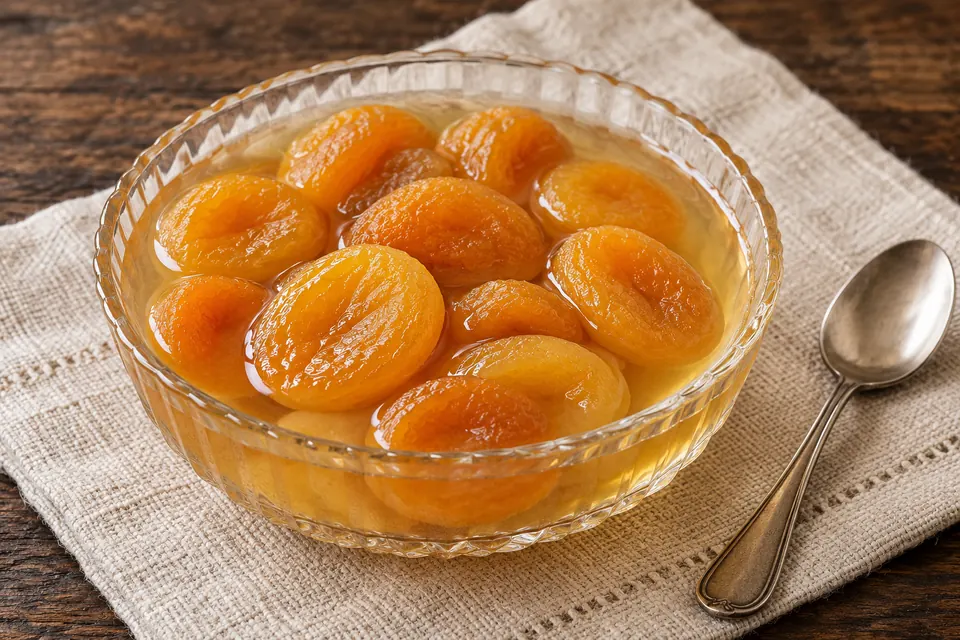
Turkish Dried-Apricot Compote — Kuru Kayısı Hoşafı
Turkish dried-apricot compote served chilled
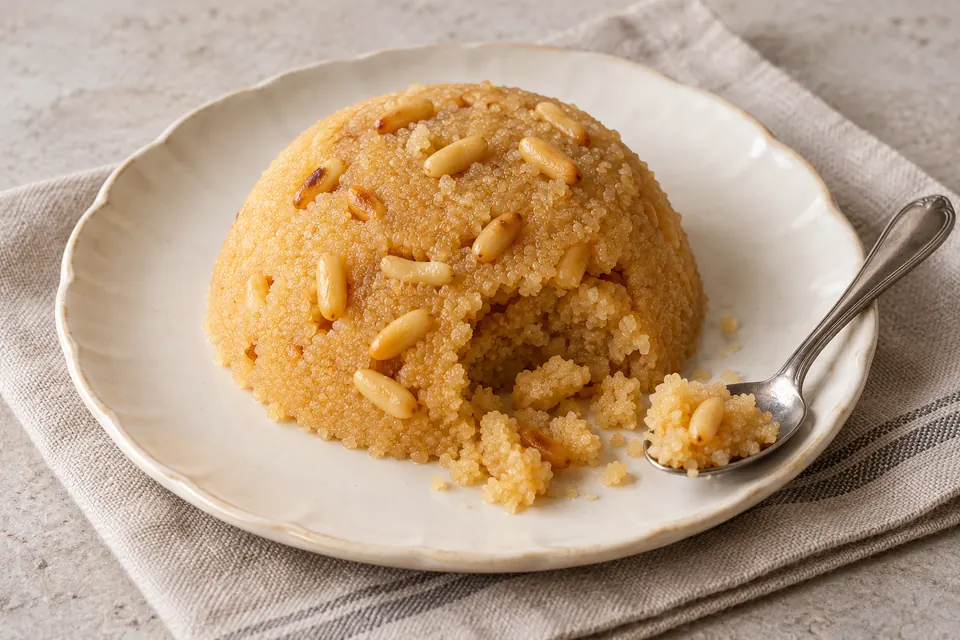
Turkish Semolina Halva — İrmik Helvası
Turkish milk-based semolina halva with pine nuts
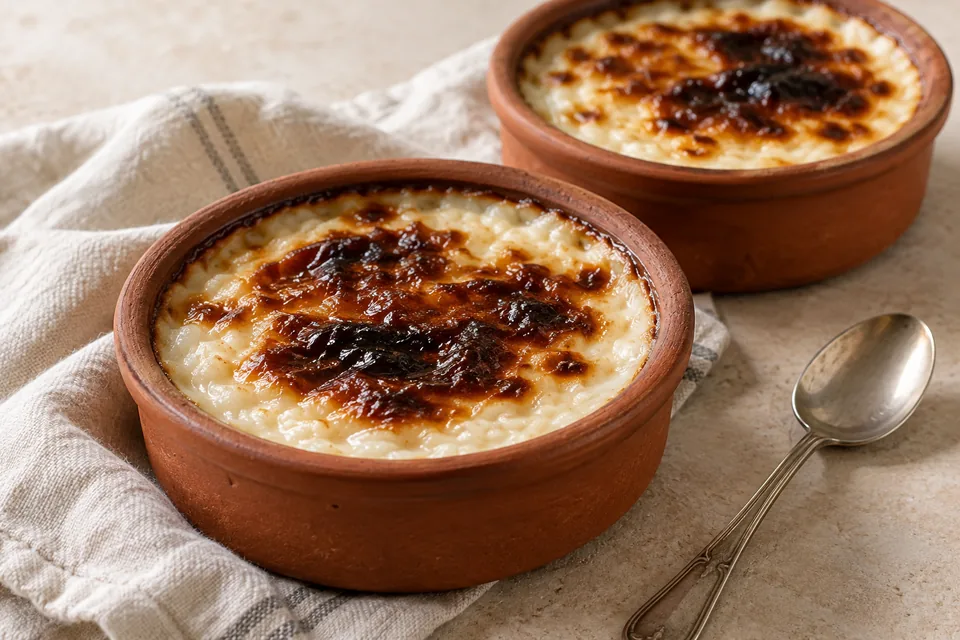
Turkish Baked Rice Pudding Recipe — Fırın Sütlaç
Turkish baked rice pudding