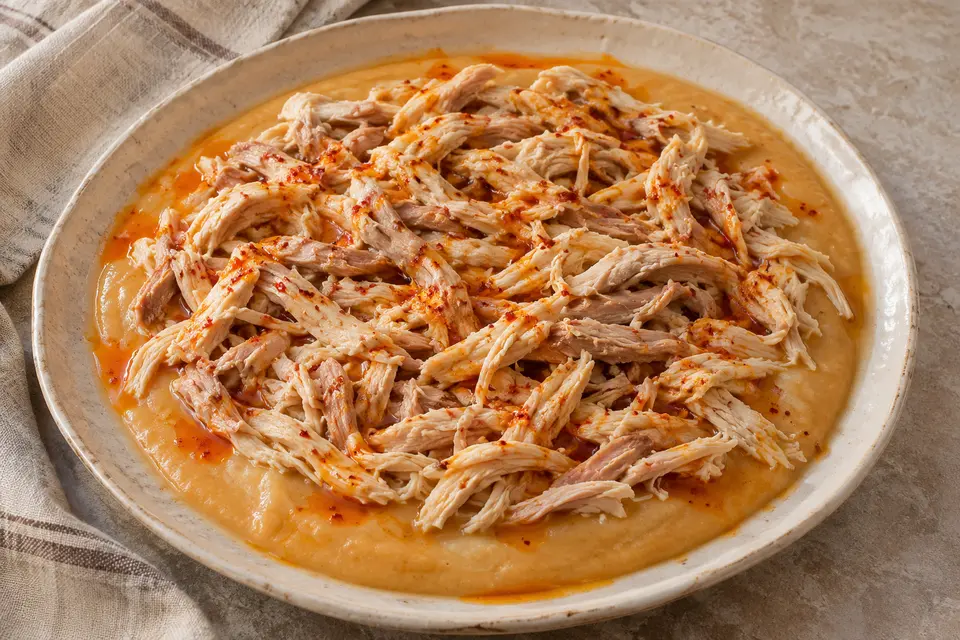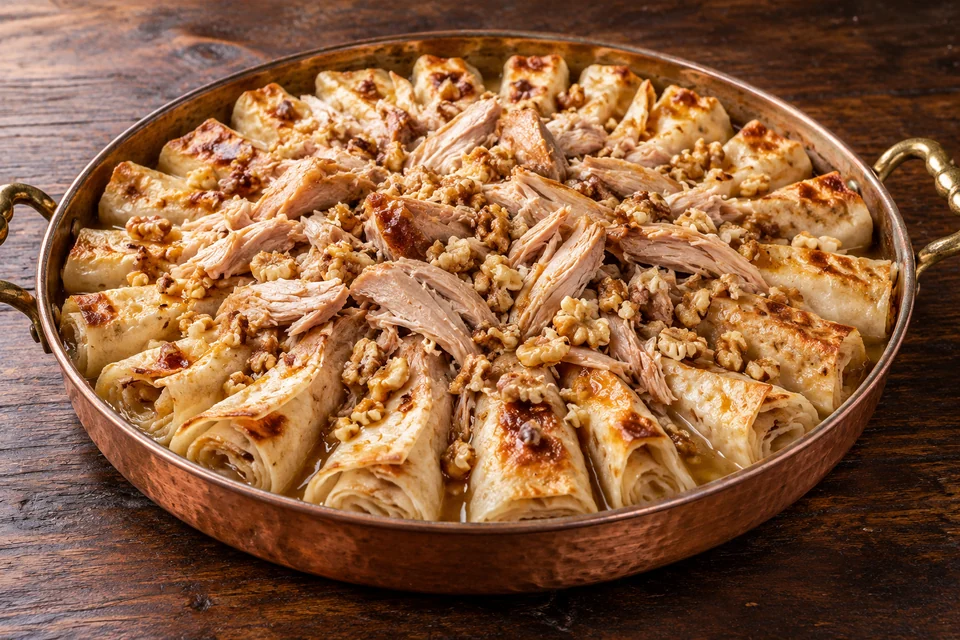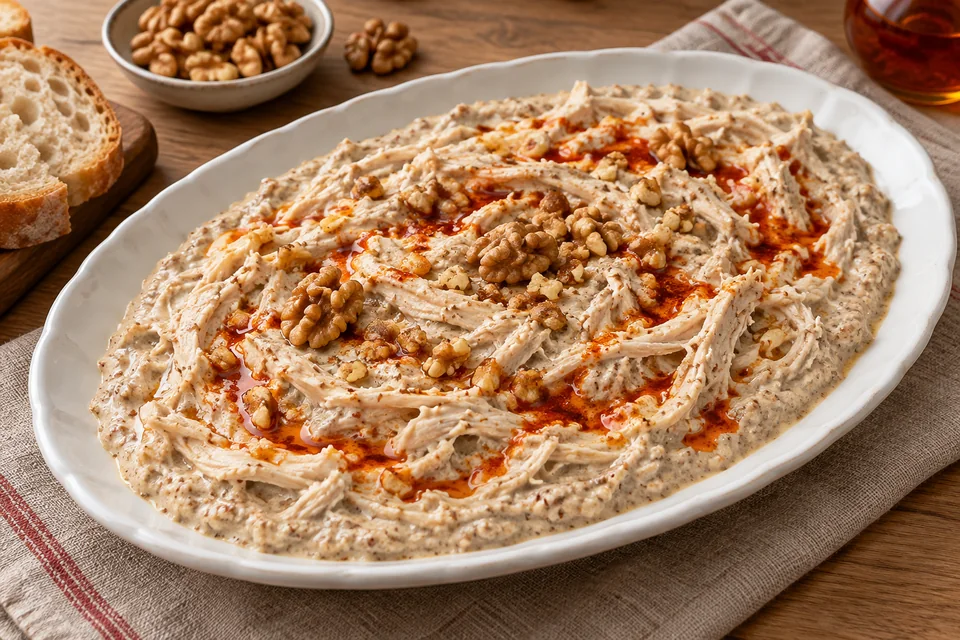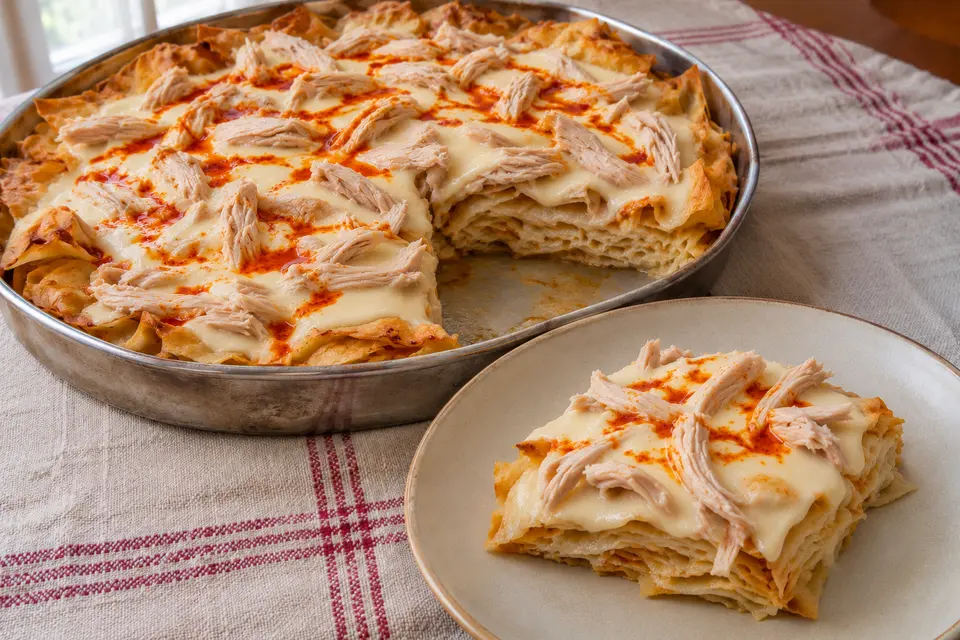
Türkiye's Culture Portal records Damat Paçası as an Ottoman-era dish that remains part of Bursa wedding tradition, prepared by the bride's mother and served for special occasions. Its official formula uses chicken, three yufka sheets and fat, followed by chicken broth, flour, garlic, egg, vinegar and red pepper. This home version keeps that sequence and the recorded three-sheet structure, uses butter in place of the listed margarine, and defines the otherwise general cooking cues with a 30 cm tray, oven temperature and thermometer targets.
Damat Paçası — Recipe Card
Bursa Wedding-Style Layered Yufka with Chicken and Garlic Sauce
Makes 6 servings · Makes one 30 cm / 12-inch tray, cut into 6 portions.US cup = 240 ml · tablespoon = 15 ml · teaspoon = 5 ml. Cup and weight conversions are approximate. Australian cooks: use a 15 ml measuring tablespoon.
Ingredient quantities and servings are scaled. Cooking times, pan sizes, frying oil depth, and temperatures stay the same; cook larger batches as needed.
Ingredients
How to make Damat Paçası
Poach the chicken and reserve the broth
Put the chicken, water and 2 g of the salt in a medium saucepan. Bring just to a simmer, skim any foam, cover loosely and cook gently for 20–25 minutes, until the thickest piece reaches 74°C/165°F. Transfer the chicken to a plate. Strain the broth, measure 360 ml/1 1/2 cups and let it cool until warm. Shred the chicken into bite-size strands.
Layer and butter the yufka
Heat the oven to 190°C/375°F. Brush a 30 cm/12-inch round metal tray with a little of the butter. Lay in the first yufka, letting it ruffle rather than sit flat, and brush with butter. Repeat with the remaining sheets, folding the edges inward and using 90 g of the butter in total for the tray and layers.
Bake and soften the pastry
Bake for 20–25 minutes, until the folded yufka is crisp and deep golden across the surface. Cool in the tray for 10 minutes. Pour 240 ml/1 cup of the warm reserved broth evenly over the pastry, cover the tray and rest for 10 minutes; the raised edges should retain some crispness.
Add the chicken
Scatter the shredded chicken evenly over the softened yufka. Keep the pieces loose rather than pressing them down, so the sauce can flow between the strands without compressing the pastry.
Cook the garlic-egg sauce
In a saucepan, whisk the remaining 120 ml/1/2 cup broth with the flour until smooth. Whisk in the garlic, egg, vinegar, remaining 4 g salt and black pepper. Cook over medium-low heat, whisking constantly, for 5–7 minutes until the sauce is thick enough to coat a spoon and reaches 74°C/165°F. Do not let it boil hard or the egg may scramble.
Finish with paprika butter
Pour the hot sauce evenly over the chicken. Warm the remaining 35 g butter with the sweet paprika over low heat for 30 seconds, just until fragrant, and drizzle it over the tray. Rest for 5 minutes, cut into 6 portions and serve warm while the pastry edges remain crisp.
Bring this recipe to your kitchen with a printable copy.
Print recipeRecipe from MyTurkishRecipes · https://myturkishrecipes.com/bursa-layered-chicken-yufka-damat-pacasi. Quantities reflect your selected serving scale. Cooking times are estimates; follow the doneness cues.
Make it work in your kitchen
Ingredient Substitutions
These swaps change flavor or texture as described. Keep the original ingredients for the closest version of the dish.
Yufka
For rolled börek, use two thin sheets of thawed filo per roll, cut to a similar size. Keep unused sheets covered with a slightly damp towel. Filo is more brittle and produces a flakier shell; try one roll before shaping the full batch.
A few helpful kitchen notes
Official measure adaptation
The Bursa record gives three yufka sheets, 300 g chicken and 125 g margarine. This version retains those quantities but uses unsalted butter, dividing it between the pastry layers and the paprika finish.
Yufka matters
Use large, flexible Turkish yufka rather than flour tortillas. Packaged phyllo is much thinner and dries faster, so it is not presented as a direct one-for-one substitute.
Salt adjustment
The official formula lists a tablespoon of salt, but broth saltiness varies widely. This version uses 6 g total; taste the strained cooked broth before making the sauce and reduce the remaining salt if the broth is already seasoned.
Heat level
Mild. Sweet paprika colors the butter without meaningful heat. For a warmer finish, replace up to half the paprika with pul biber; keep the base sauce unchanged.
Allergens and dietary note
Contains wheat, egg and dairy. Commercial yufka and broth may contain additional allergens, so check package labels. This recipe is not suitable for vegetarian or gluten-free diets.
Food safety
Cook the chicken and the egg-thickened sauce to 74°C/165°F. Keep raw poultry and its utensils separate from cooked ingredients, and refrigerate the finished tray within 2 hours.
How to store and reheat Damat Paçası
Refrigerate portions in a shallow covered container at 4°C/40°F or below within 2 hours, or within 1 hour above 32°C/90°F. Use within 3 days. Reheat covered in a 180°C/350°F oven for 15–20 minutes, uncovering for the final 5 minutes, until the center reaches 74°C/165°F. Freezing is not recommended because the egg sauce can separate and the broth-soaked yufka becomes soft.
Damat Paçası: questions and answers
Why is the dish called Damat Paçası?
The name is tied to wedding custom. The official Bursa record describes it as a special-occasion dish traditionally made by the bride's mother; the literal name is retained as the dish's established identity.
Is the pale topping a béchamel sauce?
Not in this recorded Bursa version. It is thickened with broth, flour and egg, then sharpened with garlic and vinegar. It contains no milk or cheese.
Can I make the components ahead?
Poach and shred the chicken and refrigerate it with the reserved broth for up to 1 day. Bake, soak and sauce the yufka shortly before serving so the edges keep their texture.
Can I use chicken breast?
Yes. Use the same weight and poach only until it reaches 74°C/165°F; breast meat is leaner and can dry out if simmered hard or held too long.