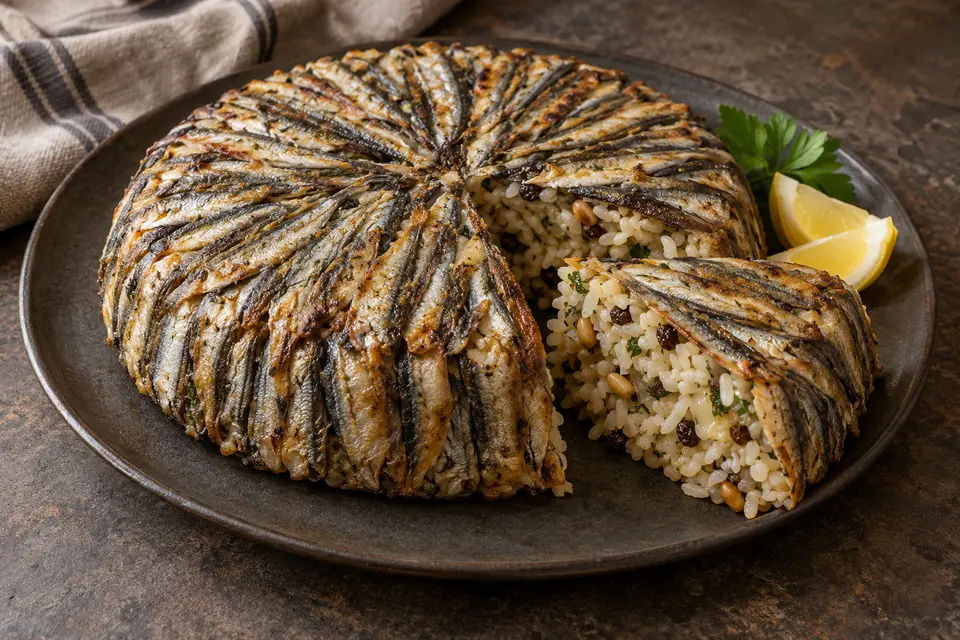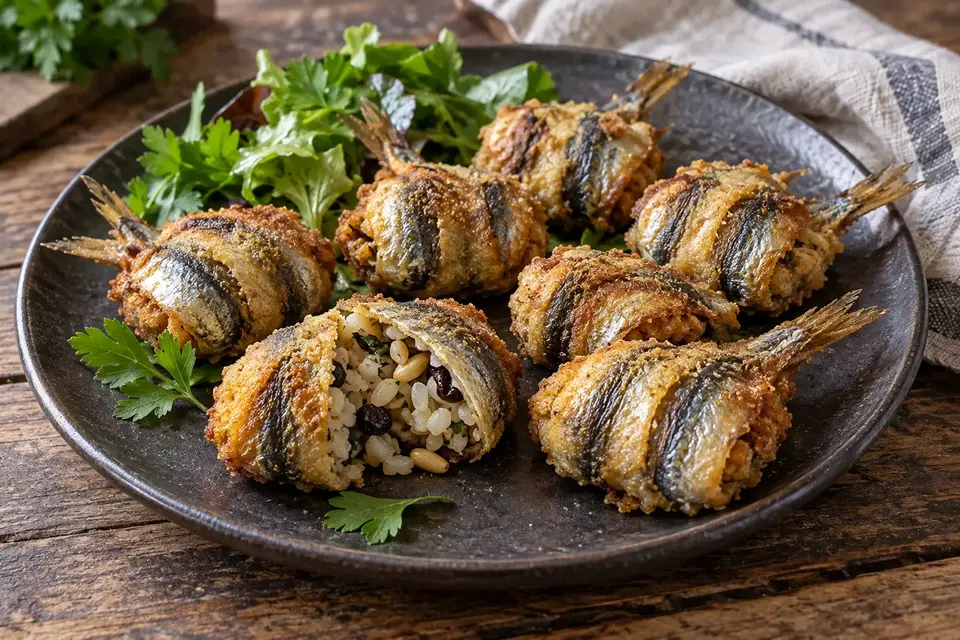
Hamsi is central to the cooking of Türkiye’s Black Sea coast, where it appears in pilafs, breads, soups and fried dishes. The Ministry of Culture’s sample recipe records this filled version of Hamsi Kuşu and explains that its small parcel shape suggests a little bird; it is also called a type of dolma. A separate Trabzon record documents a simpler herb-and-cornmeal patty under the same name, showing that the dish has more than one regional form. This recipe follows the Ministry’s rice-filled version without combining the two methods.
Hamsi Kuşu — Recipe Card
Black Sea Anchovy Parcels with Spiced Rice
Makes 4 servingsUS cup = 240 ml · tablespoon = 15 ml · teaspoon = 5 ml. Cup and weight conversions are approximate. Australian cooks: use a 15 ml measuring tablespoon.
Ingredient quantities and servings are scaled. Cooking times, pan sizes, frying oil depth, and temperatures stay the same; cook larger batches as needed.
Ingredients
How to make Hamsi Kuşu
Prepare the anchovies
Keep the fish cold while you work. Remove the heads, guts and backbones without separating the two fillets, leaving the tails attached. Rinse briefly only if needed, then pat each fish thoroughly dry with paper towels.
Salt and drain
Sprinkle the anchovies evenly with 4 g (about 5/8 teaspoon) of the salt. Arrange them in a colander over a bowl and refrigerate for 15 minutes, then blot away any released moisture.
Start the rice filling
Warm the olive oil in a small covered saucepan over medium-low heat. Add the onion and pine nuts and cook for 7–8 minutes, stirring often, until the onion is soft and the nuts are lightly golden, not dark.
Cook and season the filling
Stir in the rice for 1 minute. Add the hot water, dried currants and remaining 4 g salt. Cover, reduce the heat to low and cook for 15 minutes, or until the water is absorbed and the rice is just tender. Remove from the heat, rest covered for 5 minutes, then fold in the parsley, black pepper and sugar. Spread on a plate to cool until merely warm.
Shape the little parcels
Lay 2 anchovies side by side in your palm, skin sides down and head ends aligned, overlapping their inner edges slightly. Place about 1 heaped teaspoon of filling in the centre. Lay a third anchovy over the rice, skin side up, and bring the head ends and tails together to enclose the filling. Repeat without overfilling.
Coat gently
Put the cornmeal in one shallow dish and the beaten eggs in another. Coat each parcel lightly in cornmeal, shake off the excess, then dip it in egg. Set it on a tray while you finish the rest.
Shallow-fry until cooked
Heat the neutral oil in a wide frying pan over medium heat to about 175°C/350°F. Fry the parcels in small batches for 2–3 minutes per side, turning once, until crisp and golden. The fish must reach 63°C/145°F at the centre, or be opaque and separate easily; the egg coating should be fully set.
Drain and serve
Transfer to a rack or paper towels and let excess oil drain for 2 minutes. Serve hot, traditionally with a simple green salad; do not cover the parcels or their coating will soften.
Bring this recipe to your kitchen with a printable copy.
Print recipeRecipe from MyTurkishRecipes · https://myturkishrecipes.com/black-sea-stuffed-anchovies-hamsi-kusu-recipe. Quantities reflect your selected serving scale. Cooking times are estimates; follow the doneness cues.
A few helpful kitchen notes
Use fresh hamsi
This dish needs small fresh anchovies that can be butterflied and folded. Canned, jarred or salt-cured anchovies are too salty and cannot form the parcels; larger sardines change both the shape and cooking time.
Heat level
No added chilli. The only warmth comes from a small amount of black pepper, so the finished dish is mild.
Dietary and allergen note
The recipe contains fish, egg and pine nuts. It has no gluten ingredient when the cornmeal is verified gluten-free; use labelled cornmeal and check dried currants for cross-contact if this matters. This does not certify a coeliac-safe kitchen.
How to store and reheat Hamsi Kuşu
Refrigerate leftovers in a shallow, sealed container within 2 hours and keep at 4°C/40°F or colder. For the best fish and rice quality, eat within 2 days. Reheat on a rack in a 190°C/375°F oven until the centre reaches 74°C/165°F; do not leave cooked fish at room temperature for more than 2 hours.
Hamsi Kuşu: questions and answers
How is Hamsi Kuşu different from Hamsi Tava?
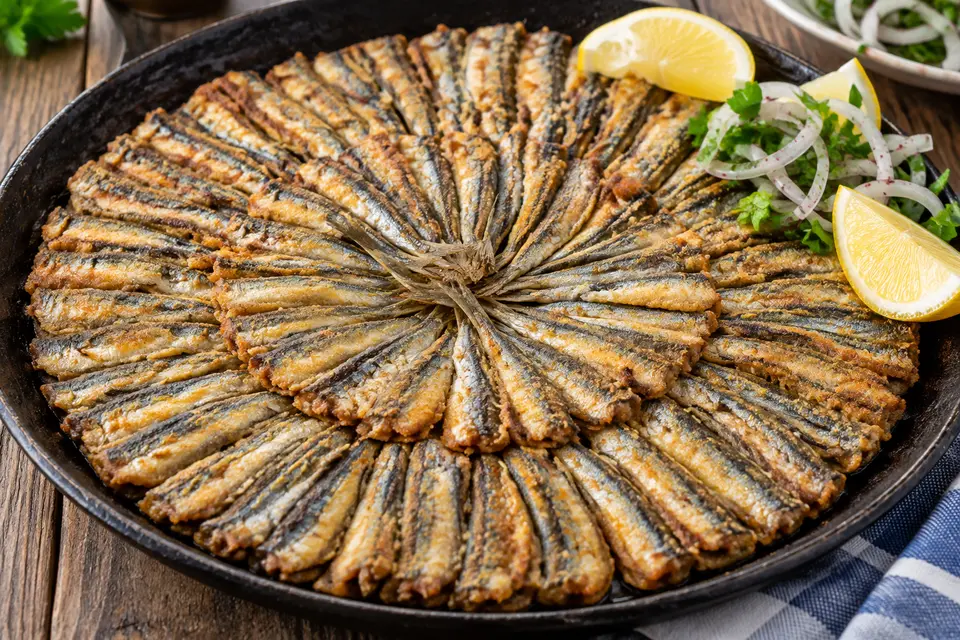
Hamsi Tava generally fries individual cornmeal-coated anchovies, often arranged in a pan. This version of Hamsi Kuşu encloses a seasoned rice filling inside three anchovies and adds an egg coating before frying.
Why is it called ‘anchovy bird’?
The Ministry of Culture explains that the compact parcel resembles a small bird. The name describes the shape; there is no poultry in the dish.
Can I prepare the filling ahead?
Yes. Cool the rice promptly, cover and refrigerate it for up to 1 day. Keep it separate from the raw fish, then assemble and fry the parcels just before serving.
Can I use canned anchovies?
No. Canned and salt-cured anchovies are already seasoned and too fragile or salty for this method. Use small fresh anchovies that can be opened flat while keeping the tail attached.