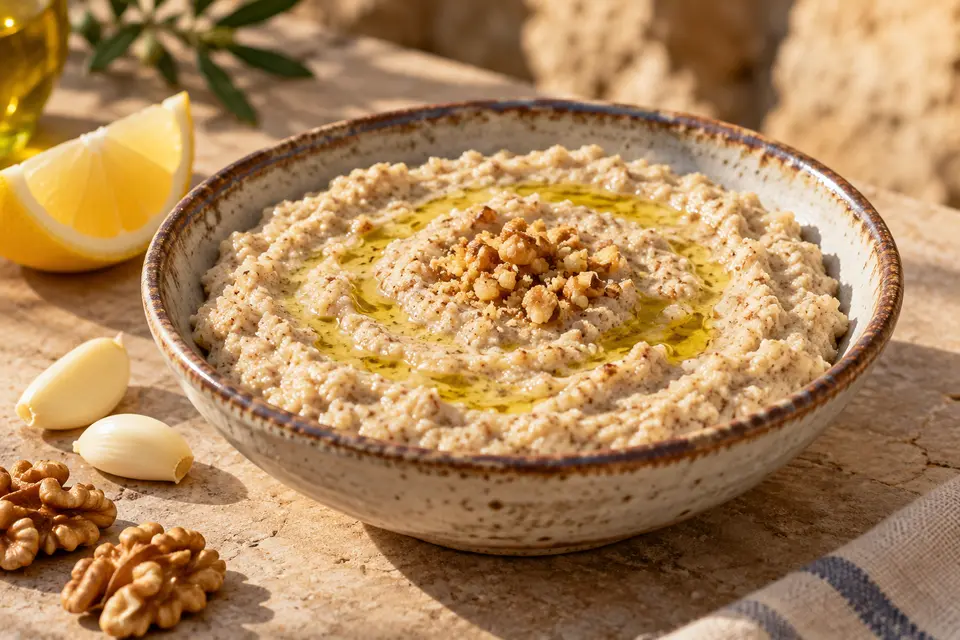
Türkiye’s Culture Portal documents this bread-and-walnut tarator in Antalya and describes tarator as an Anatolian sauce used both as a meze and as an accompaniment. The word covers more than one regional preparation: the tahini-based tarator associated with Antalya Piyazı is a different sauce. This recipe follows the Antalya source’s equal-volume bread and walnut base, lemon, garlic, olive oil and gradual addition of water.
Antalya Tarator Sosu — Recipe Card
Antalya walnut, bread and garlic sauce
Makes 6 servings · Makes about 2 cups, serving 6 as a meze or sauceUS cup = 240 ml · tablespoon = 15 ml · teaspoon = 5 ml. Cup and weight conversions are approximate. Australian cooks: use a 15 ml measuring tablespoon.
Ingredient quantities and servings are scaled. Cooking times, pan sizes, frying oil depth, and temperatures stay the same; cook larger batches as needed.
Ingredients
How to make Antalya Tarator Sosu
Prepare the bread and walnuts
Remove any firm crust from the stale bread and crumble the soft interior into a wide bowl. Crush the walnuts finely but stop before they turn into oily nut butter. Reserve 15 g/2 tablespoons walnuts for the top and add the rest to the bread.
Add the seasonings
Add the grated garlic, lemon juice and salt. Work everything together with a fork, pressing and scraping against the bowl until the bread is evenly moistened and the walnuts are distributed throughout.
Work in the olive oil
Reserve 5 ml/1 teaspoon olive oil for serving. Drizzle the remaining oil into the bread mixture in three additions, mashing thoroughly with the fork after each one. The mixture should become cohesive and glossy but retain a fine walnut-bread texture.
Adjust the consistency
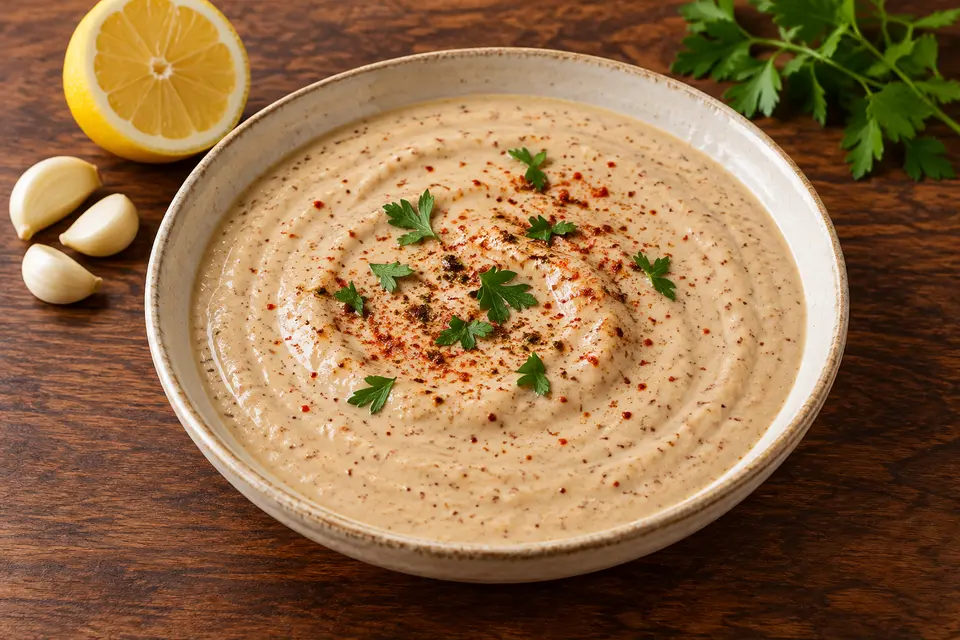
Mash in 60 ml/4 tablespoons cool water. Wait 2 minutes for the bread to absorb it, then add the remaining water 15 ml/1 tablespoon at a time only as needed. Stop when the sauce has the thick, spoonable consistency of tahini and holds soft ridges.
Plate and serve
Taste and adjust only the salt or lemon if necessary. Spread the tarator in a shallow serving bowl, make a few spoon swirls, drizzle with the reserved olive oil and scatter over the reserved walnuts. Serve immediately as a meze or sauce.
Bring this recipe to your kitchen with a printable copy.
Print recipeRecipe from MyTurkishRecipes · https://myturkishrecipes.com/turkish-walnut-garlic-sauce-antalya-taratoru. Quantities reflect your selected serving scale. Cooking times are estimates; follow the doneness cues.
A few helpful kitchen notes
Documented Antalya method
The official Antalya recipe uses equal cup measures of crumbled stale bread and crushed walnuts, one Turkish coffee cup olive oil, three garlic cloves, one lemon and salt, then adds water gradually to reach the consistency of tahini. This version converts that method to repeatable metric and US measures.
Bread and water
Use the soft interior of a plain stale loaf rather than dry commercial breadcrumbs. Loaf moisture varies, so 90 ml/6 tablespoons is a maximum: begin with 60 ml/4 tablespoons and stop as soon as the sauce is thick and spreadable.
Heat level — No added chili
The base sauce contains no chili and tastes garlicky rather than hot. The Antalya source lists cumin, citrus zest and pul biber as optional variations; for a warmer version, mix in 1 g/1/2 teaspoon pul biber without changing the base recipe.
Dietary and allergen notes
This version is vegan when made with vegan-labelled bread. It contains walnuts and wheat. For a gluten-free option, use 75 g/about 1 packed cup gluten-free white bread, verify every packaged ingredient and begin with only 45 ml/3 tablespoons water because absorption can differ; add more by the tablespoon.
How to serve it
The documented uses include serving tarator as a meze or spooning it over salads, fried or boiled vegetables, fish and köfte. Keep the base bowl plain when serving several dishes so its walnut, lemon and garlic profile remains versatile.
How to store and reheat Antalya Tarator Sosu
Because this uncooked sauce contains fresh garlic, oil and added water and has not been pH-tested, do not treat it as shelf-stable. Serve at once or cover and refrigerate within 2 hours at 4°C/40°F or colder; use within 2 days. Discard it if it has stood above 4°C/40°F for more than 2 hours, or more than 1 hour above 32°C/90°F. Do not can it. Freezing is not recommended because the bread-and-walnut texture becomes watery after thawing.
Antalya Tarator Sosu: questions and answers
What is Antalya Tarator Sosu?
It is a thick savory sauce made by mashing stale bread, walnuts, garlic, lemon, olive oil and water. In the documented Antalya version, it can be served in its own dish as a meze or used as a sauce.
Is this the same tarator used for Antalya Piyazı?
No. Tarator names a family of regional sauces. Antalya Piyazı is known for a tahini-based tarator, while the Culture Portal recipe presented here is based on stale bread and walnuts.
Can I use dried breadcrumbs?
Fresh crumbs from a stale loaf give the intended soft body. Fine dried breadcrumbs absorb much more water and can make the sauce gluey; if they are your only option, start with 45 g/1/2 cup and add water very cautiously.
Can I make tarator in a food processor?
Yes, but use short pulses and stop while a fine walnut-bread texture remains. Continuous processing can release too much walnut oil and turn the sauce into a smooth nut butter rather than the fork-mashed preparation.
Can Antalya tarator be made ahead?
Yes, up to 2 days ahead under refrigeration. It thickens as it stands, so stir in 5–15 ml/1–3 teaspoons cold water before serving, then refresh the surface with the reserved oil and walnuts.