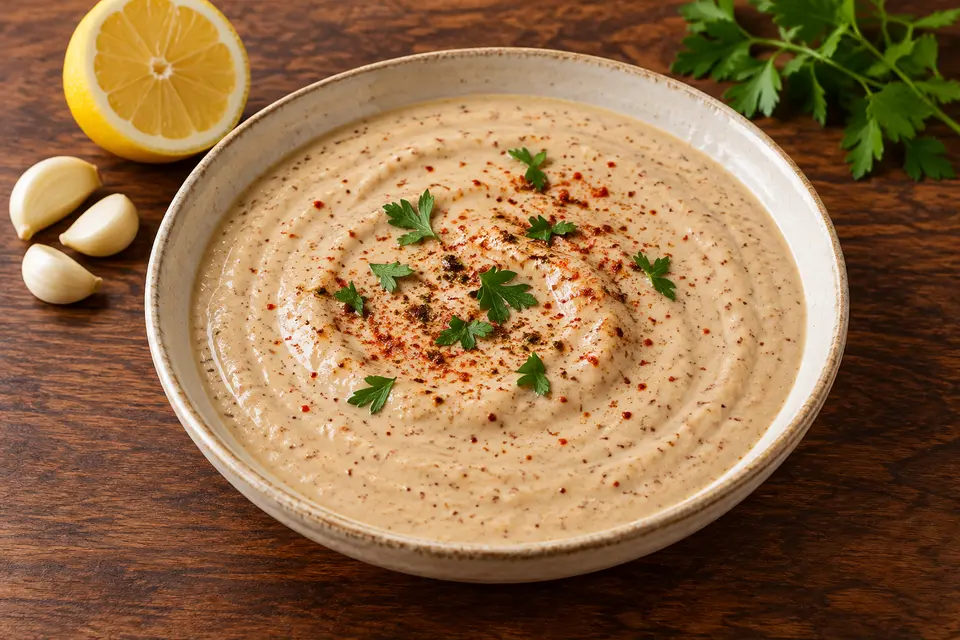
Antalya’s provincial culture directorate documents Hibeş with tahini, garlic, lemon, cumin, hot ground red pepper and salt. The regional account describes it both as a meze and as a sauce for foods such as boiled potatoes and beans. This version keeps that core and uses cold water to reach the traditional boza-like texture; olive oil is a documented alternative for loosening the mixture, but it is not part of this base recipe.
Hibeş — Recipe Card
Antalya tahini, lemon and garlic dip
Makes 6 servings · About 2 cupsUS cup = 240 ml · tablespoon = 15 ml · teaspoon = 5 ml. Cup and weight conversions are approximate. Australian cooks: use a 15 ml measuring tablespoon.
Ingredient quantities and servings are scaled. Cooking times, pan sizes, frying oil depth, and temperatures stay the same; cook larger batches as needed.
Ingredients
How to make Hibeş
Make a garlic paste
Crush the garlic with the salt on a board or in a mortar until it forms a smooth paste. This prevents harsh pieces of raw garlic in the finished dip.
Season the tahini
Put the tahini in a deep bowl. Add the garlic paste, cumin and hot ground red pepper, then whisk until the spices are evenly dispersed.
Add the lemon slowly
Whisk in the lemon juice 1 tablespoon at a time. The tahini may become pale and very stiff at first; keep whisking until all 120 ml / ½ cup is incorporated.
Adjust the texture
Add the cold water 1 tablespoon at a time, whisking well after each addition. Use only as much of the 120 ml / ½ cup as needed for a smooth, glossy mixture as thick as drinkable yogurt: it should mound briefly, then settle and pour slowly.
Rest and serve
Cover and rest for 10 minutes so the garlic and spices blend. Stir once more, transfer to a shallow bowl and garnish with parsley if using. Serve as a meze or spoon over boiled potatoes, green beans or white beans.
Bring this recipe to your kitchen with a printable copy.
Print recipeRecipe from MyTurkishRecipes · https://myturkishrecipes.com/turkish-tahini-garlic-dip-hibes. Quantities reflect your selected serving scale. Cooking times are estimates; follow the doneness cues.
A few helpful kitchen notes
Regional context
Official Antalya sources describe Hibeş as both a meze and a sauce. Water is used here to loosen it; some Antalya preparations use olive oil instead, which gives a richer result.
Heat level
Medium. The base uses 1 teaspoon hot ground red pepper. For a mild version, replace it with the same amount of sweet paprika; for a hotter dip, use 1½ teaspoons hot red pepper.
Dietary notes
The base recipe is vegan and dairy-free and contains sesame. Check tahini and spice labels for allergen and cross-contact information relevant to you; these labels do not certify the dish for a medical diet.
Lemon and consistency
Lemons and tahini brands vary. Add all the measured lemon gradually, then control the final thickness with water. The sauce thickens slightly as it rests.
How to store and reheat Hibeş
Cover and refrigerate within 2 hours at 4°C / 40°F or below and use within 4 days. Stir before serving and whisk in a teaspoon of cold water if it has thickened. Do not leave the dip at room temperature for more than 2 hours; freezing is not recommended because the emulsion may separate.
Hibeş: questions and answers
Why did the tahini become very thick when I added lemon?
Acid makes tahini tighten temporarily. Keep whisking, finish adding the measured lemon, then add cold water gradually; the mixture will become smooth and lighter.
How is Hibeş served?
Serve it in a shallow bowl as a meze or spoon it over boiled potatoes, green beans or white beans. Its strong lemon and garlic flavor works best in small portions.
Can I use less lemon?
Yes. Start with 90 ml / 6 tablespoons for a gentler acidity, then add more to taste before adding water. The dip will need slightly more water to reach the same consistency.
Can I add chickpeas?
You can, and Antalya sources mention a chickpea variation related to hummus. Once chickpeas are added, however, the texture and identity move away from this plain Hibeş recipe.