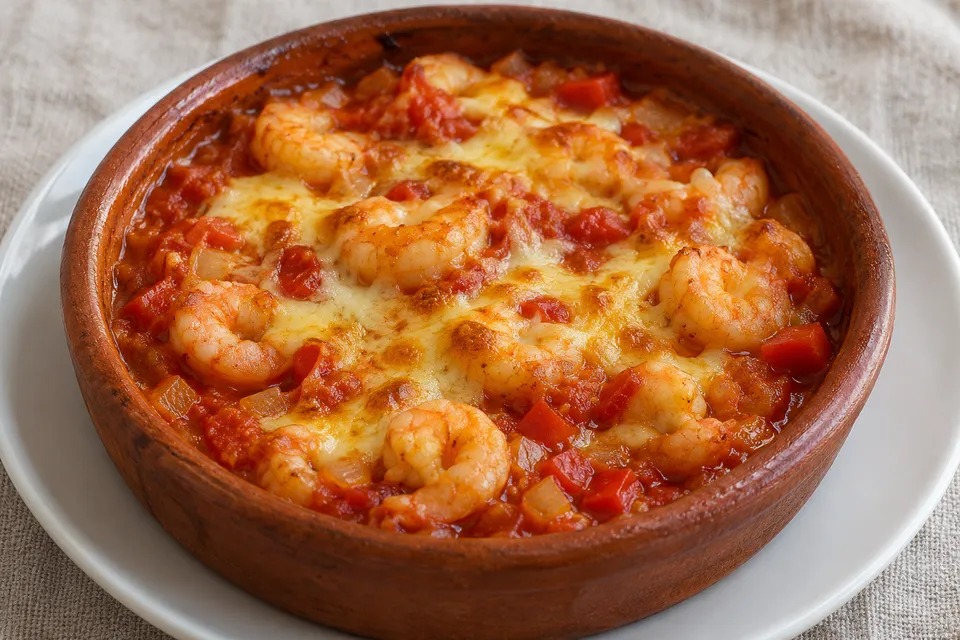
Karides güveç is a Turkish shrimp preparation commonly finished in an ovenproof dish with grated kaşar. This version uses tomato, onion, garlic and sweet red pepper, without cream or mushrooms. The sauce is reduced before the shrimp go in.
Karides Güveç — Recipe Card
Shrimp baked with tomatoes, sweet pepper and kaşar
Makes 4 servings · Four small starter portions.US cup = 240 ml · tablespoon = 15 ml · teaspoon = 5 ml. Cup and weight conversions are approximate. Australian cooks: use a 15 ml measuring tablespoon.
Ingredient quantities and servings are scaled. Cooking times, pan sizes, frying oil depth, and temperatures stay the same; cook larger batches as needed.
Ingredients
How to make Karides Güveç
Prepare the oven and dishes
Heat a conventional oven to 200°C (400°F). Set four shallow oven-safe dishes of about 250 ml (1 US cup) capacity on a baking tray. Use dishes rated for the oven and keep them at room temperature to avoid thermal shock. Keep the shrimp refrigerated until needed.
Cook the vegetable base
Heat the oil in a wide skillet over medium heat. Soften the onion for 4–5 minutes. Add the pepper for 3 minutes, then the garlic for 30 seconds. Add tomatoes, salt and pepper and simmer for 5–7 minutes, until the vegetables soften and excess watery juice reduces.
Add shrimp and bake
Stir the drained shrimp into the hot vegetables for 1–2 minutes. Immediately divide among the four dishes and scatter the cheese evenly over them. Bake for about 6–8 minutes, until the cheese melts and the shrimp are pearly and opaque. Check each casserole reaches 74°C (165°F) in the center; continue briefly if needed.
Serve safely
Place the hot dishes on heatproof plates or trivets using oven mitts. Serve immediately and warn diners that the dishes are hot.
Bring this recipe to your kitchen with a printable copy.
Print recipeRecipe from MyTurkishRecipes · https://myturkishrecipes.com/turkish-shrimp-casserole-karides-guvec. Quantities reflect your selected serving scale. Cooking times are estimates; follow the doneness cues.
A few helpful kitchen notes
Dietary notes
Contains crustaceans and milk. Check packaged shrimp, cheese and seasonings for specific dietary requirements; no gluten-free label is assigned without verifying them.
Heat level
No added chili; the red pepper is sweet. For a hotter version, add 1 g (½ tsp) hot pul biber with the tomatoes. Leave it out for the base.
Cheese substitution
Use the same 60 g (2.1 oz) low-moisture mozzarella if kaşar is unavailable. This is a practical substitute with a milder flavor; do not use watery fresh mozzarella.
How to store and reheat Karides Güveç
Best served immediately. Refrigerate leftovers in shallow covered containers at 4°C (40°F) or below within 2 hours, or within 1 hour above 32°C (90°F). Use within 2 days. Reheat covered until at least 74°C (165°F) throughout; shrimp will become firmer.
Karides Güveç: questions and answers
Can I use frozen shrimp?
Yes. Thaw raw peeled shrimp in the refrigerator and drain well before weighing. This timing is for raw shrimp, not pre-cooked shrimp.
Why is the casserole watery?
Thawed shrimp and tomatoes can release water. Drain the shrimp thoroughly and reduce the vegetable base before adding them; do not try to evaporate lots of liquid by overbaking the shrimp.