Blog
Roses in Turkish Food: Isparta, Jam, Syrup and Lokum
Rose is an aroma, an ingredient and a visible petal, but those roles do not always arrive together. A spoon of rose jam, a glass of rose sherbet and a piece of rose lokum offer three different encounters with the same floral idea. Looking at Isparta gives this comparison a regional focus. For a reader exploring Turkish food at home, the useful question is not simply whether something tastes of rose, but what form the rose takes and how the finished food is served.
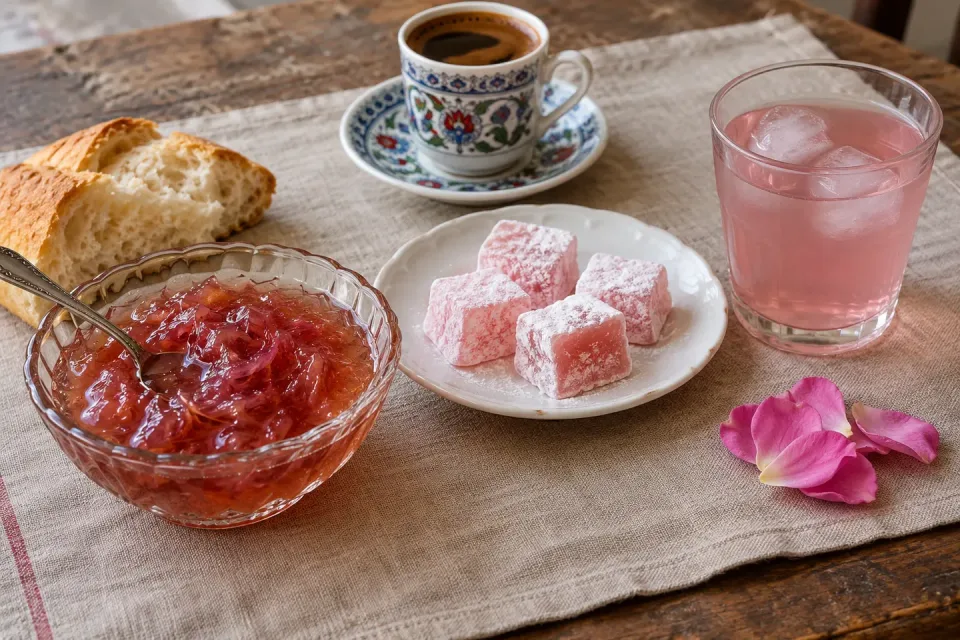
Isparta provides a regional starting point
GoTürkiye presents Isparta as Türkiye’s rose garden and identifies both rose jam and rose-flavoured lokum among its local foods. This is a documented regional association, rather than a reason to claim that every Turkish rose sweet comes from one city.
Treat that association as a way into the subject. A regional name can help you choose what to look for, but the label on the actual jar or packet still matters. Read the product name and ingredients together. A floral description alone does not tell you whether you are buying petals in syrup, a drink concentrate or a cut confection.
Gül reçeli keeps the petal in the spoon
Isparta’s official gül reçeli record describes petals layered with sugar and cooked in syrup. The soft petals remain in the preserve, giving it a visible texture absent from clear rose liquids.
At breakfast, try a small spoonful on plain bread before combining it with other sweet foods. This makes the petal texture easier to notice and lets you judge the aroma without several flavours competing. The site’s gül reçeli recipe is the place to follow a complete home method; this article describes a culinary form rather than supplying preserving instructions. A traditional account is not, by itself, a tested shelf-stable canning process.
Gül şurubu becomes a drink through dilution
The official Isparta gül şurubu entry removes the petals after extracting their colour and scent. The sweet concentrate is diluted with cold water and ice to serve guests.
That distinction matters when reading a menu or shopping. A bottle of şurup is not necessarily a ready-to-drink beverage, and its strength should not be judged by taking a full glass undiluted. Follow the producer’s serving directions. Adjust a prepared drink to your taste at the table, rather than assuming that every pink drink has the same sweetness or that every rose product needs the same dilution.
Lokum carries the aroma in a different texture
Isparta’s official rose lokum record combines a starch-and-sugar confection with rose water and dried petals. It allows a separate colouring ingredient; pinkness alone therefore cannot identify the aroma’s source.
Look for a clean cut edge and distinguish the soft, cohesive sweet from a spoonable preserve. When comparing products, check whether the ingredient list names rose water, petals or flavouring. These are useful descriptions, not a ranking based solely on colour. Serve a modest piece beside the site’s Turkish coffee recipe if you want to explore the contrast between a floral sweet and a small cup of coffee.
Choose one floral accent for the table
For a simple tasting, choose one role: jam with bread at breakfast, a diluted rose drink for refreshment, or lokum beside coffee. These are practical serving suggestions rather than a compulsory Isparta menu. Serving all three together is possible, but it can make sweetness dominate the comparison. Plain bread or water between tastes gives each texture more room.
Buy products explicitly sold for culinary use. Do not treat a perfume, cosmetic rose water or decorative bouquet as a pantry ingredient. Keep the packet’s storage and serving information with the product instead of transferring assumptions from a different rose preparation. The most useful lesson is the difference in form: petals you eat, a liquid you dilute, and a confection you cut. Remembering those jobs makes rose easier to recognize across the Turkish table.
Recipes
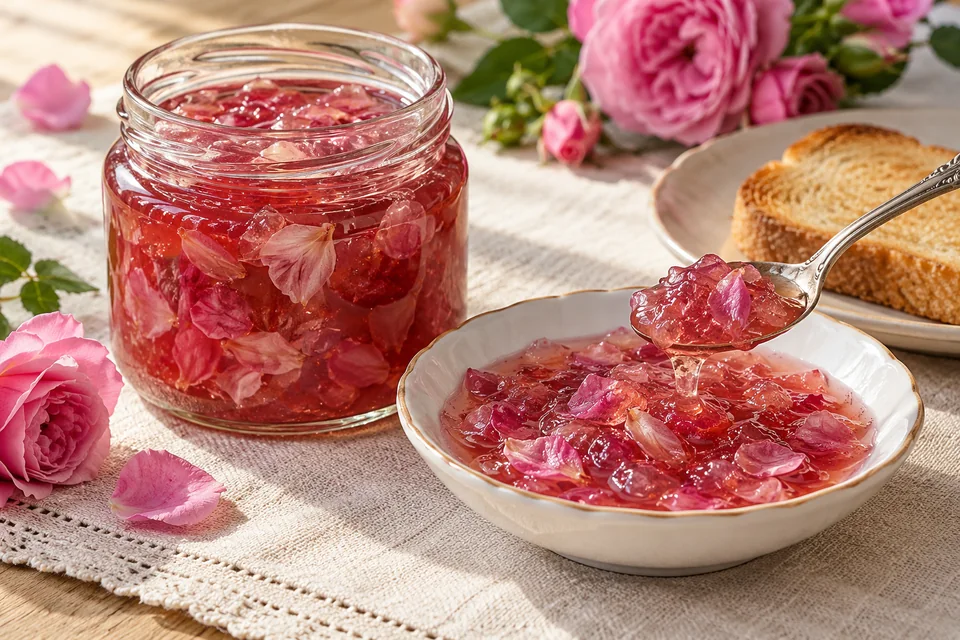
Turkish Rose-Petal Jam — Gül Reçeli
Turkish rose-petal preserve scented with lemon
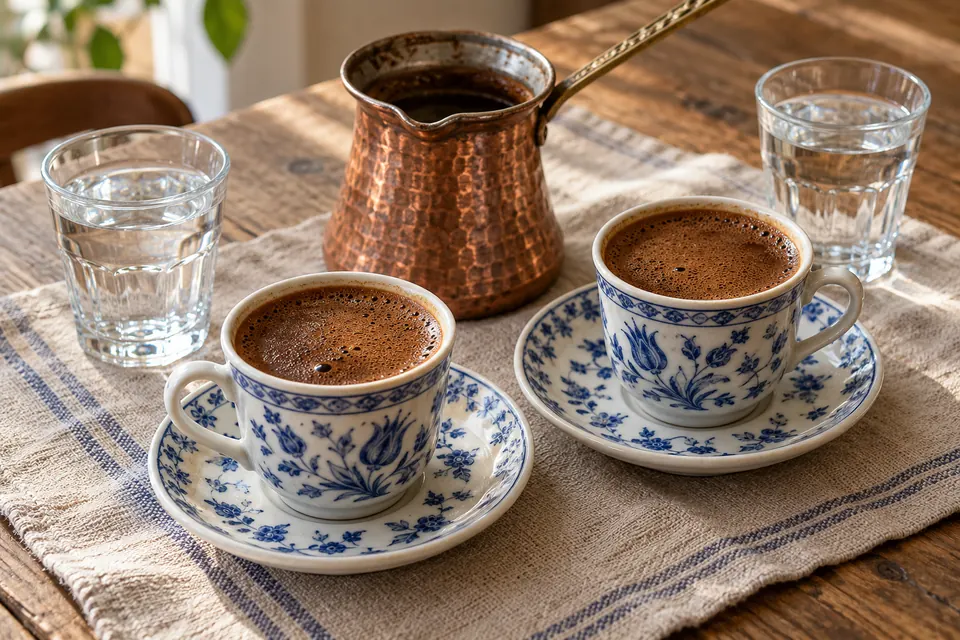
Turkish Coffee Recipe — Türk Kahvesi
Unfiltered Turkish coffee brewed slowly in a cezve