Blog
Regional Turkish Pilafs: Ankara Tava, Siirt Perde Pilavı and Mengen
A bowl of plain rice tells only part of the pilav story in Turkish cooking. In Ankara, meat rests above the grains; in Siirt, a pastry shell encloses them; in Mengen, meat, vegetables, herbs and walnuts share the pot. These regional examples show how rice can become the organizing center of a meal, with its own method, texture and presentation.
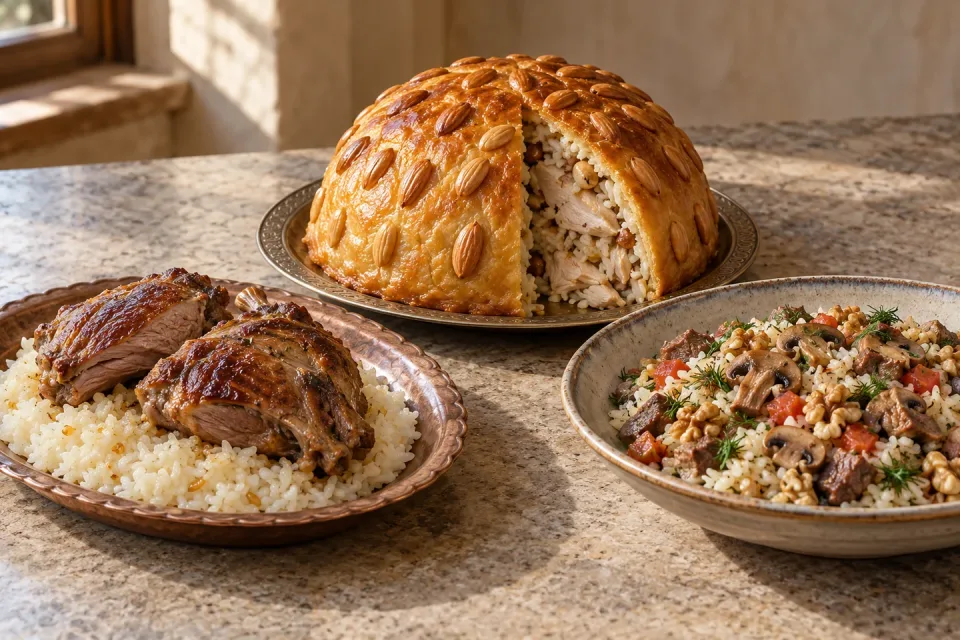
Ankara: meat above the rice
The Culture Portal's geographical-indication account describes Ankara Tava as a meat-and-rice dish made with shoulder and rib cuts from sheep or lamb raised in specified Ankara districts. It also specifies local production and a wood-fired stone oven. The presentation places meat on a bed of pilaf, so the grains are an essential part of the dish rather than an incidental accompaniment.
For a home reader, the useful distinction is between learning from a regional dish and reproducing its protected specification. A domestic oven adaptation can preserve the idea of tender lamb over savory rice without claiming the designated local product. Read the particular recipe before shopping: a regional name does not remove the need to check the meat cut, cooking liquid and equipment.
Siirt: rice within a pastry curtain
Siirt Perde Pilavı changes the architecture completely. The official account describes butter-toasted rice and chicken enclosed in dough inside a special pot, baked and turned out for slicing. Almonds decorate the mold and become visible on the finished crust. The exterior creates a moment of discovery: the rice is hidden until the shell is opened.
The sources also demonstrate variation within one place. One Culture Portal recipe includes chicken liver, while the geographical-indication summary lists chicken or partridge and a different dough formula. These accounts should be read as specific versions, not blended into a universal ingredient list. Pastry, egg, dairy and nuts also make this a different dietary proposition from an unadorned bowl of rice.
Mengen: ingredients woven through the grains
The Bolu Culture Portal records Mengen Pilavı with cubed meat, onion, tomato and mushrooms. Dill, thyme and walnuts enter through a butter finish before the pilaf rests and is gently mixed. Unlike Ankara's layered serving or Siirt's enclosing shell, this version distributes contrasting ingredients through the rice itself.
That combination provides an easy way to understand the dish before cooking it: mushrooms bring a soft bite, walnuts a firmer one, and herbs an aromatic finish. It also explains why the name alone cannot tell you whether a pilaf is vegetarian. Mushrooms may be conspicuous, but this documented version contains meat and butter. Always assess the full recipe, including its stock and finishing ingredients.
Choosing one pilaf for the table
When planning a meal, choose the role of the rice first. A simple buttered pilaf can accompany another main; Ankara Tava and pastry-wrapped Siirt pilaf already combine protein and rice in one substantial centerpiece. Mengen's mixed ingredients likewise call for attention to the whole dish rather than treating it as neutral rice.
As a practical menu suggestion, pair a rich regional pilaf with a crisp shepherd salad and let the main dish supply the complexity. Serve portions that preserve its character: meat over grains for Ankara, a slice revealing the filling for Siirt, and a gentle spoonful that keeps Mengen's additions distinct. There is no need to put all three on one menu; comparing them is a way to choose, not a requirement to cook a feast.
Recipes
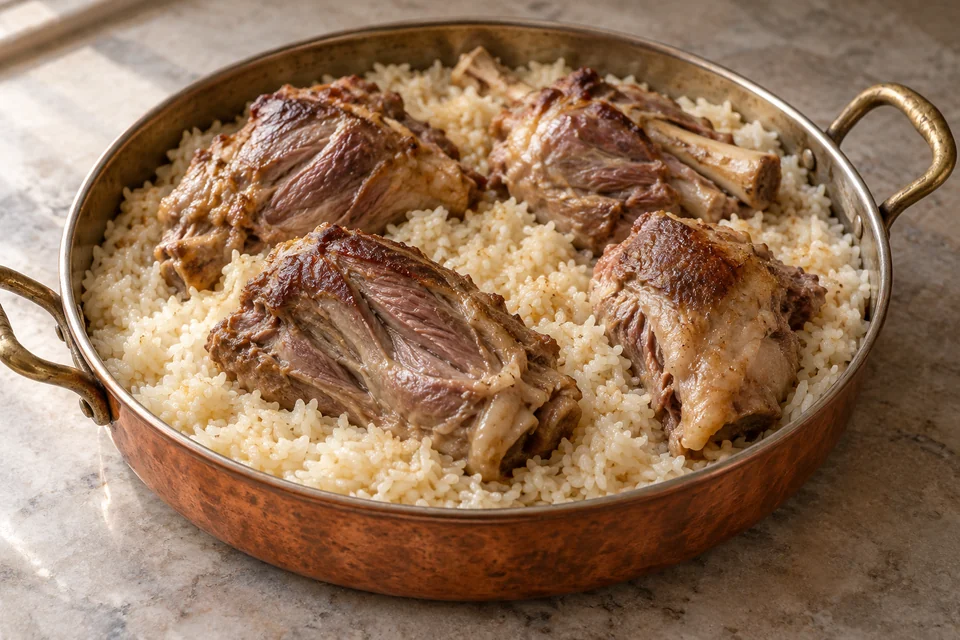
Turkish Lamb and Rice — Ankara Tava
Ankara-style slow-cooked lamb served over buttered rice
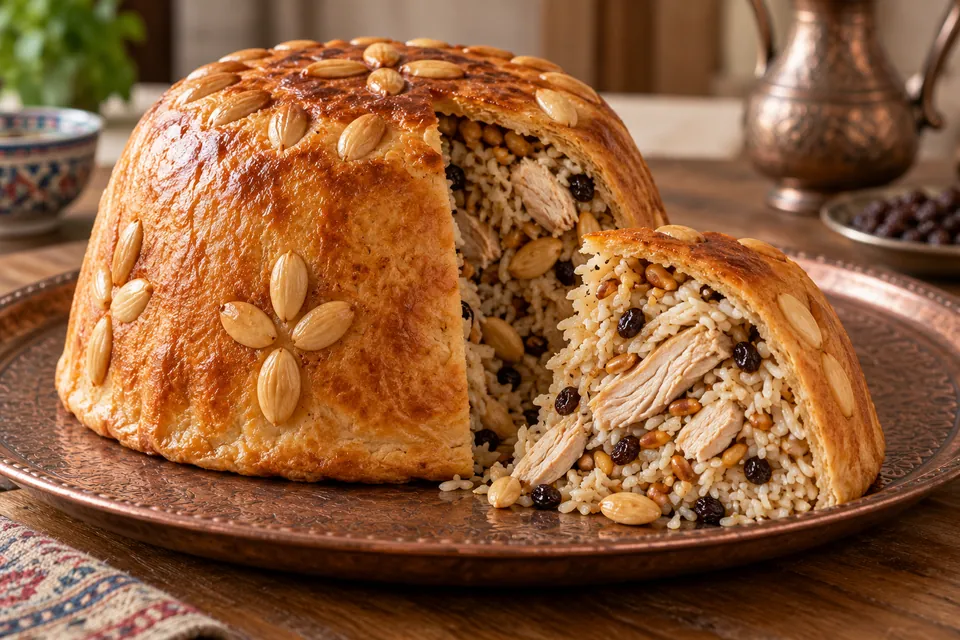
Turkish Pastry-Wrapped Chicken Rice — Siirt Perde Pilavı
Siirt-style chicken rice baked inside a golden almond-patterned pastry shell
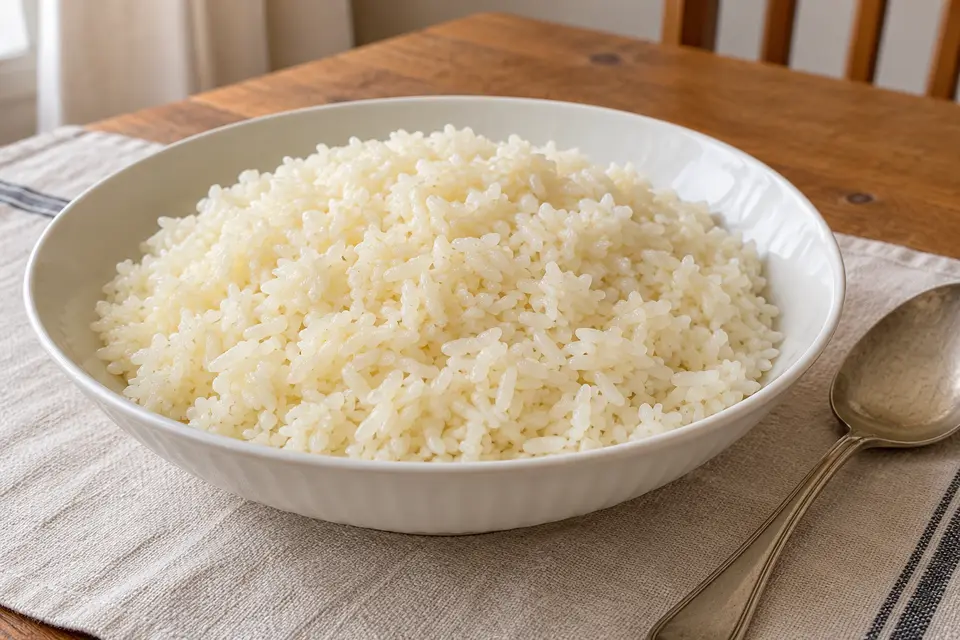
Turkish Buttered Rice Pilaf — Pirinç Pilavı
Turkish buttered rice pilaf with separate, tender grains
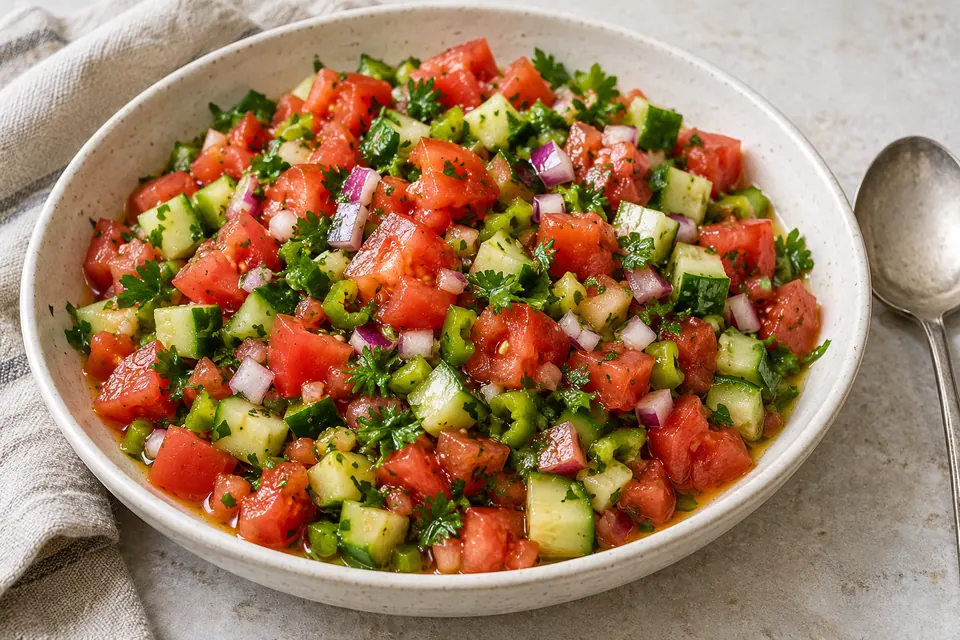
Turkish Shepherd Salad — Çoban Salatası
Turkish chopped tomato and cucumber salad