Blog
Pekmez in Turkish Cooking: From Grape Harvest to Tahin-Pekmez
Pekmez is often translated as molasses, but on a Turkish table the word describes a distinct family of concentrated fruit products. Grapes are the best-known starting point, while mulberries and other local fruits also become pekmez in different regions. A spoonful may be paired with tahini at breakfast, used in a cooked sweet or worked into a bakery coating. Its colour and flavour depend on the fruit, place and method, so there is no single jar that represents every Turkish pekmez.
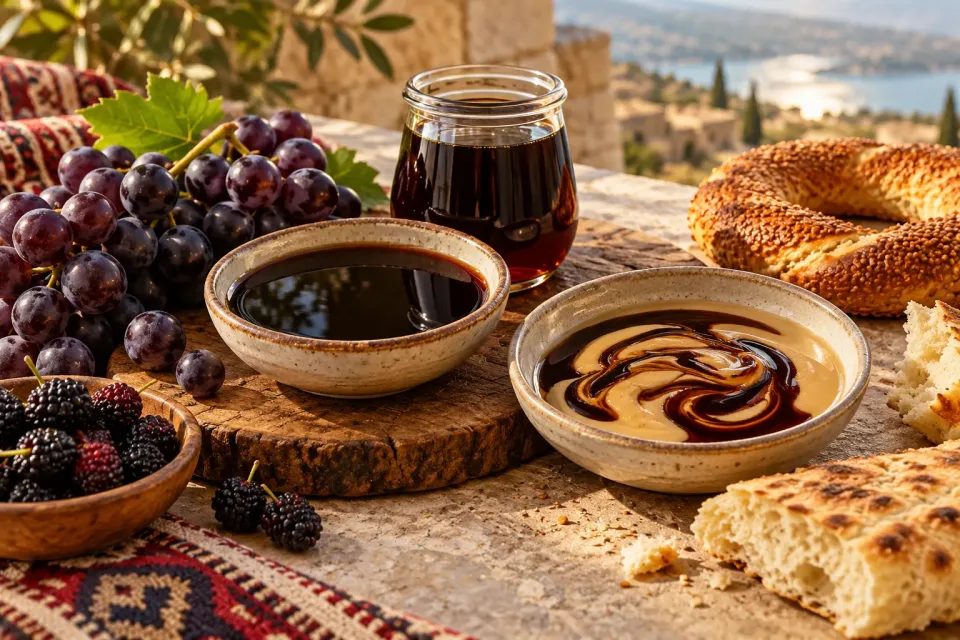
Concentrated fruit, not honey or jam
Pekmez is made by extracting fruit juice and concentrating it until it becomes thick, pourable and intensely flavoured. Unlike jam, it normally does not depend on pieces of fruit suspended in a sugar syrup. Unlike honey, it is a fruit product rather than something made by bees. Grape pekmez can range from amber to nearly black, with sweetness balanced by roasted, tart or earthy notes. Mulberry pekmez is another established regional form. Names on a label matter: the fruit tells you more about flavour than the English word molasses alone.
Traditional descriptions should not be flattened into one national formula. The fruit, clarifying method, fuel, vessel and desired consistency can all change. Some grape methods use a mineral-rich pekmez soil to reduce acidity and help clarify the juice; that step does not define every variety. Mulberry preparations documented in the Black Sea region follow a different path. The useful principle is concentration, while the details belong to particular places and makers.
From harvest to the pekmez cauldron
A detailed record from Niğde begins with the autumn grape harvest. Grapes intended for pekmez are separated, washed and crushed so their juice can be collected. In the documented local method, pekmez soil is mixed with the juice, which is briefly heated, allowed to settle and filtered through woven bags. The clarified liquid returns to a broad copper pan and is stirred over heat until it thickens. Foam is removed along the way. This sequence explains why pekmez making has traditionally been both preservation work and a seasonal household event.
The Culture Portal’s Ordu account of mulberry pekmez shows the regional contrast. Mulberries are boiled with a little water, strained through a sieve and cloth, and pressed so the remaining juice is not wasted. The liquid is then stirred and boiled for hours until it reaches pekmez consistency. No grape-specific clarification step is described. Comparing the two records makes the diversity clear: both preserve ripe fruit by concentrating its juice, but the handling follows the character of the fruit and local practice.
Why tahin-pekmez belongs at breakfast
At a Turkish breakfast, pekmez is often paired with tahini, the paste made from ground sesame. GoTürkiye includes tahin-pekmez among the small sweet and savoury plates of a shared serpme kahvaltı. The two may arrive separately or partly mixed. Combining them softens tahini’s gentle bitterness and loosens its dense texture, while tahini makes the concentrated fruit sweetness rounder and creamier. There is no mandatory ratio: adding pekmez gradually lets each person choose a pale, nutty mixture or a darker, sweeter one.
Tahin-pekmez needs a bread that can scoop or spread it without disappearing beneath it. Torn bazlama is soft and substantial; simit adds toasted sesame and a chewy crust. Pekmez also has a second connection to simit because many simit styles are dipped in a diluted molasses mixture before sesame seeds are applied and the rings are baked. That bakery use is different from serving a bowl at the table, but it shows how pekmez can contribute colour, aroma and browning as well as sweetness.
A pantry ingredient beyond the breakfast bowl
Pekmez can move from condiment to cooking ingredient. Regional records from Niğde describe it sweetening flour-based preparations and cooking with fruits such as apples or quinces. Elsewhere it may flavour puddings, helva-like sweets or winter snacks made with nuts and thickened grape juice. These dishes should be understood by their regional names rather than treated as one standard pekmez dessert. The common advantage is practical: concentrated fruit can sweeten and deepen a dish while carrying the flavour of the harvest into colder months.
For a simple tasting, start with a small spoonful on its own, then compare it with tahini and bread. Grape pekmez suits the classic breakfast pairing, while mulberry pekmez can taste softer or more fruit-forward depending on the producer. Store and use the product according to its label, because concentration and processing vary. Pekmez is best understood not as a health cure or a substitute for every sweetener, but as a varied Turkish pantry tradition shaped by fruit, season and place.
Recipes
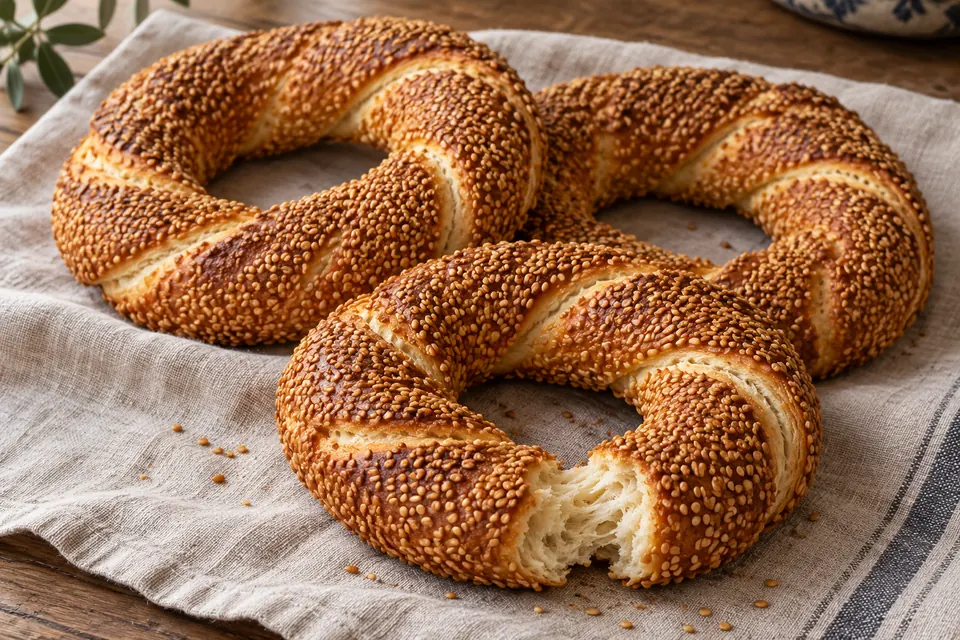
Turkish Sesame Bread Rings — Simit
Turkish twisted bread rings with grape molasses and sesame
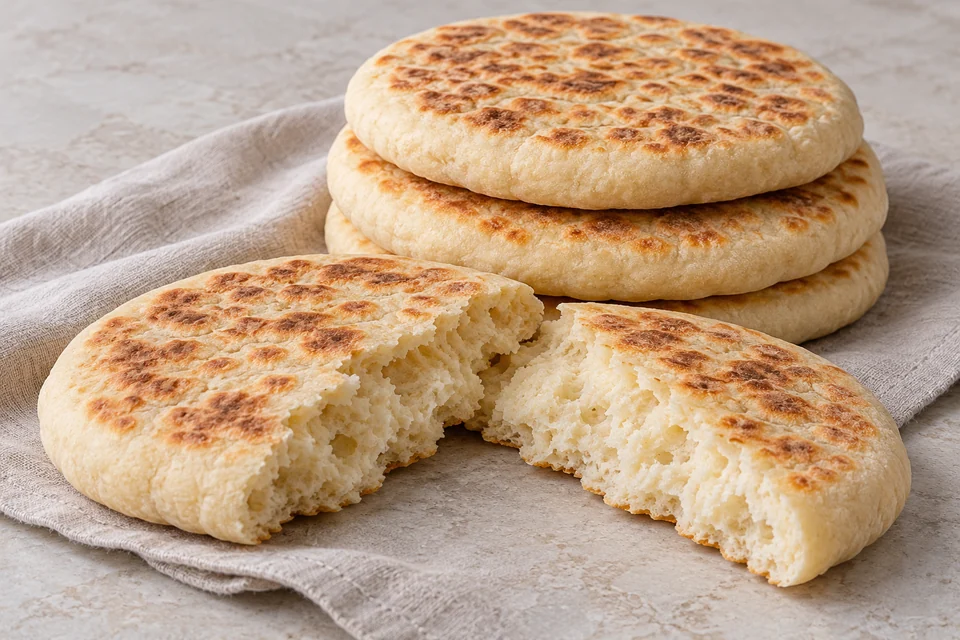
Turkish Flatbread Recipe — Bazlama
Soft Turkish skillet flatbread