Blog
Közleme in Turkish Cooking: Charred Vegetables, Three Regional Salads
A blistered pepper and a collapsed eggplant can be the beginning of very different Turkish dishes. Közleme describes a way of cooking that gives vegetables a roasted exterior before their skins are removed and their flesh is prepared for the table. Looking at three regional salads makes the distinction useful: the cooking method connects them, while the vegetables, dressing and final texture keep each dish individual. These examples offer a way to read a menu more carefully and plan a small tasting at home.
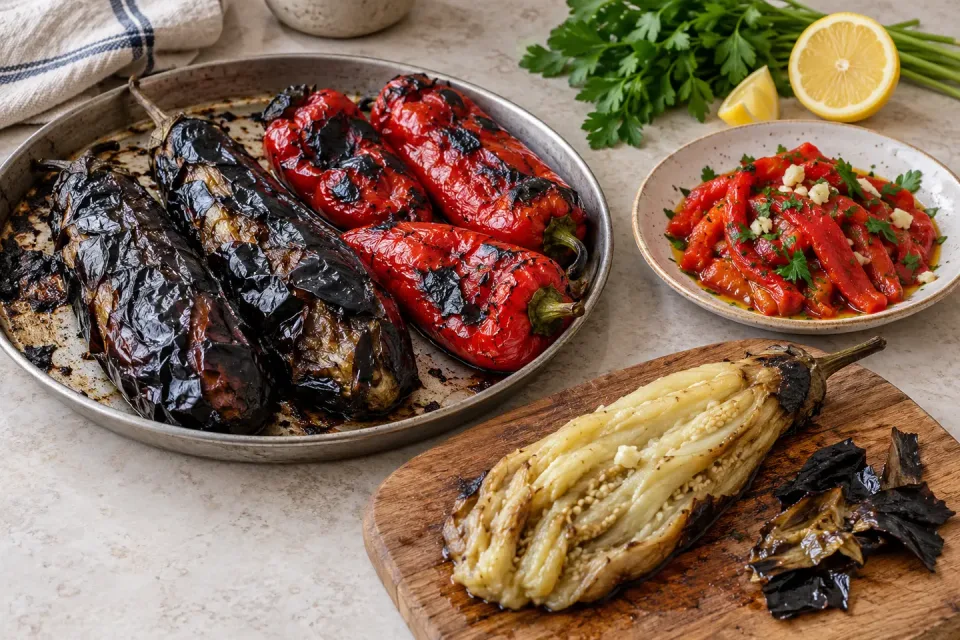
Çanakkale: let the pepper lead
Çanakkale’s Biber Parpullaması gives red peppers the central role. The provincial cultural archive records peppers turned over embers, peeled and cut, then combined with garlic, parsley, lemon, sunflower oil and salt. There is no yogurt in that documented version. The short ingredient list makes it an approachable starting point for understanding how a roasted vegetable can become a complete small plate.
The linked Biber Parpullaması recipe supplies the quantities and home cooking method. As you eat, notice the soft strips rather than expecting a smooth dip. Lemon and garlic season the pepper without changing its identity into a paste. Sunflower oil also matters here: olive oil is familiar in Turkish vegetable dishes, but it should not automatically replace the oil named in every regional account.
Isparta: cooked flesh meets fresh vegetables
Isparta’s recorded Közlenmiş Patlıcan Salatası combines roasted eggplant and green peppers with tomato, onion, garlic, lemon and olive oil. The peeled cooked vegetables are chopped rather than left whole. This creates a useful contrast with the pepper-led Çanakkale plate: several vegetables share the bowl, and fresh ingredients join the roasted base.
A salad of this kind need not be treated as an anonymous eggplant dip. Look for its actual components and how finely they are cut. Onion and tomato can make the finished bowl feel quite different from a purée, even though eggplant has already softened during cooking. The regional account identifies one preparation; it does not establish a single formula for every Turkish eggplant salad.
Antalya: a method with more than one heat source
Antalya’s Toros Salatası, also called Al Köz-Al Göz, brings eggplant, red peppers and onions together with herbs and a tart dressing. Its documented preparation uses direct stovetop heat for the eggplant and an oven for the peppers and onions. This is a helpful reminder that a regional salad can combine more than one cooking approach.
The herbs and acidity give this example another identity rather than simply adding more vegetables to the same salad. Read the full named recipe when you want to make it; a cultural comparison should not be mistaken for instructions with every quantity and timing. In particular, do not transfer the cooking time of a slender pepper to a large onion or eggplant.
Make the comparison useful at your table
For a first tasting, prepare Biber Parpullaması and choose one familiar supporting dish instead of cooking all three salads at once. Bazlama gives a soft bread accompaniment; Haydari offers a separate yogurt element if dairy suits the guests. This is a practical menu suggestion, not a fixed regional custom. Keep the bowls separate so the different textures remain easy to notice.
Roasting and dressing are only part of the decision. Check whether your chosen complete recipe includes dairy, which peppers it uses and how it handles leftovers. Charred skin does not tell you whether a pepper is hot, and the word salad does not guarantee a particular dietary profile. Use the linked recipes for preparation and storage, and let the regional names guide curiosity without turning them into interchangeable labels.
Recipes
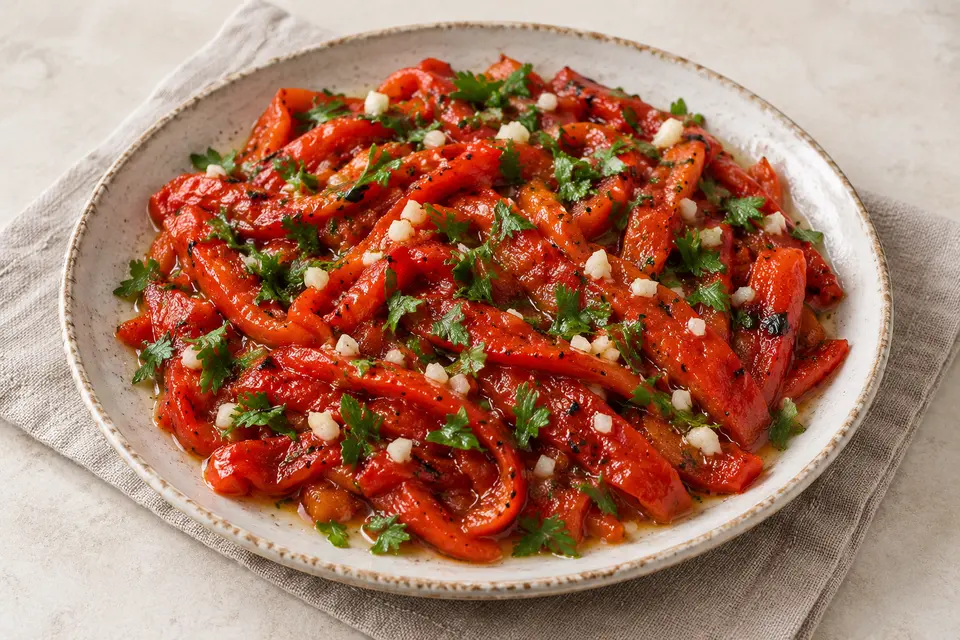
Turkish Roasted Red Pepper Meze — Biber Parpullaması
Çanakkale-Style Charred Red Pepper Meze
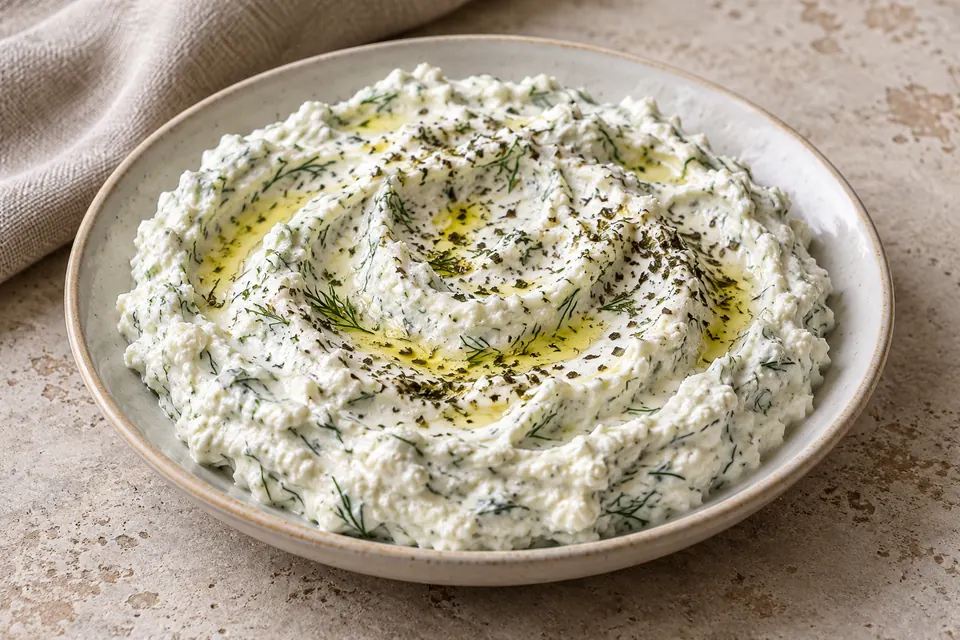
Turkish Yogurt and Herb Dip — Haydari
Thick Turkish yogurt and white-cheese meze with dill and mint

Turkish Flatbread Recipe — Bazlama
Soft Turkish skillet flatbread