Blog
Kete in Turkish Food Culture: Kars, Bayburt and Erzurum
A golden crust does not tell the whole story of kete. The name appears in several regional food traditions, but it is more useful to ask how a particular pastry is filled and folded than to expect one universal shape. Kars, Bayburt and Erzurum offer three starting points for understanding that diversity. Together, their official cultural descriptions encourage a closer look at the pastry rather than a search for a single definitive version.
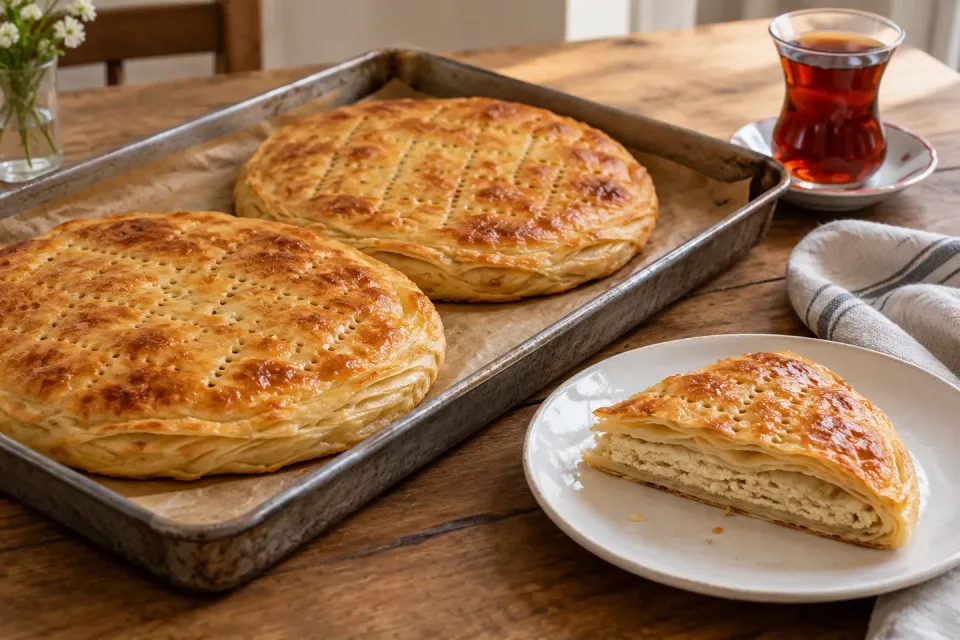
Begin with the place, then ask about the pastry
Erzurum's Provincial Directorate of Culture and Tourism includes kete and pastries in its list of local products. Bayburt's visitor guidance also recommends trying açma kete and taking Bayburt ketesi home. These references establish regional presence, rather than a single origin story. They do not prove that every bakery or household makes the same dough, or that one city's version explains all the others.
For an English-speaking reader, leaving the name kete intact is helpful. Translating it simply as bread may hide the filling, while calling every example a cheese pastry creates an expectation that the documented versions need not meet. At a counter, ask which local preparation is being sold. A brief question about the inside can be more useful than judging a whole tray by its golden surface.
Kars gives the folds a precise identity
The registered Kars Ketesi uses milk-and-yeast dough, fat-brushed sheets and an enclosed filling. Its specification allows savory, sweet or ginger fillings, with walnuts optional. Round and square forms are recognized. These details describe a protected regional product, rather than a definition of every kete baked across Türkiye.
The Culture Portal emphasizes its fragile, crumbly texture and serving it in slices after cooling. That makes the cut face especially informative: look at the distinction between the dough and its inner filling, not just the crust. The linked Kars Ketesi recipe presents a savory example for the home kitchen. Read its full method before baking, since a folded pastry depends on the sequence of preparation as well as the ingredient list.
Bayburt offers another way of shaping
Bayburt's provincial food page describes a flour filling cooked in fat, followed by rolling the filled dough, coiling it and pressing it flatter. That recorded preparation provides a useful contrast with the enclosed Kars fold. It is one documented regional example; it should not be treated as an inventory of every Bayburt household's practice.
This comparison offers a practical way to learn about pastry. Ask how the filling is distributed, whether the dough is rolled or folded, and what a slice reveals. Similar-looking tops may cover different structures. Conversely, two shapes can share an ingredient without being interchangeable recipes. When baking at home, keep one complete method together instead of combining a filling from one source with shaping instructions from another.
Make a small tasting table
For a simple tasting, serve small wedges of the linked savory Kars Ketesi with tea. If you want a second bake, the linked Peynirli Poğaça offers an explicit cheese-filled comparison. This is a suggested home menu, not a claim that the pairing is a fixed custom in Kars, Bayburt or Erzurum. Keep the portions modest so that the difference in crumb and filling remains easy to notice.
Label each pastry by its actual name and explain what is inside. Check the individual recipe for wheat, milk, egg and any optional nuts rather than assigning dietary properties to the word kete. Most importantly, preserve the place name when discussing a particular version. Regional names give the conversation useful detail without requiring a contest over which pastry is the only authentic one.
Recipes
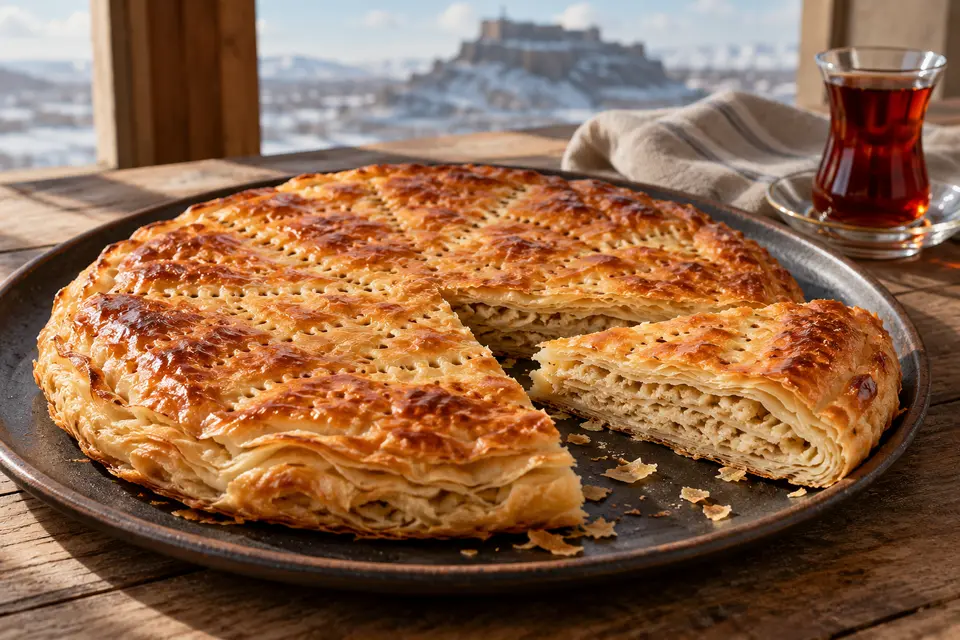
Turkish Layered Savory Pastry — Kars Ketesi
Kars-style layered pastry with a savory flour filling
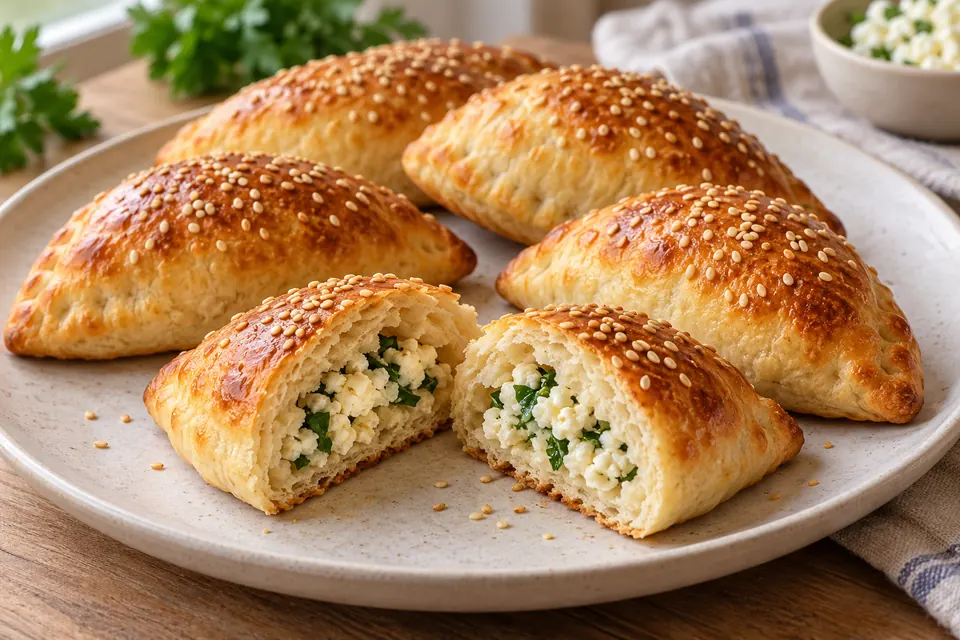
Turkish Cheese Pastries — Peynirli Poğaça
Soft Turkish yeast-raised pastries with white cheese and parsley