Blog
Greens in Turkish Cooking: İzmir, Manisa and Akçakoca
In Turkish cooking, a bunch of greens can become a small plate, a substantial pan dish or the filling for bread. The useful question is not simply which leaf is used, but what happens to it. Regional accounts from İzmir, Manisa, Muğla and Akçakoca show different ways of building a meal around greens. Reading those preparations side by side offers a practical introduction to ot yemekleri, dishes made with edible herbs and greens, without turning them into one uniform national recipe.
İzmir: a plate that keeps the greens visible
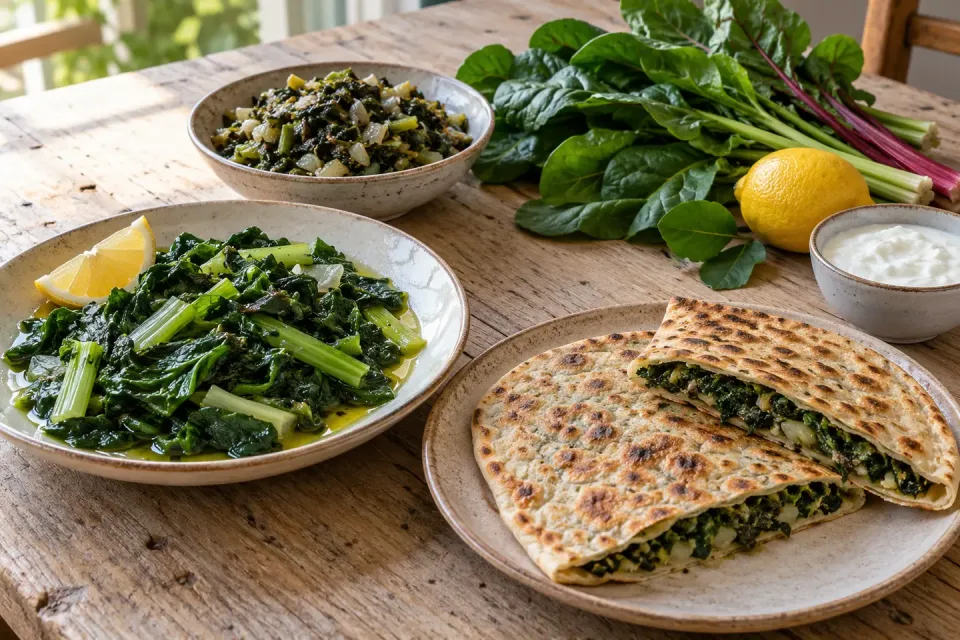
İzmir’s provincial cultural account describes spring markets filled with edible greens, including radika, turp otu and deniz börülcesi. One documented approach is to boil the cleaned greens until tender, then dress them with lemon and extra-virgin olive oil.
For a reader encountering this style for the first time, notice the separate strands, leaves and stems on the plate. A plain dressing gives the vegetable a clear place in the meal. At home, an individual plate of greens can sit alongside another dish rather than being hidden beneath it. This is a serving suggestion, not a rule that every İzmir household follows. The plant and its preparation still matter; a coastal succulent and a leafy vegetable need not behave alike.
Manisa and Muğla: greens take a turn in the pan
Manisa’s recorded karışık ot kavurması combines several greens with onion, olive oil and tomato, and suggests yogurt alongside. Muğla’s yumurtalı tilkişen kavurması offers a different structure: greens cooked with onion and garlic and finished with beaten egg.
These examples make the word kavurma useful to recognize on a menu, but they also show why the word alone cannot tell you every ingredient. Ask whether eggs, cheese or yogurt are included, particularly when ordering for a vegan guest. A plate dominated by greens can still contain animal products.
For a home menu, think about the role of the dish before adding more food. A pan of greens with egg may occupy a different place from a modest vegetable accompaniment. Offer bread or another supporting dish according to appetite rather than assuming every regional preparation needs the same complete spread.
Akçakoca: greens inside a folded bread
The Culture Portal’s Akçakoca Mancarlı Pide account uses spinach and chard with onion and seasonings inside a thin dough folded into a half-moon. Its shape gives the greens a portable bread casing rather than an open serving bowl.
The linked Mancarlı Pide recipe provides the actual method for making that dish. Ispanaklı Gözleme offers another recipe to explore the relationship between leafy filling and thin dough. They are useful companions for comparison, not interchangeable names. Look at the named preparation, filling and folding method before deciding that two green-filled breads are the same food.
Build a comparison around method, not rarity
You do not need a large collection of unfamiliar plants to understand these contrasts. Start with a known edible green from a reliable food supplier and choose a complete recipe intended for it. Regional names in cultural accounts are not an identification guide for gathering wild plants. Substituting spinach may make a practical home variation, but it does not reproduce the flavor or identity of every local green.
For a small tasting, choose one bread with greens and one simply prepared vegetable plate. Add a separate spoonful of Haydari if dairy suits the guests; its thick yogurt texture creates another point of comparison. Keep each dish distinct and explain what changes between them: exposed leaves, a pan mixture, or a bread filling. That gives the table variety without requiring a claim that the arrangement is a fixed Turkish custom.
Recipes
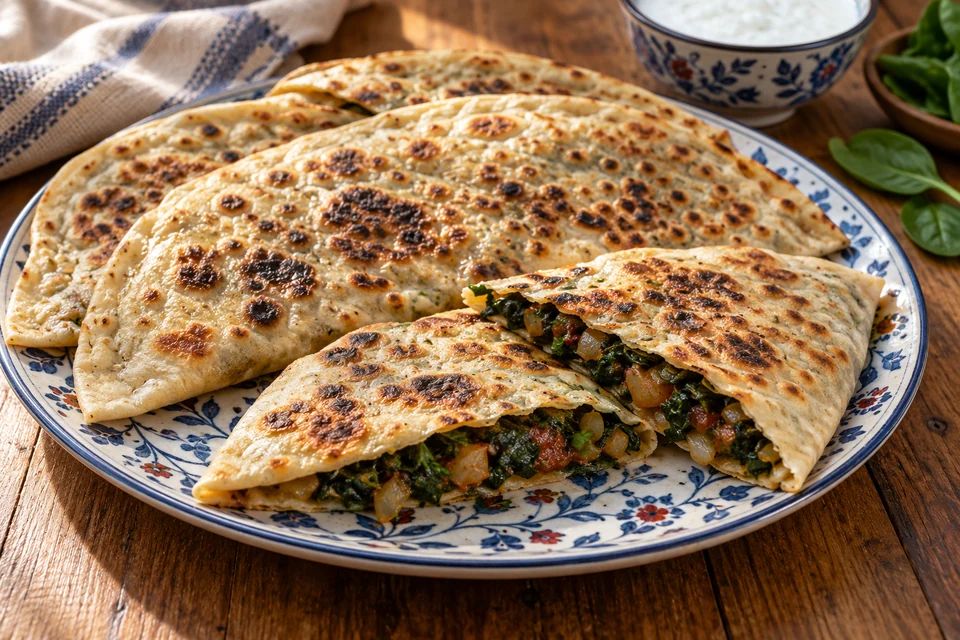
Turkish Spinach Flatbread — Ispanaklı Gözleme
Turkish spinach-filled griddle flatbreads
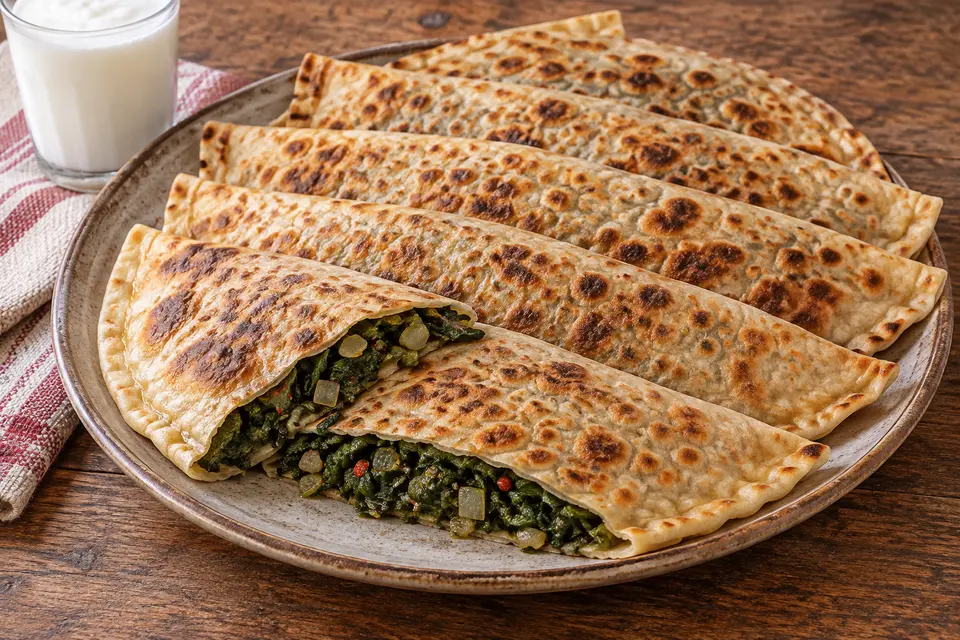
Turkish Greens Flatbread — Akçakoca Mancarlı Pide
Düzce-style half-moon flatbreads with spinach and chard
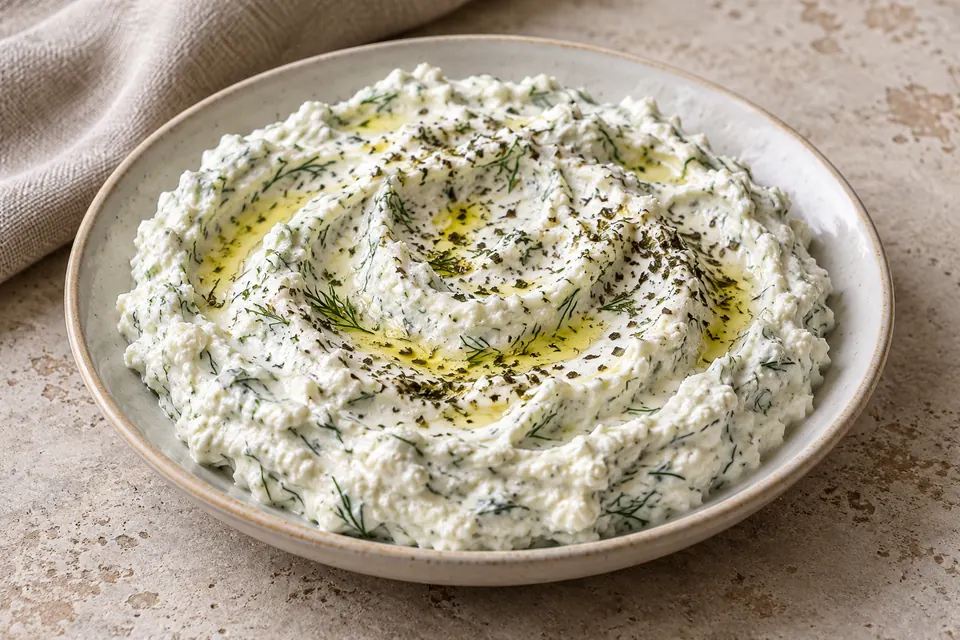
Turkish Yogurt and Herb Dip — Haydari
Thick Turkish yogurt and white-cheese meze with dill and mint