Blog
Garlic in Turkish Cooking: Taşköprü, Cacık and Simit Tiridi
Garlic can be a named regional product, a small but noticeable part of a yogurt bowl, or the link between bread, broth and meat. Following it through Turkish cooking shows how an everyday ingredient changes its role from dish to dish. Taşköprü garlic and Kastamonu simit tiridi offer a particularly clear regional connection; cacık provides a familiar comparison at the wider table.
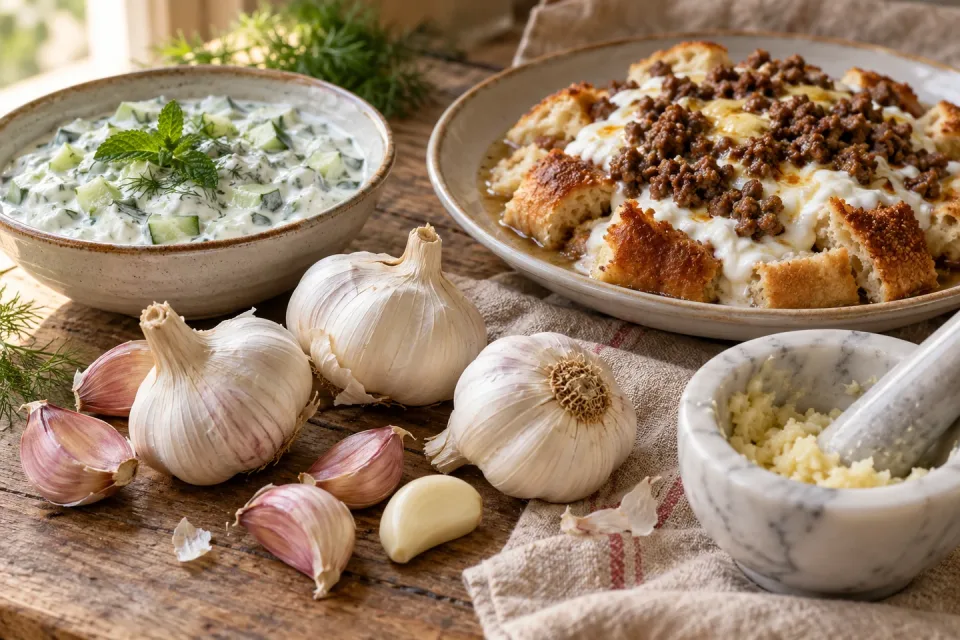
Taşköprü: a place name attached to an ingredient
The Culture Portal identifies Taşköprü Sarımsağı as a registered Turkish geographical indication of the menşe adı type. Its description distinguishes the white outer bulb skin, pink clove skins and cream-yellow flesh. It also emphasizes a pronounced smell and characteristic pungency. These are details of a named regional product, not a claim that any white garlic bulb can be identified as Taşköprü garlic by appearance alone.
For a home cook, the useful lesson is to separate provenance from substitution. Ordinary garlic may serve a practical purpose in a yogurt sauce, but using it does not make the dish a certified regional product. Buy named garlic from a source that identifies its origin when that origin matters. Otherwise describe the ingredient simply and let the individual recipe guide how much to use.
Cacık: garlic shares the bowl
The Ministry's vegetarian-cuisine account of cacık lists cucumber, yogurt and garlic alongside dill, mint, vinegar, olive oil and salt. It is a specific documented version, not a requirement that every household use the same combination. The suggestion to serve individual small bowls is a useful reminder that cacık can have its own place at the table rather than being treated only as a sauce poured over another dish.
Garlic is one voice among several here: cucumber contributes texture, herbs add aroma and yogurt forms the base. Our cacık recipe is a practical route into that relationship. Haydari offers a second comparison with a thicker yogurt-and-herb preparation. Read the separate recipes rather than assuming that all garlic-yogurt dishes are interchangeable or differ only in their names.
Kastamonu simit tiridi: a more substantial setting
In the Culture Portal's account of Kastamonu Tiridi, simit is moistened with bone broth, then dressed with garlic yogurt, browned minced meat and optional butter. The specified garlic is Taşköprü Sarımsağı. Here the garlic-yogurt layer sits within a complete bread-and-meat dish, connecting the broth-soaked base with the topping rather than standing alone as a small accompaniment.
The bread deserves equal attention. This tirit uses Kastamonu's plain, sesame-free simit, and the source allows both fresh and stale bread. It relates the dish to the practice of using simit after it has cooled and lost freshness. Our sesame-coated simit recipe is included for comparison: it shows why the word simit alone does not identify the exact bread required for the documented Kastamonu preparation.
Let the dish determine garlic's role
When planning a meal, choose where you want the most prominent garlic flavor. Cacık or haydari can provide a focused yogurt accompaniment without adding another garlic sauce to every plate. A substantial tirit already contains yogurt, bread and meat, so it calls for a different balance of accompanying dishes. These are menu suggestions, not fixed rules for all Turkish households.
Keep the distinctions visible when describing what you serve: a regional garlic name identifies provenance, cacık describes its own cucumber-yogurt preparation, and simit tiridi brings a particular bread into the meal. Understanding those relationships is more useful than searching for one universal garlic sauce. It also makes substitutions clearer: a home adaptation can be enjoyable while still being described honestly as an adaptation.
Recipes
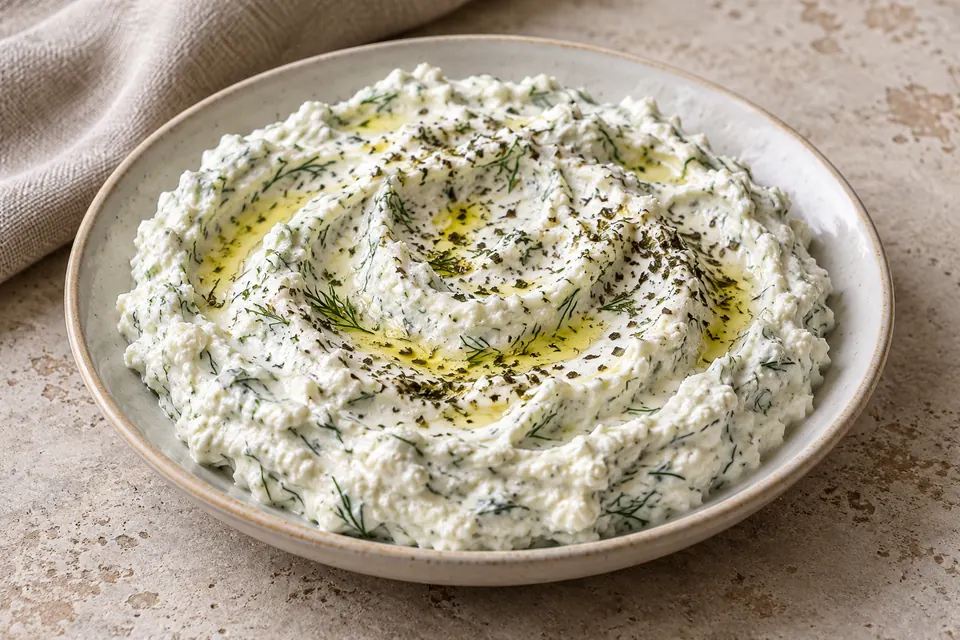
Turkish Yogurt and Herb Dip — Haydari
Thick Turkish yogurt and white-cheese meze with dill and mint

Turkish Sesame Bread Rings — Simit
Turkish twisted bread rings with grape molasses and sesame
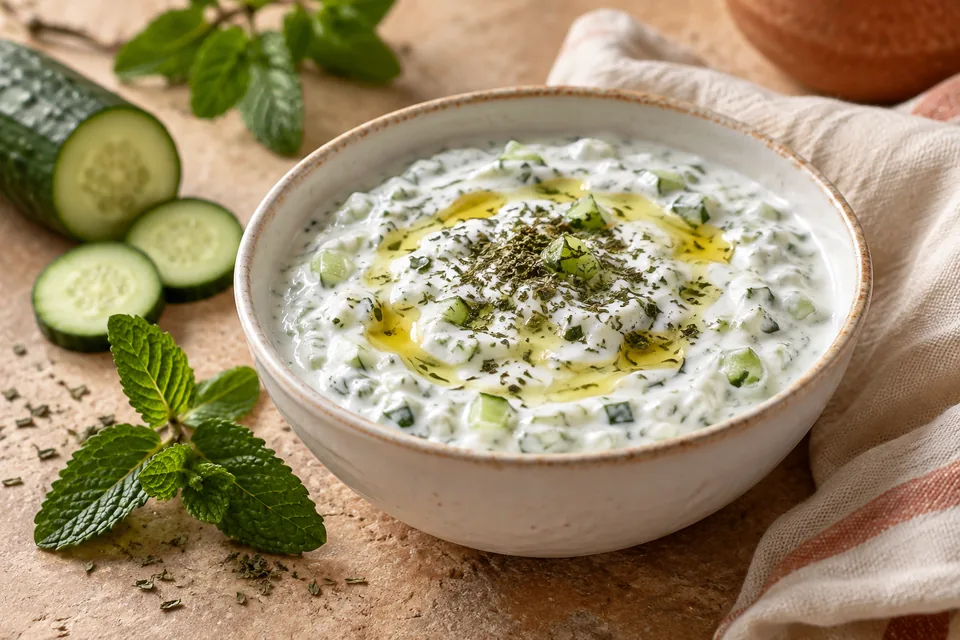
Turkish Cucumber Yogurt Dip Recipe — Cacık
Cooling cucumber & yogurt with mint